In modern internet culture, words from regional English often go viral and confuse global users. One such term is “claggy”, a word that pops up in food reviews, British conversations, and sometimes online chats where people describe textures or experiences in a very expressive way.
If you’ve ever seen someone say “this cake is claggy” or “the weather feels claggy” and had no idea what it meant don’t worry. You’re not alone.
Exact meaning of claggy, how it is used, where it comes from, and how to use it correctly in real-life conversations and online discussions.
What Does “Claggy” Mean?
The word claggy is mainly a British English adjective used to describe something that is:
- Sticky
- Heavy or dense in texture
- Slightly unpleasant or overly moist in a thick way
Simple Definition
Claggy = sticky, heavy, and unpleasantly thick (especially in food or weather conditions).
Where Does “Claggy” Come From?
“Claggy” is believed to originate from Northern English dialects. It is derived from the word “clag”, which means:
- To stick or become stuck
- To cling heavily together
Over time, “claggy” evolved as a descriptive adjective used in everyday British speech, especially in:
- Cooking and baking
- Weather descriptions
- Casual slang conversations
Modern Meaning in 2026 Context
Today, the word is still widely used in the UK and appears online in:
- Food reviews (blogs, TikTok, Reddit)
- British TV shows and cooking competitions
- Casual texting between UK speakers
It is not a formal word, but it is very common in conversational English.
How to Use “Claggy” in Texts or Chat
Even though claggy meaning is not internet slang in the traditional sense (like LOL or BRB), it still appears in digital communication when people describe experiences.
Common Usage Contexts
You can use “claggy” when talking about:
- Food texture (most common)
- Weather conditions
- Sticky or uncomfortable situations
In Text Messages
People use it casually like this:
- “This brownie is way too claggy, I can’t finish it.”
- “Ugh, it’s so claggy outside today, feels like humidity overload.”
- “That rice turned out claggy, I messed up the recipe.”
Tone of the Word
- Slightly negative or critical
- Informal and conversational
- Often used humorously in food debates
Important Tip
Don’t confuse “claggy” with slang abbreviations like “idk” or “brb.”
It is a descriptive adjective, not a texting shortcut.
Examples of “Claggy” in Conversations
Let’s look at real-world style examples so you fully understand how it works.
1. Food Review Example
Person A: How was the chocolate cake?
Person B: Honestly, it was too claggy. It felt heavy and kind of undercooked in the middle.
👉 Here, “claggy” means the cake is sticky, dense, and not pleasant in texture.
2. Weather Chat Example
Friend 1: How’s the weather there?
Friend 2: Super claggy. Humid and sticky all day.
👉 Here, it describes uncomfortable humidity.
3. Casual Text Example
User: I tried making pasta at home.
Friend: Was it good?
User: Nope, came out claggy 😭
4. Social Media Review
“This pudding looked amazing but tasted claggy and heavy. 4/10.”
Common Mistakes or Misunderstandings About “Claggy”
Because it is not widely used outside the UK, many people misunderstand it.
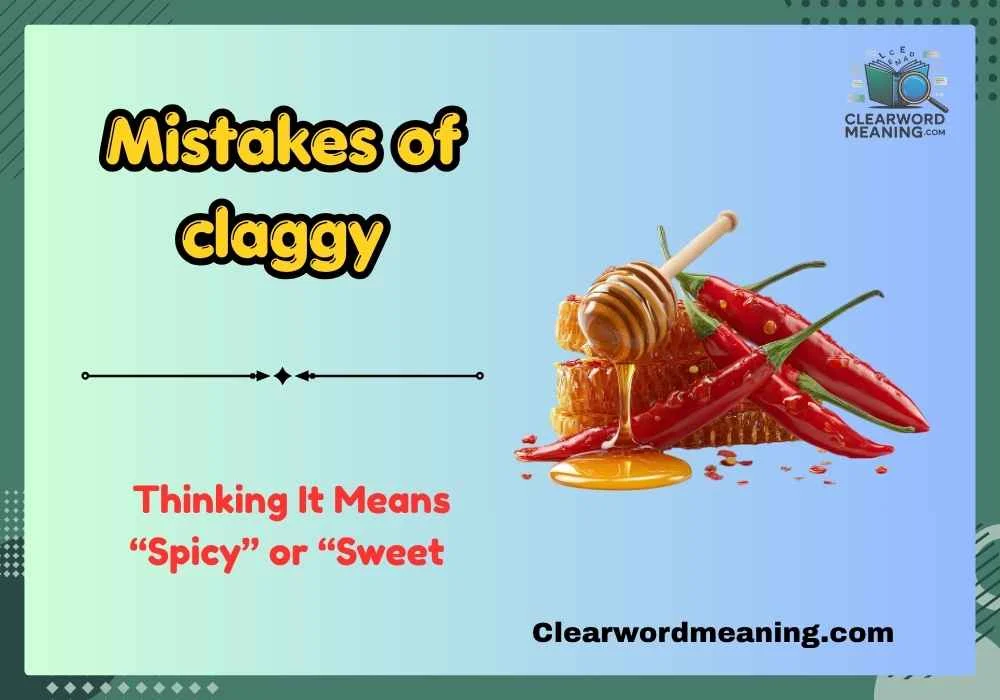
❌ Mistake 1: Thinking It Means “Spicy” or “Sweet”
Some assume it describes flavor—but it actually describes texture, not taste.
❌ Mistake 2: Confusing It With Internet Slang
“Claggy” is NOT:
- An abbreviation
- A meme acronym
- A modern texting code
It is a traditional descriptive word.
❌ Mistake 3: Using It in Formal Writing
Avoid using “claggy” in:
- Academic essays
- Business reports
- Professional emails
It is informal and conversational only.
❌ Mistake 4: Overusing It
Using it too much can sound unnatural outside British contexts.
Related Slang & Similar Words
If you’re learning claggy meaning, here are similar or related expressions:
1. Sticky
Most direct synonym:
- “This rice is sticky.”
2. Gooey
Often used for desserts:
- “This brownie is gooey.”
3. Dense
Used for heavy food textures:
- “This cake is too dense.”
4. Soggy
Used when something has too much moisture:
- “These fries are soggy.”
5. Gluey
Very close to claggy in meaning:
- “The sauce is gluey.”
Bonus British Slang Connections
- “Lurgy” – feeling unwell
- “Cheeky” – playful or casual action
- “Scran” – food (Northern UK slang)
Why “Claggy” Is Still Relevant in 2026 Internet Culture
Even though it is an old regional word, “claggy” has gained new visibility online because:
- Food content creators use it in reviews
- British cooking shows are popular globally
- TikTok food reactions use expressive texture words
- Reddit discussions often include UK slang explanations
People love descriptive words that feel more expressive than simple terms like “bad” or “gross.”
How to Use “Claggy” Correctly (Quick Guide)
If you want to use it naturally, follow these simple rules:
✔ Use it for:
- Food texture issues
- Humid weather
- Sticky or heavy materials
✔ Use it in:
- Casual chats
- Social media posts
- Friendly conversations
❌ Avoid it in:
- Formal writing
- Technical contexts
- Non-English speaking audiences without explanation
FAQs:
1. What does claggy mean in simple words?
Claggy means sticky, heavy, or unpleasantly thick—usually used for food or weather.
2. Is claggy a slang word?
Not exactly. It is more of a regional British English adjective than modern slang.
3. Can claggy describe weather?
Yes, especially humid or sticky weather conditions.
4. Is claggy a negative word?
Mostly yes. It usually describes something unpleasant or poorly textured.
5. Where is claggy commonly used?
It is mostly used in the UK, especially Northern England, and in online food discussions.
6. Can I use claggy in texting?
Yes, but only in casual chats when describing food or weather.
7. What is the closest synonym of claggy?
Words like sticky, gooey, dense, or soggy are the closest in meaning.
Conclusion
The claggy meaning is simple but very expressive: it describes something sticky, heavy, and unpleasantly thick, especially in food or humid weather conditions.
While it may not be a global slang abbreviation, it remains a useful and colorful word in British English and online food culture.
Understanding words like “claggy” helps you better interpret reviews, conversations, and social media content especially when interacting with UK based creators or communities.
In 2026, as global communication continues to blend regional dialects with internet culture, words like this become more common and more useful than ever.

I am the author, M Brauer, a dedicated and detail-focused professional committed to quality content and clear information. I focus on creating reliable, easy-to-understand material that delivers real value and builds trust with readers.