Want to know the real Flee Meaning without confusing dictionary terms? This beginner-friendly guide explains everything in a clear and engaging way so anyone can understand it fast.
Learn the meaning of flee, its origin, pronunciation, examples in sentences, and how native English speakers use it in daily life.
This powerful article is perfect for improving vocabulary, school learning, competitive exams, and content writing.
Discover the difference between flee and similar words while gaining expert tips that make English learning more effective and interesting.
If you want a complete, reliable, and easy explanation of Flee Meaning, this guide is exactly what you need.
What Does “Flee” Mean?
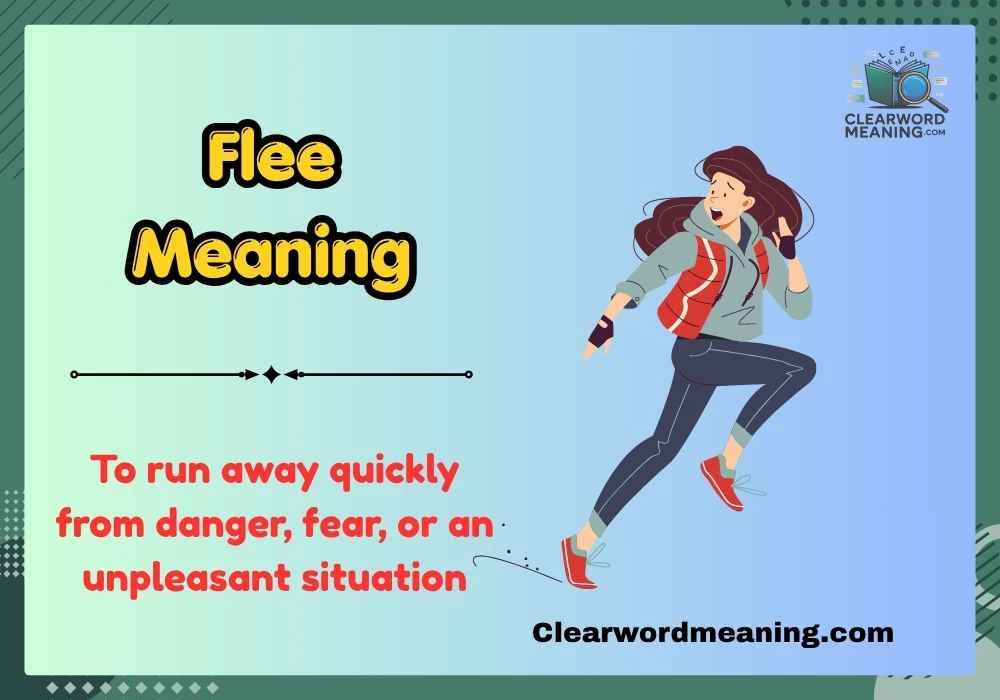
The word “flee” is a verb in English that means:
To run away quickly from danger, fear, or an unpleasant situation.
In simple terms, when someone flees, they are escaping or leaving very fast.
📌 Basic Definition:
- Flee = to escape quickly
- Often used in serious or urgent situations
🧠 Origin of the Word:
The word “flee” comes from Old English “flēon”, which has Germanic roots. It has been used for centuries in literature, storytelling, and historical writing to describe escaping danger or conflict.
💡 Important Note for 2026 Usage:
In modern digital communication, “flee” is not a slang or abbreviation. It remains a standard English word, but it is often used:
- In memes
- In gaming chats
- In storytelling posts
- In dramatic social media captions
So when people search “flee meaning in chat”, they are usually trying to understand how it fits into modern online conversations.
How “Flee” Is Used in Texts or Chat

Even though “flee” is a traditional word, it has found its way into modern texting and online culture.
💬 Common Contexts in Chat:
- Gaming Chats
- Players use it when escaping enemies
- Example: “Bro, flee! They’re coming!”
- Funny or Dramatic Conversations
- Used humorously to exaggerate situations
- Example: “I had to flee the group chat after that roast 😂”
- Storytelling or Roleplay
- Common in RPG or fantasy chats
- Example: “The hero flees the castle at midnight.”
- Social Media Captions
- Used in dramatic or funny posts
- Example: “Me fleeing responsibilities like…”
🧾 Key Point:
In texting, “flee” is usually used in a dramatic or humorous way, not always in a serious sense.
Examples of “Flee” in Conversations
To help you fully understand the flee meaning in chat, here are real-life style examples:
📱 Example 1: Normal Use
A: Why did you leave so fast?
B: I had to flee the party, it was getting awkward.
🎮 Example 2: Gaming Chat
Player 1: Enemy team is pushing!
Player 2: Flee now or we’re done!
😂 Example 3: Funny Chat
Friend 1: Did you see her reply?
Friend 2: I had to flee the conversation immediately 💀
📚 Example 4: Story Mode
“The knight flees the battlefield after losing his sword.”
📲 Example 5: Social Media
“Fleeing Monday mornings like I’m in an action movie.”
These examples show how flexible the word is depending on tone and context.
Common Mistakes or Misunderstandings
Many people misunderstand the flee meaning, especially in online conversations. Let’s clear up the confusion.
❌ Mistake 1: Thinking It’s Slang or Abbreviation
- “Flee” is NOT an acronym
- It is a normal English verb
❌ Mistake 2: Confusing It with “Free” or “Feel”
- “Flee” sounds similar but has a completely different meaning
- Example confusion:
- Wrong: I feel the party
- Correct: I flee the party
Mistake 3: Using It in the Wrong Tone
- It is usually used for escape or urgency
- Using it in casual contexts may sound dramatic or humorous
❌ Mistake 4: Overusing in Formal Writing
- Not recommended in academic or professional reports unless describing escape situations
Related Slangs & Similar Words
If you’re exploring flee meaning in texting, here are some related words and expressions you might see online:
🔁 Similar Words:
- Escape
- Run away
- Bolt
- Dash
- Evacuate
💬 Internet Slang Alternatives:
- “Dip” → to leave quickly (“I’m gonna dip”)
- “Ghost” → to suddenly stop responding
- “Bounce” → leave a place quickly
- “RIP out” → dramatic exit (slang)
🧠 Related Chat Expressions:
- “I’m out”
- “Gotta go”
- “Peace out”
- “Abort mission”
These are often used instead of “flee” in casual texting environments.
Why People Search “Flee Meaning” in 2026
With the rise of short-form content, memes, and gaming slang, more people encounter words like “flee” in unexpected places.
🔍 Common reasons for searches:
- Understanding game instructions
- Decoding meme captions
- Learning English vocabulary
- Clarifying chat messages
- Social media trends
In 2026, communication is faster, more visual, and more slang-heavy, so even simple words like “flee” can cause confusion.
How to Use “Flee” Correctly in Texting
Here’s a simple guide to using it naturally:
✔️ Do:
- Use it when describing escape or urgency
- Use it in funny or dramatic contexts
- Use it in storytelling or gaming
❌ Don’t:
- Don’t treat it like slang or abbreviation
- Don’t use it in formal business emails
- Don’t replace simple words unnecessarily
💡 Pro Tip:
If your sentence sounds like an action movie, you’re probably using “flee” correctly 😄
Modern Digital Usage Trends (2026 Update)
In 2026, “flee” is seeing interesting usage trends:
- 🎮 Popular in gaming chats (especially survival games)
- 📱 Used in TikTok captions for humor
- 😂 Common in meme culture
- 📖 Still used in storytelling and fantasy writing
- 💬 Rare in casual texting compared to slang alternatives like “dip” or “bounce”
So while it’s not new slang, it remains relevant in expressive online communication.
FAQs:
❓ 1. What does “flee” mean in chat?
It means to run away or escape quickly from a situation, often used humorously or dramatically in chats.
❓ 2. Is “flee” slang or formal English?
It is standard English, not slang, but it is commonly used in informal online conversations.
❓ 3. Can I use “flee” in texting?
Yes, especially when describing escaping a situation or jokingly leaving a chat or event.
❓ 4. What is the difference between “run” and “flee”?
“Flee” is more urgent and dramatic than “run,” often implying danger or strong emotion.
❓ 5. Is “flee” used in social media captions?
Yes, especially in humorous or dramatic captions like “fleeing responsibilities.”
❓ 6. What are similar slang words for “flee”?
Common alternatives include “dip,” “bounce,” “ghost,” and “run away.”
❓ 7. Why do gamers use the word “flee”?
Because it clearly communicates urgent escape or retreat during gameplay situations.
Conclusion:
Understanding the flee meaning in text and chat helps you interpret conversations more clearly and even express yourself in a more creative way.
While it is not modern slang, it remains a powerful word used for escape, urgency, and humor across gaming, social media, and storytelling.
In 2026, online communication continues to evolve, but classic words like “flee” still hold their place in expressive digital language.
Whether you’re escaping a game battle or joking about avoiding responsibilities, this word adds a dramatic touch to your message.

I am the author, Brook, dedicated to creating clear and reliable content that informs and engages readers. With a passion for well-researched and valuable information, I focus on delivering content that is both easy to understand and practical. My goal is to build trust with my audience by providing consistent, accurate, and meaningful material. Whether writing for beginners or experts, I strive to make every piece insightful, engaging, and impactful.