You’ve probably heard someone say, “Don’t copy it paraphrase it.”
Or maybe a teacher, coworker, or AI writing tool mentioned paraphrasing during editing.
At first glance, the word sounds academic and a little formal. But in reality, paraphrasing is something people do every single day — in conversations, social media captions, emails, classrooms, and even casual texting.
So what does paraphrasing meaning actually refer to?
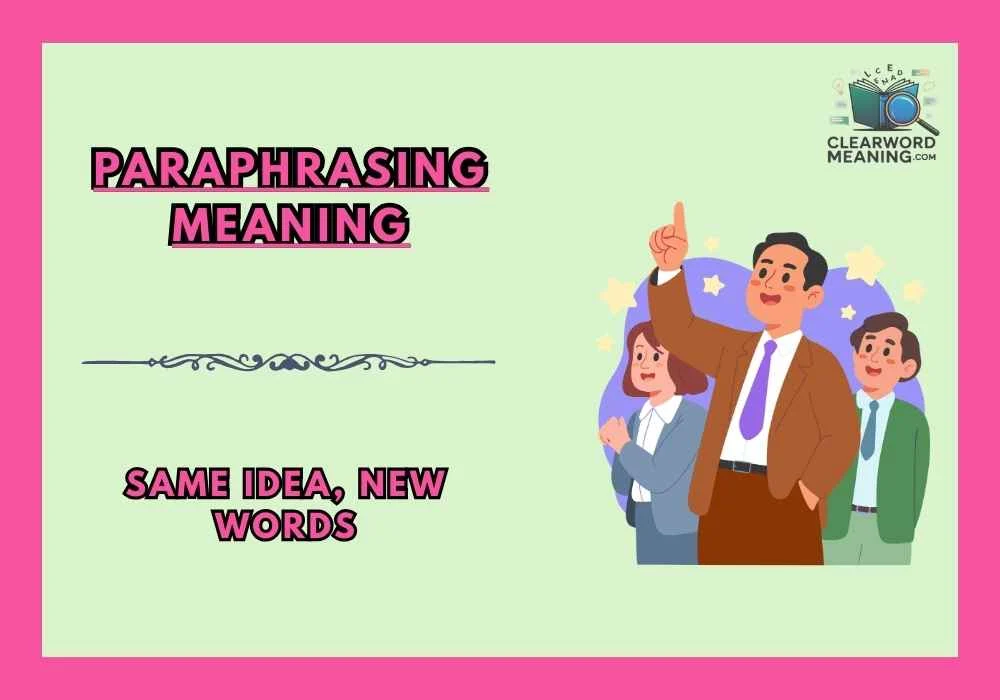
In simple terms, paraphrasing means expressing someone else’s words or ideas in a new way without changing the original meaning. Instead of repeating something word-for-word, you rewrite or explain it using different wording.
That sounds straightforward, but there’s more nuance to it than most people realize.
A good paraphrase keeps the original idea intact while sounding natural, clear, and original. A bad paraphrase can accidentally distort meaning, sound robotic, or even cross into plagiarism.
This guide breaks down the full meaning of paraphrasing, where the term came from, how people use it online, and why it matters in modern communication.
What Does Paraphrasing Mean?
The word paraphrasing refers to rewriting or restating information using different words while preserving the original message.
Simple Definition
Paraphrasing means saying the same thing in a different way.
People paraphrase when they want to:
- simplify difficult language
- avoid copying exact wording
- explain ideas more clearly
- summarize information naturally
- adapt content for a different audience
Quick Example
Original sentence:
“The weather conditions significantly affected transportation services.”
Paraphrased version:
“Bad weather caused major travel delays.”
The wording changes, but the core idea remains the same.
Full Form of Paraphrasing
Paraphrasing is not an acronym or abbreviation, so it does not have a full form.
It comes from the word paraphrase, which originated from Greek and Latin roots meaning:
- “to tell in other words”
- “additional way of speaking”
Unlike internet slang terms such as “LOL” or “BRB,” paraphrasing is a standard English language concept used in education, journalism, research, business communication, and digital writing.
Origin and History of the Word
The term “paraphrase” has existed for centuries.
It traces back to the Greek word paraphrasis:
- para = beside or beyond
- phrasis = expression or speech
Historically, writers used paraphrasing to reinterpret religious texts, translate literature, and explain complex philosophy in simpler language.
Today, the meaning has expanded beyond academics. Modern internet culture uses paraphrasing constantly:
- creators rewrite trends in their own voice
- students restate textbook information
- social media users summarize drama or news
- AI tools generate rewritten versions of text
That’s why the word appears more frequently online now than it did a decade ago.
Paraphrasing Meaning and Examples
Paraphrasing means rewriting someone’s ideas or information using your own words without changing the original meaning. It is commonly used in writing, studying, and communication to avoid plagiarism and improve clarity.
For example:
Original: “The weather is very cold today.”
Paraphrased: “Today is extremely chilly.”

4
Paraphrasing Meaning in English
In English, paraphrasing means restating a sentence or passage in a different way while keeping the same meaning. It helps improve vocabulary, grammar, and understanding of language.
It is widely used in essays, summaries, and academic writing to make content clearer and more natural.

Paraphrasing Meaning in Research
In research, paraphrasing means restating existing studies or sources in your own words with proper understanding and citation. It is essential in academic writing to show comprehension and avoid plagiarism.
4
Paraphrasing Meaning in Communication
In communication, paraphrasing means repeating someone’s message in your own words to confirm understanding. It is often used in conversations, meetings, and professional discussions.
It helps avoid misunderstandings and ensures both sides clearly understand each other.

6
Paraphrasing Meaning in Simple Words
In simple words, paraphrasing means saying the same thing in a different way using easy words. It helps make difficult sentences easier to understand.
For example, turning complex sentences into simple and clear language for better understanding.

6
Paraphrasing in a Sentence
Paraphrasing can be used in a sentence like this:
“She paraphrased the article to make it easier for her classmates to understand.”
This shows how paraphrasing works in real-life writing and communication by changing the wording while keeping the meaning the same.

Paraphrasing Meaning in Counselling
In counselling, paraphrasing means the therapist restates what the client has said to show understanding and empathy. It is a key active listening skill used in therapy sessions.
It helps clients feel heard, supported, and encourages deeper conversation.

Paraphrasing Meaning in Writing
In writing, paraphrasing is often used to present information clearly without directly copying another source.
This matters in:
- essays
- blog posts
- journalism
- research papers
- business reports
- SEO content
- marketing copy
Why Writers Paraphrase
Writers usually paraphrase for three reasons:
| Purpose | Explanation |
|---|---|
| Clarity | Makes difficult ideas easier to understand |
| Originality | Prevents direct copying |
| Readability | Helps content sound more natural |
Good writers don’t just swap a few words with synonyms. They restructure the entire sentence while preserving the original meaning.
That distinction is important.
What Makes a Good Paraphrase?
A strong paraphrase should:
- keep the original meaning
- use different sentence structure
- sound natural
- avoid copying phrases directly
- fit the new context smoothly
Weak Paraphrasing Example
Original:
“Technology has transformed modern communication.”
Poor paraphrase:
“Technology has changed modern communication.”
This barely changes the wording.
Better Paraphrase
“Digital tools have completely reshaped the way people communicate today.”
That version feels more original and human.
Paraphrasing Meaning in Texting
In texting, people use paraphrasing casually all the time without realizing it.
For example:
Friend 1:
“She basically said she doesn’t want to go.”
Friend 2:
“So you’re saying she canceled?”
That second message paraphrases the first one.
Why It Happens in Texting
People paraphrase in messages to:
- shorten long explanations
- confirm understanding
- simplify emotional conversations
- retell stories quickly
- make messages clearer
Unlike academic paraphrasing, texting paraphrases are usually informal and conversational.
Paraphrasing Meaning on Snapchat
On Snapchat, paraphrasing often appears in:
- story recaps
- screenshot explanations
- gossip retelling
- meme captions
- reaction posts
Someone might watch a long video and post:
“Basically he said nobody supported him.”
That’s paraphrasing.
Snapchat users tend to condense information into shorter, emotionally charged summaries. Accuracy sometimes gets lost because people paraphrase too aggressively or oversimplify context.
Paraphrasing Meaning on TikTok
TikTok has made paraphrasing incredibly common.
Creators frequently:
- explain trending topics
- summarize podcasts
- restate celebrity interviews
- reinterpret motivational quotes
- simplify news stories
You’ll often hear phrases like:
- “What she’s basically saying is…”
- “In other words…”
- “To paraphrase…”
TikTok and Misinterpretation
One interesting thing about TikTok culture is that paraphrasing can unintentionally distort meaning.
A creator may shorten a 5-minute explanation into one dramatic sentence. That rewritten version spreads faster than the original.
So while paraphrasing helps content travel quickly, it can also create misunderstandings online.
Paraphrasing Meaning on Instagram
On Instagram, paraphrasing usually appears in captions, reels, carousel posts, and motivational content.
Examples include:
- turning long quotes into shorter captions
- rewriting advice in simpler wording
- summarizing interviews
- converting tweets into image posts
Common Instagram Style
Original quote:
“Confidence grows when you stop comparing yourself to others.”
Instagram paraphrase:
“Your life improves when you stop competing with everyone online.”
Same concept. Different expression.
Real Conversation Examples of Paraphrasing
Here are some realistic examples people actually use in daily life.
Example 1: School
Teacher:
“The assignment should reflect your own interpretation.”
Student:
“So basically you want us to explain it in our own words?”
That’s paraphrasing.
Example 2: Workplace
Manager:
“We need stronger customer engagement metrics.”
Employee:
“You mean better interaction numbers?”
Again, same meaning expressed differently.
Example 3: Social Media
Original tweet:
“Burnout happens when rest feels unproductive.”
Paraphrased repost:
“People get exhausted because they feel guilty relaxing.”
How People Commonly Use the Word “Paraphrasing”
People use the term in several contexts.
Academic Use
- “You need better paraphrasing skills.”
- “That paragraph was paraphrased from a journal article.”
Internet Use
- “I’m paraphrasing here, but that’s basically what happened.”
Casual Conversation
- “To paraphrase what she said…”
Workplace Communication
- “Let me paraphrase your point to make sure I understand.”
The Emotional Tone Behind Paraphrasing
Paraphrasing itself is neutral, but the tone changes depending on context.
It Can Sound:
- helpful
- explanatory
- simplifying
- sarcastic
- dismissive
- clarifying
For example:
“So what you’re really saying is…”
That type of paraphrasing can sound confrontational depending on tone.
Meanwhile:
“If I understand correctly…”
sounds more respectful and collaborative.
Situations Where You Should NOT Paraphrase
Paraphrasing isn’t always appropriate.
1. Legal or Official Statements
Changing wording in contracts or legal documents can alter meaning.
2. Sensitive Quotes
Paraphrasing emotional or controversial statements may misrepresent someone.
3. Academic Citations Without Credit
Even paraphrased ideas still require attribution in formal writing.
This is a major misunderstanding online.
People often think:
“If I changed the words, it’s mine now.”
That’s not always true.
The underlying idea may still belong to the original source.
Common Misunderstandings About Paraphrasing
Myth 1: Changing a Few Words Is Enough
It isn’t.
True paraphrasing involves restructuring ideas naturally.
Myth 2: Paraphrasing Means Summarizing
Not exactly.
- Paraphrasing = same idea, different wording
- Summarizing = shorter version of the main points
Myth 3: AI Tools Always Paraphrase Correctly
They don’t.
Some automated paraphrasing tools produce awkward or misleading sentences that sound unnatural.
Human judgment still matters.
Difference Between Paraphrasing and Rewriting
People often confuse these terms.
| Term | Meaning |
|---|---|
| Paraphrasing | Restating the same idea differently |
| Rewriting | Changing wording, structure, or style more broadly |
| Summarizing | Condensing information into shorter form |
| Quoting | Using exact original words |
Paraphrasing focuses specifically on preserving meaning while changing expression.
Similar Terms and Related Language
If you’re researching “paraphrasing meaning,” you may also come across related terms that can internally connect to broader language topics.
Related Terms
- summarizing
- rewording
- rephrasing
- quoting
- plagiarism
- citation
- interpretation
- translation
- restating
- rewriting
These concepts overlap but aren’t identical.
Why Paraphrasing Matters More in 2026
Modern communication moves fast.
People constantly reinterpret information across platforms:
- TikTok clips
- AI-generated content
- social media threads
- podcasts
- newsletters
- reaction videos
Because of that, paraphrasing has become one of the most important communication skills online.
It helps people:
- explain complex ideas quickly
- adapt content for different audiences
- avoid duplication
- communicate clearly
- sound more natural
At the same time, poor paraphrasing contributes to misinformation and context loss.
That balance matters more than ever.
FAQ About Paraphrasing Meaning
Is paraphrasing the same as copying?
No. Copying uses the exact original wording, while paraphrasing expresses the same idea differently.
What is a simple example of paraphrasing?
Original:
“Exercise improves mental health.”
Paraphrased:
“Working out can help people feel emotionally better.”
Is paraphrasing allowed in school?
Yes, but sources usually still need proper citation.
Can paraphrasing change meaning?
It shouldn’t. Good paraphrasing keeps the original idea accurate.
Why do students paraphrase?
Students paraphrase to explain ideas in their own words, improve understanding, and avoid direct copying.
What’s the difference between paraphrasing and summarizing?
Paraphrasing restates the full idea differently. Summarizing shortens the information to key points only.
Is paraphrasing used on social media?
Absolutely. People paraphrase posts, videos, interviews, tweets, and trends constantly across TikTok, Instagram, Snapchat, and YouTube.
Final Thoughts on Paraphrasing Meaning
Paraphrasing is much more than swapping words around.
At its best, it’s a communication skill that helps people explain ideas clearly, naturally, and responsibly. Whether someone is rewriting an essay, summarizing a TikTok debate, explaining a complicated text, or simplifying information for a broader audience, paraphrasing plays a huge role in how modern language works.
The internet has made this skill even more important.
Information spreads quickly, gets shortened, reinterpreted, and reposted across platforms within minutes. That means understanding how paraphrasing works — and how it can sometimes distort meaning — matters in everyday life now, not just in classrooms.
A strong paraphrase respects the original message while making it easier for new audiences to understand. And when done well, it sounds effortless, human, and authentic rather than forced or robotic.

I am the author, Brook, dedicated to creating clear and reliable content that informs and engages readers. With a passion for well-researched and valuable information, I focus on delivering content that is both easy to understand and practical. My goal is to build trust with my audience by providing consistent, accurate, and meaningful material. Whether writing for beginners or experts, I strive to make every piece insightful, engaging, and impactful.