Have you ever met someone who stays calm in chaos while another person instantly reacts with emotion? Or noticed how two people can experience the same situation but respond in completely different ways?
That difference often comes down to something deeper than personality traits or mood it’s what we call temperament.
But here’s the thing: most online definitions of “temperament meaning” feel too shallow. They say it’s just “a person’s nature or behavior.”
That’s technically correct, but it doesn’t really help you understand how the term actually works in real life, conversations, psychology, or even everyday judgments we make about people.
Let’s break it down in a much more practical, human way.
Meaning Overview: What Does Temperament Really Mean?
At its core, temperament meaning refers to a person’s natural emotional and behavioral tendencies the way they typically react to situations, people, stress, and experiences.
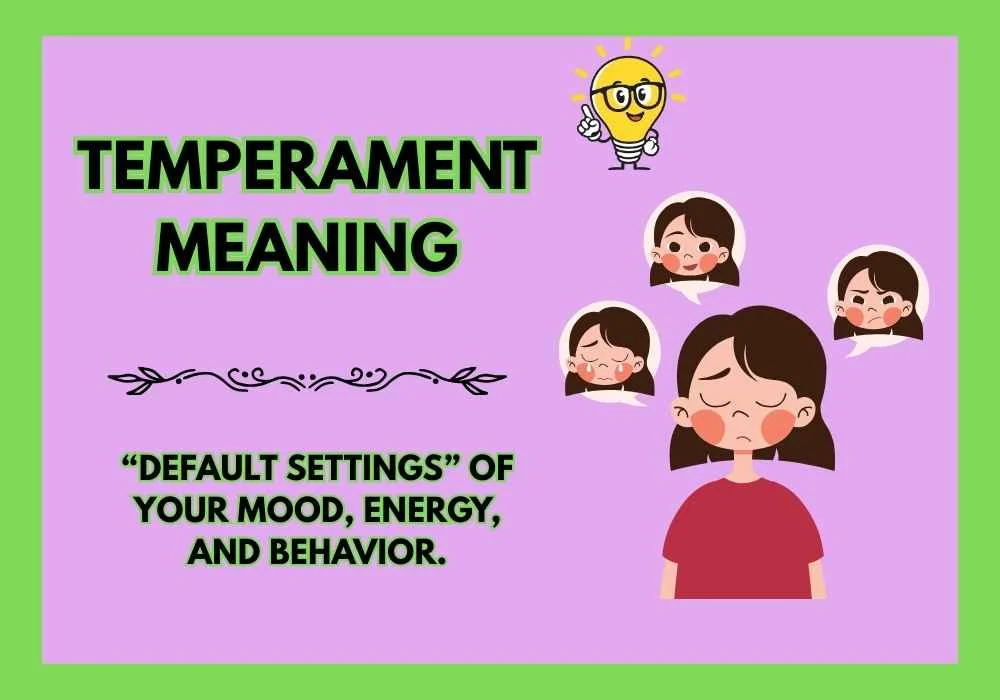
Unlike mood, which changes frequently, temperament is more stable and long-term. Think of it as your emotional “default setting.”
In simple terms:
- It’s how quickly you get angry or stay calm
- How sensitive you are to emotions
- How you respond under pressure
- Your general emotional style in daily life
A quiet, patient person and a highly reactive, expressive person don’t just “choose” those reactions a lot of it comes from temperament.
Is There a Full Form of Temperament?
A common search query is “temperament full form,” but the truth is simple: temperament is not an acronym, so it does not have a full form.
Instead, it is a psychological and behavioral term used in:
- Psychology
- Personality studies
- Everyday communication
- Behavioral science
So if you were looking for a hidden expansion, there isn’t one it’s a standalone concept.
Origin and Historical Background of Temperament
The idea of temperament is not new. It actually goes back thousands of years.
Ancient Greek physicians like Hippocrates believed human behavior was influenced by bodily fluids called “humors.” They categorized people into four temperaments:
- Sanguine (social and energetic)
- Choleric (strong-willed and intense)
- Melancholic (thoughtful and sensitive)
- Phlegmatic (calm and relaxed)
While modern psychology has moved away from this biological theory, the idea still influences how we casually describe people today.
Even now, when someone says “he has a calm temperament,” they are unknowingly echoing ancient ideas of emotional balance.
Temperament meaning in Farsi
In Farsi, temperament is translated as “مزاج” (Mizaj). It describes a person’s natural mood, behavior patterns, and emotional style, often linked with personality and inner character.
Temperament meaning in medical
In medical terms, temperament refers to a person’s biological and emotional constitution that influences behavior, stress response, and mental stability. It is often studied in relation to mental health and neurology.
Temperament meaning in relationship
In relationships, temperament means how a person naturally behaves with their partner, especially in emotional situations. It affects communication style, patience level, anger response, and overall compatibility.
Temperament meaning in animal’s
In animals, temperament describes an animal’s natural behavior traits such as aggression, calmness, friendliness, or fearfulness. It helps trainers and owners understand animal behavior and manage them safely.
Temperament meaning in sports
In sports, temperament refers to an athlete’s emotional control during competition. A strong temperament means staying calm under pressure, handling stress, and performing consistently in high-intensity situations.
Temperament meaning for kids
For kids, temperament describes their natural behavior patterns such as being active, shy, emotional, or calm. It helps parents and teachers understand how a child reacts and learns in different situations.
Temperament Meaning in Psychology (Modern View)
In modern psychology, temperament refers to biologically based personality traits that appear early in life.
Psychologists often study temperament in children to understand:
- Emotional intensity
- Attention span
- Activity level
- Sensitivity to stimulation
- Adaptability
One key insight from research is that temperament shows up very early — even infants display different behavioral patterns before environment shapes them fully.
This is why some babies are naturally calm while others cry more often or react strongly to change.
Temperament Meaning in Texting and Everyday Conversation
In texting or casual chat, people rarely use “temperament” in a clinical way. Instead, it appears in conversational judgments like:
- “She has a really soft temperament.”
- “Don’t mind him, he’s got a hot temperament.”
- “We don’t match temperament-wise.”
Here, it usually means:
👉 someone’s emotional attitude or personality vibe
It’s often used when describing compatibility between people — especially in friendships, relationships, or workplaces.
Temperament Meaning on Snapchat, TikTok, and Instagram
On social media, “temperament” isn’t a viral slang term, but it shows up in captions, comments, and personality discussions.
Snapchat usage:
People might say:
- “His temperament is wild 😭”
- “She’s chill, love her temperament”
It’s usually tied to private impressions of someone’s behavior.
TikTok usage:
On TikTok, temperament often appears in:
- personality test videos
- “POV: your temperament in relationships”
- psychology-based content
It’s used more in storytelling and self-analysis.
Instagram usage:
On Instagram captions or bios:
- “Soft temperament, strong mindset”
- “Calm temperament, loud dreams”
Here it becomes part of personal branding or aesthetic identity.
Real-Life Conversation Examples
Let’s make it more practical. Here’s how “temperament” sounds in real situations:
Example 1: Workplace
“He’s skilled, but his temperament makes teamwork difficult.”
Example 2: Friendship
“We get along, but our temperaments are totally different.”
Example 3: Relationship
“I like her, but I’m not sure our temperaments match long-term.”
Example 4: Parenting
“Each child has a different temperament, even in the same family.”
These examples show that temperament is less about skill and more about emotional behavior patterns.
How People Commonly Use the Word Temperament
In daily language, temperament is often used to describe:
- Emotional stability
- Personality compatibility
- Behavior under pressure
- Social energy level
A quick breakdown:
| Situation | Meaning of Temperament |
|---|---|
| Work environment | How someone handles stress or authority |
| Relationships | Emotional compatibility |
| Parenting | Natural behavior of a child |
| Social life | Personality vibe and reactions |
It’s a word people use when they want to sound more thoughtful or precise than just saying “personality.”
Situations Where “Temperament” Should NOT Be Used
Even though it’s a useful term, it doesn’t fit everywhere.
Avoid using it when:
- You’re describing temporary mood changes (“I’m in a bad temperament today” ❌)
- Talking about physical appearance
- Referring to short-term emotions like anger bursts
- Writing informal memes or jokes where simpler slang works better
In casual texting, “vibe,” “mood,” or “attitude” often sound more natural.
Tone and Emotional Meaning Behind Temperament
Temperament carries emotional weight. It often implies something deeper than surface behavior.
For example:
- “Calm temperament” → emotionally steady, reliable
- “Short temperament” → easily irritated
- “Warm temperament” → friendly, approachable
- “Cold temperament” → emotionally distant
Notice how the word often shapes judgment about character, not just behavior.
That’s why it can feel slightly formal or analytical in conversation.
Similar Slang and Related Terms
If you’re trying to understand “temperament meaning,” it helps to compare it with similar words:
- Personality
- Attitude
- Mood
- Nature
- Behavior
- Vibe (slang version)
- Energy (social media slang)
Each term overlaps slightly but isn’t identical.
Temperament vs Personality: What’s the Difference?
This is where many people get confused.
| Temperament | Personality |
|---|---|
| Natural, biological tendency | Shaped by experience and environment |
| Appears early in life | Develops over time |
| Harder to change | More flexible |
| Emotional reaction style | Overall identity pattern |
In short: temperament is your raw emotional wiring, while personality is the full result of life + temperament combined.
Common Misunderstandings About Temperament
A few misconceptions float around online:
1. “Temperament means attitude”
Not exactly. Attitude is temporary, temperament is long-term.
2. “People can fully change their temperament”
You can adapt behavior, but core temperament is relatively stable.
3. “It’s only a psychology term”
No — it’s also widely used in everyday language.
Cultural and Internet Context
Online, temperament has gained popularity in self-awareness and psychology content.
You’ll often see it in:
- personality quizzes
- relationship compatibility posts
- “why I act like this” self-reflection videos
It’s especially popular among audiences interested in emotional intelligence and human behavior analysis.
FAQs About Temperament Meaning
What is the simple meaning of temperament?
Temperament is a person’s natural way of reacting emotionally and behaviorally to situations.
Is temperament the same as personality?
No. Temperament is more about inborn emotional responses, while personality includes life experiences and learned behavior.
Can temperament change over time?
It can be influenced by experience, but it is generally considered stable throughout life.
What are the types of temperament?
Traditionally, they include sanguine, choleric, melancholic, and phlegmatic — though modern psychology uses broader categories.
How is temperament used in daily life?
People use it to describe emotional compatibility, behavior patterns, and personality traits in relationships or workplaces.
Final Thoughts
Understanding temperament meaning is really about understanding human behavior at a deeper level. It’s not just a fancy word for personality — it’s the emotional foundation behind how people react, connect, and respond to the world around them.
Once you start noticing temperament in real life, conversations begin to make more sense. Why someone stays calm under pressure. Why another person reacts quickly. Why some relationships feel naturally smooth while others constantly clash.
It’s subtle, but powerful — and it quietly shapes almost every human interaction you see.

I am the author, Mitchell, passionate about creating engaging and reliable content that adds real value to readers. With a focus on clarity, accuracy, and insight, I aim to make complex topics easy to understand. I believe in delivering well-researched, practical information that builds trust and helps my audience make informed decisions. Every piece I write is crafted to be informative, meaningful, and impactful, reflecting my commitment to quality and consistency.