Why Knowing “Temperament” Matters in Life and Texting
Ever wondered why some people stay calm under pressure while others snap at the smallest inconvenience? That’s all about temperament.
In 2026, understanding temperament isn’t just for psychologists it’s crucial in social interactions, texting, and online chats.
Whether you’re trying to decode a friend’s tone in a message or understand your own reaction patterns, knowing temperament meaning can help you communicate better and avoid misunderstandings.
What Does “Temperament” Mean? (Definition & Origin)
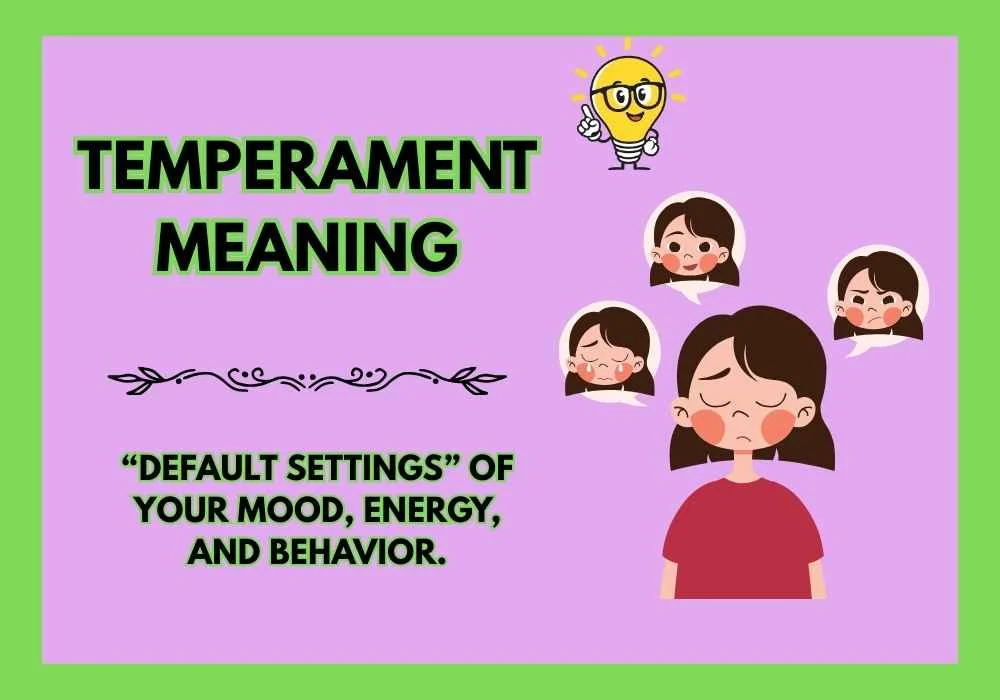
Temperament refers to the natural personality traits and emotional patterns that shape how a person reacts to situations. Think of it as the “default settings” of your mood, energy, and behavior.
- Origin: The term comes from the Latin word temperare, meaning “to mix” or “to moderate.” Historically, it was linked to the four humors theory: sanguine, choleric, melancholic, and phlegmatic. While medicine has moved on, the basic idea of personality patterns remains relevant.
- Modern Understanding: Today, temperament isn’t just about psychology—it’s about understanding your social style, how you handle stress, and even how you interact in chats or texts.
Quick Insight: Someone with a “calm temperament” might always reply politely in texts, even during heated debates, while a person with a “fiery temperament” might use more all-caps or emojis to express emotions.
How to Use “Temperament” in Texts or Chat
In digital communication, temperament can help you interpret the tone behind messages:
- Calm Temperament: Uses minimal punctuation, avoids drama, replies thoughtfully.
- Fiery Temperament: May use multiple exclamation points, CAPS LOCK, or emojis to convey energy.
- Reserved Temperament: Sends short, concise replies; might avoid sharing emotions.
- Cheerful Temperament: Frequently uses GIFs, emojis, and positive phrases.
Pro Tip: You can even reference temperament in texts casually:
- “Lol, your temperament is too chill, I love it 😎”
- “Wow, fiery temperament detected! 🔥 Calm down!”
Examples of “Temperament” in Conversations
Here are some relatable texting scenarios showing how temperament plays out:
- Scenario 1: Calm Temperament
Friend: “Did you see the traffic today?”
You: “Yeah, it was slow, but no worries. Got my podcast ready 😌” - Scenario 2: Fiery Temperament
Friend: “Did you see the traffic today?”
You: “OMG!!! I’ve been stuck for 2 HOURS 😡🚗💨” - Scenario 3: Reserved Temperament
Friend: “How was the movie?”
You: “Good.” - Scenario 4: Cheerful Temperament
Friend: “How was the movie?”
You: “Amazing 😍👏! Loved every scene, can we watch it again soon?”
These examples highlight how temperament meaning directly affects communication style—even in short texts.
Common Mistakes or Misunderstandings

Even with a clear idea of temperament, people often misinterpret messages online:
- Overreading Emojis: Someone with a calm temperament might use fewer emojis, but that doesn’t mean they’re upset.
- Assuming Text Tone Equals Mood: A short reply doesn’t always indicate anger—some people are naturally reserved.
- Mixing Up Temperament and Personality: Temperament is more about innate emotional patterns, while personality includes habits, skills, and values.
Tip: Understanding temperament helps avoid misreading tone in DMs, group chats, or social media comments.
Related Slangs or Abbreviations
If you’re into texting lingo, some terms can relate to temperament:
- LOL / LMAO: Cheerful or expressive temperament
- SMH: Reserved or frustrated temperament
- IDK: Neutral temperament, often calm or indecisive
- BRB / AFK: Someone with a structured or organized temperament
- OMG / WTF: Fiery temperament, reacting emotionally
These abbreviations give subtle hints about a person’s temperament in chat culture.
Updated Insights for 2026
With AI chatbots, social media threads, and instant messaging dominating communication in 2026, understanding temperament is more practical than ever. It helps:
- Decode tone in professional emails or DMs
- Avoid conflicts in group chats
- Communicate your personality clearly online
- Understand friends, colleagues, and new acquaintances quickly
By knowing temperament, you can adjust your texting style and improve both personal and professional relationships.
FAQs:
What is the difference between temperament and personality?
Temperament is the innate emotional and behavioral tendencies you are born with, while personality includes learned behaviors, habits, and attitudes.
Can temperament change over time?
Temperament is mostly stable, but life experiences, maturity, and self-awareness can shape how it’s expressed.
Why is temperament important in texting?
It helps you interpret tone, avoid misunderstandings, and communicate effectively, especially in short or ambiguous messages.
How can I identify my temperament?
Observe how you react to stress, social situations, and daily life. Personality quizzes or psychological tests can also help.
Does temperament affect online relationships?
Absolutely! It influences how you express emotions, respond to messages, and understand others’ digital cues.
Conclusion
Understanding temperament meaning isn’t just academic—it’s a practical skill for navigating modern social and digital life. By recognizing your temperament and the temperaments of others, you can communicate more effectively, avoid misunderstandings, and even make texting more fun.
Next time you text, notice the vibe: is it calm, fiery, cheerful, or reserved? Awareness is key!

I am the author, Mitchell, passionate about creating engaging and reliable content that adds real value to readers. With a focus on clarity, accuracy, and insight, I aim to make complex topics easy to understand. I believe in delivering well-researched, practical information that builds trust and helps my audience make informed decisions. Every piece I write is crafted to be informative, meaningful, and impactful, reflecting my commitment to quality and consistency.