If you’ve ever heard someone say “that outfit is skimpy” or seen the word pop up in a comment thread and felt slightly unsure about the tone, you’re not alone. “Skimpy” is one of those English words that looks simple on the surface but carries a surprising amount of attitude depending on how and where it’s used.
At its core, the skimpy meaning is easy to understand—but the emotional weight behind it changes a lot based on context, culture, and intent. Sometimes it’s casual, sometimes judgmental, and occasionally just descriptive. Let’s break it all down in a way that actually makes sense in real-life conversations.
Meaning Overview of Skimpy
The word “skimpy” generally means something that is small in amount, size, or coverage.
It is commonly used in two main ways:
- Physical quantity: something that is not enough or is insufficient
- Clothing/style: something that is revealing, minimal, or barely covering
So when people talk about the “skimpy meaning,” they are usually referring to one of these ideas:
- Not enough material or substance
- Very limited or minimal coverage
- Something that feels slightly “too little” for comfort or expectation
Simple breakdown:
- A skimpy meal → not enough food
- Skimpy budget → very limited money
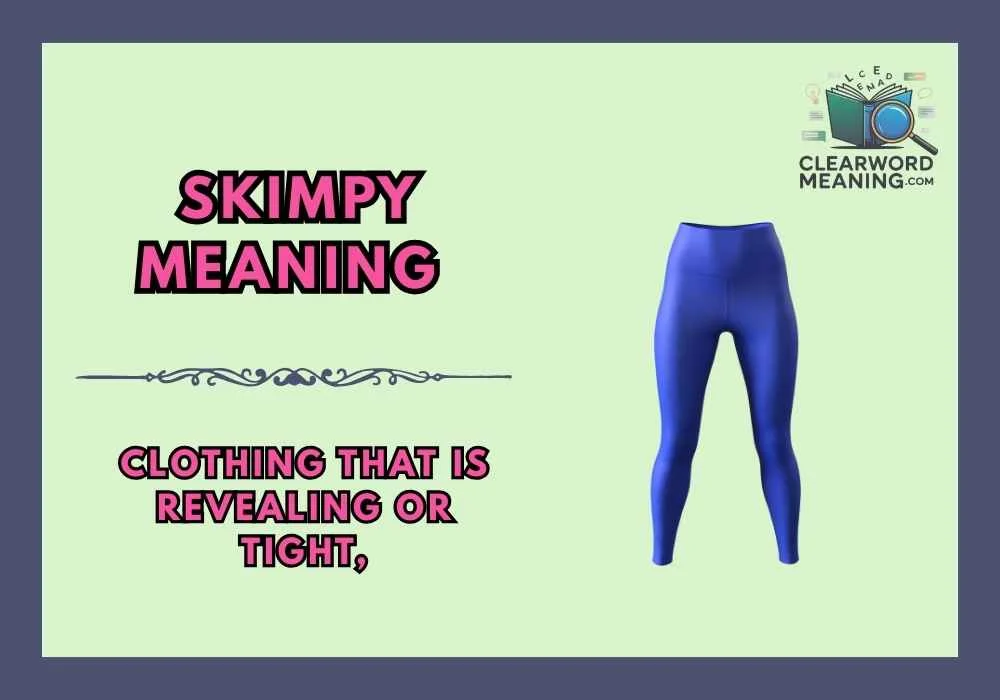
- Skimpy dress → revealing or minimal clothing
The meaning shifts depending on what is being described, which is why the word can feel a bit subjective.
Is There a Full Form of Skimpy?
No, skimpy does not have a full form or abbreviation meaning. It is not an acronym.
It is a standard English adjective that developed from older English usage of “skim,” which originally referred to something thin, light, or insufficient in amount.
Origin and History of the Word Skimpy
“Skimpy” comes from the idea of “skimping,” which means to supply something in an inadequate or restricted way.
Historically, it was used in everyday English to describe situations where someone was being stingy or not providing enough resources. Over time, the word expanded beyond money or food and entered fashion and pop culture language.
By the mid-to-late 20th century, “skimpy” became widely used in fashion commentary, especially when describing clothing that is minimal or revealing.
Today, it’s common in:
- Fashion discussions
- Social media comments
- Casual texting
- Entertainment reviews
Skimpy Meaning in Texting
In texting, “skimpy” is usually used informally, and the tone depends heavily on who is saying it.
Here’s how it typically shows up:
- “That portion was skimpy lol” → not enough food
- “Your explanation is kinda skimpy” → lacking detail
- “That outfit looks skimpy” → revealing clothing
In casual chat, it can be:
- Neutral (just describing something small)
- Slightly critical (implying something is lacking)
- Playfully teasing among friends
But it’s rarely used in formal texting or professional communication.
Skimpy Girl Meaning
The term “skimpy girl” usually refers to a woman wearing very revealing, tight, or minimal clothing.
It is often used in informal or slang contexts and can carry a judgmental tone depending on usage. In modern language, it may simply describe a fashion style that is bold or revealing rather than modest.
Skimpy Meaning Synonyms
“Skimpy” means something that is insufficient, small in amount, or minimal in size. Common synonyms include meager, limited, scarce, tight, inadequate, and insufficient.
The word is often used to describe clothing, food portions, or resources that feel too little or not enough.
Skimpy Meaning Money
When used with money, “skimpy” refers to having very little or not enough funds. It describes a situation where financial resources are tight or insufficient to meet needs.
For example, a “skimpy budget” means a very limited amount of money that restricts spending.
Skimpy Meaning in Chinese
The word “skimpy” in Chinese can be translated depending on context. Common meanings include 吝啬 (lìnsè) for stingy or small amount, and 简陋 (jiǎnlòu) for something lacking or insufficient. For clothing, it may be described as 暴露的 (bàolù de) meaning revealing.
Skimpy Meaning Urban Dictionary
In Urban Dictionary style usage, “skimpy” often refers to revealing clothing or something extremely minimal.
It is commonly used in slang to describe outfits, especially swimwear or dresses that show a lot of skin. It can also mean something lacking or not enough in a casual, humorous way.
Skimpy Food Meaning
“Skimpy food” means a very small portion of food that feels not enough to satisfy hunger.
It is often used in restaurants or reviews when meals are served in limited quantity. For example, a “skimpy serving” suggests the food portion is smaller than expected.
Meaning of Skimpy on Snapchat
On Snapchat, “skimpy” is most often used in reference to outfits, selfies, or appearance-based comments.
For example:
- “Skimpy fit 🔥” → complimenting a revealing or bold outfit
- “That’s a bit skimpy tbh” → mild judgment about clothing choice
On platforms like Snapchat, where visual content dominates, the word tends to lean more toward fashion and aesthetic description.
However, tone matters a lot. Depending on the sender:
- It can be flattering (bold, confident style)
- Or it can sound judgmental or critical
Skimpy Meaning on TikTok
On TikTok, “skimpy” appears frequently in:
- Fashion videos
- Dance clips
- Outfit transitions
- Comment sections
Typical usage:
- “This outfit is kinda skimpy but cute”
- “Skimpy summer dress inspo”
- “She always wears skimpy outfits”
On TikTok, the word often blends into aesthetic culture, where minimal or bold fashion is part of self-expression.
Still, it can attract mixed reactions:
- Supportive comments see it as fashion freedom
- Negative comments may use it to criticize modesty
So the meaning is not fixed—it shifts with audience perception.
Skimpy Meaning on Instagram
On Instagram, the word “skimpy” is commonly used in:
- Fashion captions
- Influencer comments
- Styling discussions
Examples:
- “Skimpy beachwear vibes 🌴”
- “Not everyone can pull off skimpy outfits like this”
- “Skimpy but elegant look”
Instagram usage often overlaps with fashion marketing and influencer culture, so the word can sound:
- Stylish
- Trend-focused
- Or occasionally controversial
Real Conversation Examples
To really understand the skimpy meaning, here are some realistic everyday conversations:
Example 1: Food context
A: “How was the buffet?”
B: “Honestly, kind of skimpy for the price.”
Example 2: Fashion context
A: “What do you think of my outfit?”
B: “It’s a bit skimpy, but you’re pulling it off.”
Example 3: Work context
A: “Did they explain the project?”
B: “Yeah, but the details were pretty skimpy.”
Example 4: Casual teasing
Friend 1: “That’s your dinner?”
Friend 2: “Yeah, I know, it’s skimpy 😂”
These examples show how flexible the word really is.
How People Commonly Use “Skimpy”
People typically use “skimpy” when they want to describe something that feels:
- Smaller than expected
- Lacking detail or substance
- Minimal in design or coverage
- Slightly underwhelming
It’s often used in:
- Conversations about clothing
- Complaints about quantity
- Casual observations
- Social media commentary
Situations Where You Should NOT Use It
Even though “skimpy” is common, it’s not always appropriate.
Avoid using it when:
- Talking to someone in a professional setting
- Commenting on someone’s body directly
- Speaking in formal writing
- Addressing sensitive topics
Why? Because “skimpy” can easily sound judgmental, especially in fashion or appearance-related discussions.
Instead of saying:
- “That’s a skimpy outfit”
You could say:
- “That outfit is quite minimal”
- “That style is more revealing”
The tone becomes softer and more respectful.
Tone and Emotional Meaning
One of the most interesting things about the skimpy meaning is how emotionally flexible it is.
Depending on tone, it can feel:
- Neutral → “The portion was skimpy.”
- Negative → “That’s a skimpy excuse.”
- Playful → “Haha that outfit is skimpy!”
- Complimenting (in fashion contexts) → “Skimpy beach look, love it.”
So the word itself isn’t inherently good or bad—it borrows meaning from context.
Similar Slang and Related Terms
Here are some words and slang terms that overlap with “skimpy”:
| Word | Meaning |
|---|---|
| Minimal | Very small or basic |
| Revealing | Showing more skin |
| Tiny | Very small in size |
| Bare | Almost uncovered |
| Lacking | Not enough detail or substance |
Each has a slightly different emotional tone, even if they overlap in meaning.
Differences Between Similar Terms
People often confuse “skimpy” with similar words, but there are subtle differences:
- Skimpy vs Minimal
Minimal is neutral; skimpy can sound judgmental. - Skimpy vs Revealing
Revealing focuses only on clothing exposure; skimpy can also mean “not enough.” - Skimpy vs Small
Small is neutral; skimpy often implies “too small or insufficient.”
These differences matter, especially in tone-sensitive conversations.
Common Misunderstandings
A big misunderstanding is that “skimpy” only refers to clothing. That’s not true.
It can also describe:
- Food portions
- Information quality
- Budget limitations
- Time or effort
Another misconception is that it’s always offensive. In reality, it depends entirely on usage and intention.
Cultural and Internet Context
On the internet, especially in fashion-heavy platforms, “skimpy” has become part of aesthetic language.
It often appears in:
- Outfit rating comments
- Viral fashion trends
- Beachwear or summer styling posts
However, cultural perception varies:
- Some see it as fashion freedom and self-expression
- Others associate it with immodesty or overexposure
That’s why the same word can spark very different reactions online.
FAQ: Skimpy Meaning Explained
What does skimpy mean in simple words?
It means something that is very small in amount, size, or coverage, often less than expected.
Is skimpy always about clothing?
No, it can also describe food, money, information, or anything insufficient.
Is “skimpy” a bad word?
Not always. It can be neutral, but sometimes it sounds critical depending on tone.
What does skimpy mean on social media?
It usually refers to outfits or styles that are minimal or revealing.
Can skimpy be used positively?
Yes, especially in fashion contexts where bold or minimal styles are appreciated.
What is the opposite of skimpy?
Words like “ample,” “generous,” or “full” are often considered opposites.
Final Thoughts
The skimpy meaning isn’t locked into a single definition. It’s a flexible word shaped by context, tone, and intent. While it often refers to something small or revealing, its emotional impact can shift from neutral to critical to even complimentary depending on how it’s used.
That’s what makes it interesting—it’s not just a description, it’s also a reflection of attitude. Understanding that nuance helps you read conversations more accurately and use the word more thoughtfully in everyday speech.

I am the author, M Brauer, a dedicated and detail-focused professional committed to quality content and clear information. I focus on creating reliable, easy-to-understand material that delivers real value and builds trust with readers.