
In today’s hyper-connected world, understanding global greetings isn’t just a cultural bonusit’s a communication advantage. Whether you’re chatting with international friends, scrolling through social media, or exploring new languages, you’ve probably come across the word “salom.”
So, what exactly does salom meaning Uzbek greeting refer to, and why is it becoming more popular online?
“Salom” is a simple yet powerful word used in Uzbek culture that means “hello” or “hi.” But beyond its basic definition, it carries warmth, friendliness, and cultural identity.
As global communication continues to grow in 2026, learning greetings like salom helps you connect more authentically with people from different backgrounds.
What Does “Salom” Mean?
The keyword salom meaning Uzbek greeting refers to the commonly used Uzbek word:
👉 Salom = Hello / Hi
It’s a casual and friendly greeting used in everyday conversations across Uzbekistan and among Uzbek speakers worldwide.
Origin of “Salom”
The word salom has roots in Arabic, derived from “salaam,” which means peace. Over time, it became widely used in Central Asian languages, including Uzbek, as a greeting.
Cultural Context
- Used in both formal and informal situations (though slightly more casual)
- Reflects warmth, respect, and friendliness
- Common among friends, family, and even strangers
💡 Think of salom as the Uzbek version of:
- “Hi”
- “Hello”
- “Hey” (depending on tone and context)
How to Use “Salom” in Texts or Chat
Understanding salom meaning Uzbek greeting is one thing—but using it naturally is where it gets interesting.
Basic Usage
You can use salom at the start of a conversation, just like in English:
- Salom! Qalaysan? (Hi! How are you?)
- Salom, nima gap? (Hello, what’s up?)
In Online Chats & Social Media (2026 Trend)
With the rise of global messaging platforms, salom is now commonly seen in:
- WhatsApp chats
- Instagram DMs
- Telegram groups
- Gaming communities
Casual vs Slightly Formal
- Casual: Salom!
- Slightly polite: Salom, yaxshimisiz? (Hello, are you well?)

Pro Tip for Natural Use
If you want to sound more fluent:
👉 Pair salom with a follow-up phrase instead of using it alone.
Examples of “Salom” in Conversations

Let’s look at some real-life and relatable examples to fully understand the salom meaning Uzbek greeting in action.
Example 1: Friendly Chat
Person A: Salom!
Person B: Salom! Qalaysan?
Person A: Yaxshiman, rahmat!
👉 Translation:
A: Hi!
B: Hi! How are you?
A: I’m good, thanks!
Example 2: Social Media Message
DM:
Salom 🙂 yangi post zo’r chiqibdi!
👉 Meaning:
Hi 🙂 your new post looks awesome!
Example 3: Meeting Someone New
You: Salom, tanishganimdan xursandman
👉 Hello, nice to meet you
Example 4: Funny Scenario
You join a gaming lobby and type:
👉 “Salom guys!”
Suddenly, someone replies in Uzbek—and now you’re in a multilingual conversation 😄
Common Mistakes or Misunderstandings
Even though salom is simple, people often misuse it. Let’s clear that up.
1. Thinking It’s Only Formal
❌ Wrong: Using it only in serious situations
✅ Correct: It’s actually casual and friendly
2. Mispronunciation
Some people say:
❌ “Sa-lom” (too robotic)
✅ Correct: Sah-lom (smooth and natural)
3. Using It Without Context
Just saying salom and disappearing can feel incomplete.
👉 Better:
- Salom! Qalaysan?
- Salom, nima gap?
4. Confusing It With “Salaam”
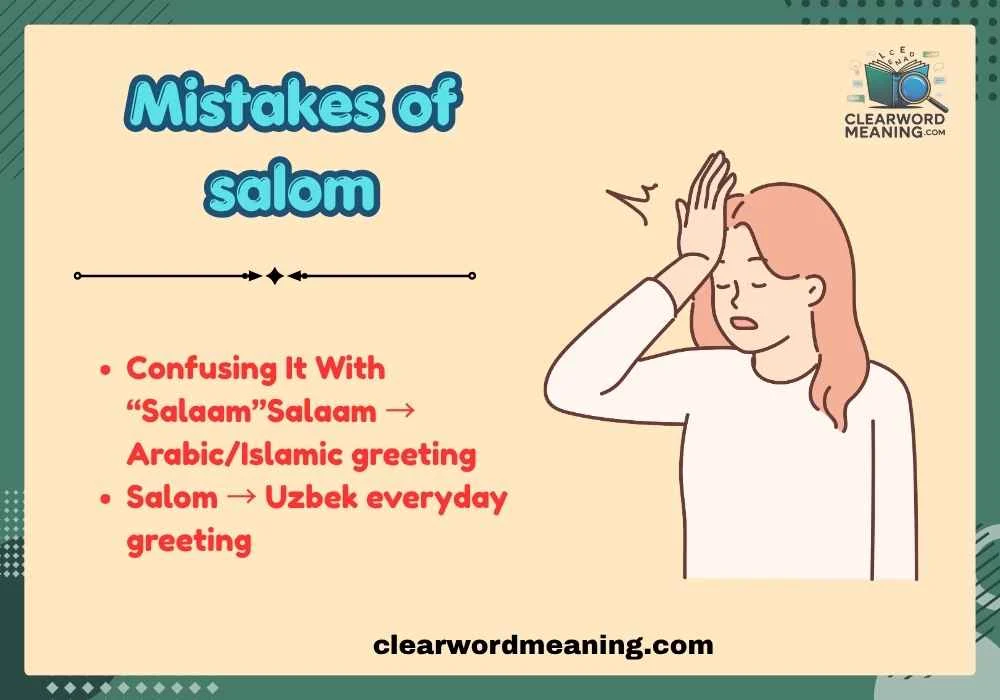
While related, they are used differently:
- Salaam → Arabic/Islamic greeting
- Salom → Uzbek everyday greeting
Related Slangs or Abbreviations
If you’re exploring salom meaning Uzbek greeting, you’ll love these related expressions:
Uzbek Greetings
- Assalomu alaykum – Formal greeting (Peace be upon you)
- Yaxshimisiz? – How are you?
- Nima gap? – What’s up?
Internet Slang Equivalents
You can think of salom as similar to:
- Hi
- Hey
- Yo
- Sup
Internal Linking Suggestions (SEO Boost)
For better SEO performance, link this article to:
Practical Tips: When and Where to Use “Salom”
To fully master salom meaning Uzbek greeting, here’s where it fits best:
Best Situations to Use “Salom”
- Messaging Uzbek friends
- Commenting on Uzbek social media posts
- Traveling to Uzbekistan
- Joining online communities with Uzbek users
Where It’s Commonly Used
- Telegram (very popular in Uzbekistan)
- Instagram comments
- TikTok captions
- Online forums
Quick Usage Checklist
✔ Start conversations with it
✔ Pair it with a follow-up phrase
✔ Use it in casual chats
✔ Keep the tone friendly
FAQs:
What does salom mean in Uzbek?
Salom means hello or hi and is a common greeting used in everyday conversations.
Is salom formal or informal?
It is mostly informal, but still polite enough for general use.
Can I use salom online?
Yes, it’s widely used in texts, social media, and messaging apps in 2026.
Is salom the same as salaam?
Not exactly. They share roots, but salom is Uzbek, while salaam is Arabic.
How do you reply to salom?
You can reply with:
- Salom!
- Salom, qalaysan?
Conclusion:
Understanding the salom meaning Uzbek greeting is more than just learning a word—it’s about connecting with a culture. This simple greeting opens the door to friendly conversations, whether you’re chatting online or meeting someone new.
In 2026, as global communication becomes even more seamless, knowing words like salom helps you stand out as someone culturally aware and approachable. It’s easy to use, widely accepted, and instantly makes your interactions feel more personal.

I am the author, M Brauer, a dedicated and detail-focused professional committed to quality content and clear information. I focus on creating reliable, easy-to-understand material that delivers real value and builds trust with readers.