The word friction shows up everywhere—from science class and workplace conversations to relationships, business discussions, and even social media captions. But depending on the context, the meaning can shift quite a bit.
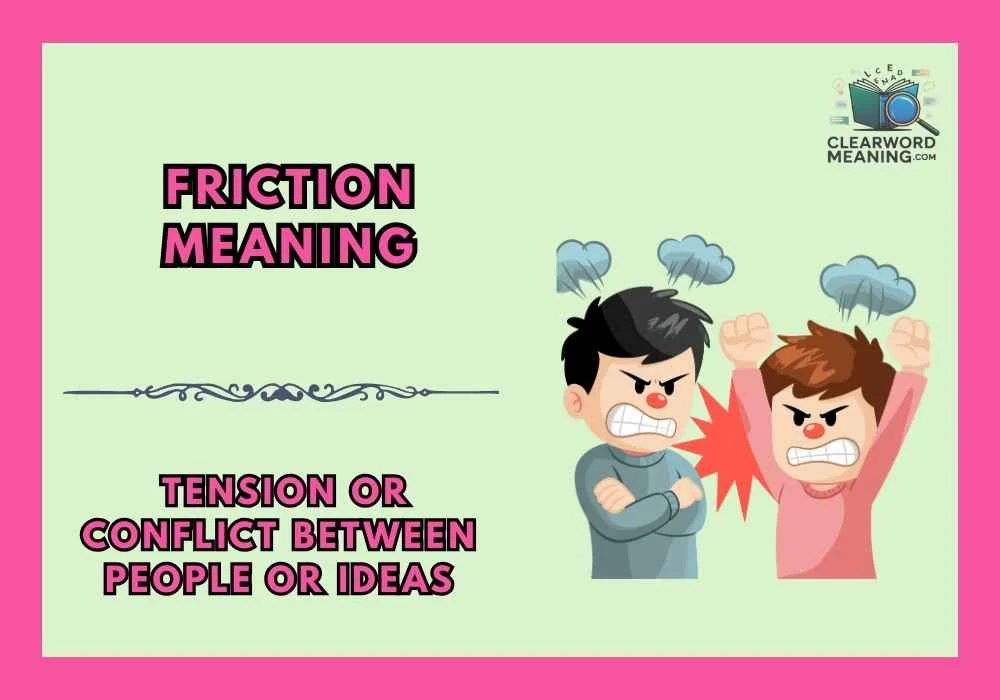
Sometimes friction is literal, like the force between two surfaces. Other times, it describes tension between people, emotional conflict, or anything that slows progress down.
That’s why so many people search for “friction meaning.” They want more than a dictionary definition—they want to understand how real people actually use the word.
This guide breaks it all down in plain English with examples, internet usage, emotional context, and common misunderstandings.
What Does Friction Mean?
At its simplest, friction means:
Resistance between two things that are moving against each other.
That’s the core idea. But the word is used in both physical and figurative ways.
Two main meanings of friction:
| Type | Meaning | Example |
|---|---|---|
| Physical friction | Resistance between surfaces | Tires gripping the road |
| Emotional/social friction | Tension or conflict | Friction between coworkers |
So while the word started in physics, it’s now commonly used in everyday language too.
Friction Meaning in Science
In physics, friction is a force that resists motion when two surfaces touch.
Without friction:
- You couldn’t walk properly
- Cars couldn’t stop safely
- Objects would slide uncontrollably
A simple example:
When you rub your hands together, friction creates heat.
Another example:
Shoes grip the ground because friction prevents slipping.
Types of Friction
Static Friction
Keeps objects from moving initially.
Example:
A heavy box staying still on the floor.
Sliding Friction
Occurs when surfaces move across each other.
Example:
Dragging furniture across tiles.
Rolling Friction
Happens when wheels roll over surfaces.
Example:
A bicycle moving on a road.
Fluid Friction
Resistance caused by liquids or air.
Example:
Air resistance on an airplane.
The Basic Friction Formula
In physics, friction is commonly represented using this formula:
F = \mu N
Where:
- (F) = frictional force
- (\mu) = coefficient of friction
- (N) = normal force
This formula helps explain why rougher surfaces usually create more resistance than smoother ones.
Friction Meaning in Everyday Language
Outside science, friction usually means:
- Conflict
- Disagreement
- Tension
- Difficulty in cooperation
People use it when relationships or situations feel strained.
Example:
“There’s been some friction between management and employees lately.”
That doesn’t mean physical rubbing—it means emotional or professional tension.
Emotional Meaning of Friction
Friction often carries a slightly negative tone.
It suggests:
- Stress
- Resistance
- Misunderstanding
- Clashing personalities
- Obstacles slowing progress
But interestingly, friction isn’t always bad.
Sometimes friction:
- Creates important discussions
- Leads to improvement
- Exposes hidden problems
- Helps people grow
For example:
Creative teams often experience friction when debating ideas, but that can produce stronger results.
Friction Meaning in Relationships
In relationships, friction refers to repeated disagreements or emotional tension.
Common causes:
- Poor communication
- Different expectations
- Stress
- Jealousy
- Personality differences
Example:
“They love each other, but there’s constant friction over money.”
This usage is very common in:
- Relationship advice
- Therapy discussions
- Social media posts
- Workplace communication
Friction Meaning at Work or Business
In professional settings, friction usually means:
- Workflow problems
- Communication barriers
- Team conflict
- Customer frustration
Examples:
- “Too many approval steps create friction.”
- “The app reduces friction during checkout.”
- “There’s friction between departments.”
In business language, reducing friction means making processes smoother and easier.
That’s why tech companies often talk about:
- “frictionless experiences”
- “low-friction onboarding”
- “removing customer friction”
Friction Meaning in Technology and UX Design
In digital products, friction means anything that slows users down.
Examples include:
- Too many login steps
- Confusing navigation
- Slow loading pages
- Complicated checkout forms
Example:
“If users abandon the signup process, friction may be too high.”
This meaning is extremely common in:
- App design
- SEO
- Ecommerce
- User experience (UX)
- Marketing
Friction Meaning in Texting and Social Media
Unlike slang abbreviations, friction keeps its normal meaning online.
People use it to describe:
- Drama
- Awkwardness
- Tension
- Arguments
- Emotional distance
TikTok Example
“There’s friction in the friend group again 👀”
Instagram Caption
“Creative friction makes the best art.”
Twitter/X Example
“Too much friction in modern dating.”
The tone depends heavily on context:
- Serious
- Emotional
- Intellectual
- Professional
Real-Life Conversation Examples
Example 1: Workplace
A: “Why is the project delayed?”
B: “There’s some friction between the teams.”
Example 2: Relationship
“She said the constant friction was exhausting.”
Example 3: Science Class
“Friction helps cars stop safely.”
Example 4: Business
“We need to reduce friction in the checkout process.”
How People Commonly Use the Word Friction
Most modern uses fall into these categories:
- Physics and education
- Relationships
- Workplace conflict
- User experience design
- Business strategy
- Emotional tension
- Team communication
It’s a versatile word because the central idea stays the same:
resistance between forces, people, or movement.
Situations Where “Friction” Should NOT Be Used
Avoid using friction when:
- The disagreement is extremely serious or aggressive
- You mean physical violence
- The situation involves legal accusations
- You want a warm or emotional tone
For example:
Saying “there’s friction” during a major crisis may sound too soft or dismissive.
Friction Meaning Book
In books and literature, friction meaning refers to conflict, tension, or disagreement between characters, ideas, or situations. Writers use friction to create drama, emotion, and excitement in a story. Without friction, a book may feel boring because nothing challenges the characters.
Friction Meaning in Farsi
The friction meaning in Farsi is commonly translated as اصطکاک (Estekak). It describes the resistance created when two surfaces rub against each other. In daily conversation, it can also mean conflict or tension between people.
Friction Meaning in Science
In science, friction meaning refers to the force that resists movement when two surfaces touch each other. Friction helps us walk, drive cars, and hold objects without slipping. Scientists study friction in physics to understand motion and energy.
Friction Meaning in English
The friction meaning in English is the resistance that happens when one object moves against another. It can also describe conflict, tension, or disagreement between people, groups, or ideas.
Friction Meaning Example
A simple friction meaning example is rubbing your hands together to create heat. Another example is a car tire gripping the road while driving. In relationships, friction can mean arguments or misunderstandings between people.
Friction Meaning in Biology
In biology, friction meaning describes the resistance between body surfaces, tissues, or organs when they move against each other. For example, friction occurs in joints, muscles, and blood flow. The body naturally uses fluids like mucus and synovial fluid to reduce friction.
Friction Meaning in Maths
In maths, friction meaning is mostly used in applied mathematics and physics calculations. It refers to the resisting force between surfaces and is measured using formulas involving force, motion, and coefficients of friction.
Friction Meaning in Medical
In medical terms, friction meaning refers to rubbing or resistance between body tissues or organs. Doctors may use the term in conditions like “friction rub,” which is an unusual sound caused by tissues rubbing together inside the body.
Similar Words and Related Terms
Here are words closely related to friction:
| Word | Difference |
|---|---|
| Tension | More emotional |
| Conflict | Stronger disagreement |
| Resistance | Broader obstacle |
| Drama | Informal emotional conflict |
| Disagreement | Mild difference of opinion |
| Hostility | Much more aggressive |
Friction vs Conflict
People often use these interchangeably, but they aren’t identical.
Friction
Usually ongoing, mild, or subtle.
Example:
Small disagreements between coworkers.
Conflict
More direct and serious.
Example:
A heated argument or legal dispute.
Think of friction as “ongoing resistance” and conflict as “active confrontation.”
Common Misunderstandings About Friction
1. Friction always means fighting
Not true. It can simply mean difficulty or resistance.
2. Friction is always negative
Actually, some friction leads to innovation and growth.
3. Friction is only a science term
Modern usage extends far beyond physics.
4. Friction means hate
Not necessarily. Two people can have friction without disliking each other.
Cultural and Internet Context
Online culture uses friction in increasingly modern ways.
You’ll often see it in discussions about:
- Dating apps
- Politics
- Workplace burnout
- Social media drama
- Startup culture
- UX design
- Online communities
Tech companies especially love the term because it sounds more professional than simply saying “problem.”
Popular Search Questions About Friction
What does friction mean emotionally?
Emotionally, friction refers to tension, stress, or repeated disagreement between people.
What is friction in simple words?
Friction is resistance that makes movement, interaction, or progress harder.
What does friction mean in a relationship?
It means ongoing tension, arguments, or emotional strain between partners.
Is friction good or bad?
It can be both. Too much friction causes problems, but healthy friction can improve ideas and communication.
Why is friction important?
In science, friction helps control movement. In life, friction can reveal issues that need attention.
Final Thoughts
Friction is one of those words that works in both literal and emotional ways, which is why it appears in so many conversations today.
In science, it’s the force that resists motion.
In relationships, it’s emotional tension.
In business and technology, it’s anything that creates unnecessary difficulty.
What connects all these meanings is the same core idea:
friction happens when something resists smooth movement or harmony.
Once you understand that central concept, the word becomes much easier to recognize in any context—whether you’re reading a physics textbook, scrolling TikTok, or navigating real-life relationships.

I am the author, M Brauer, a dedicated and detail-focused professional committed to quality content and clear information. I focus on creating reliable, easy-to-understand material that delivers real value and builds trust with readers.