Understanding amicable meaning is more important than ever in today’s digital world where people constantly communicate through chats, emails, and social media.
The term amicable meaning is often used when describing relationships, conversations, or situations that are friendly, peaceful, and without conflict. If you have ever seen this word and felt confused, this guide will clear everything in a simple way.
In this article, we will break down amicable meaning in the easiest language possible so you can use it confidently in real conversations. You will also learn how it applies in texting culture, social media discussions, and even professional communication.
By the end, you’ll fully understand what people mean when they say something is amicable and how amicable meaning is used in real-life scenarios.
Updated for 2026, this guide is designed to help you master the term with clear examples, relatable explanations, and practical usage tips that make learning effortless and engaging.
What Does Amicable Meaning Mean Definition & Origin
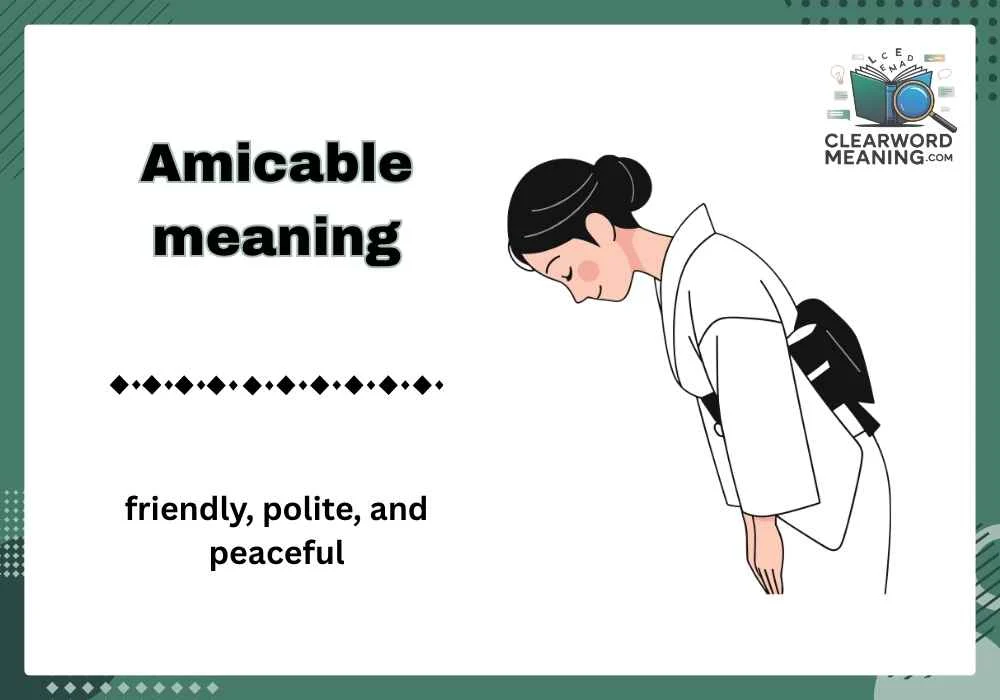
The amicable meaning refers to something that is friendly, polite, and peaceful, especially in situations where disagreement or conflict could exist but does not. In simple words, when people handle something in a calm and respectful way, it is called amicable.
Simple Definition
- Amicable = Friendly and peaceful behavior
- Used mostly in formal or neutral situations
- Commonly describes agreements, relationships, or separations handled without anger
Origin of the Word
The word “amicable” comes from the Latin word amicabilis, which means “friendly” or “like a friend.” It is related to the Latin word amicus, meaning “friend.”
Over time, the word became popular in English to describe situations where people remain polite even when they disagree.
Real-Life Meaning Insight
In modern usage, especially in 2026 digital communication:
- It describes peaceful breakups
- Friendly business agreements
- Calm discussions online
- Respectful endings of arguments
So, the amicable meaning is not just about being nice—it is about maintaining respect even in difficult situations.
How to Use Amicable Meaning in Texts or Chat
In texting and online communication, the word “amicable” is often used in more serious or formal conversations. However, understanding amicable meaning helps you recognize it when others use it.
Common Usage Contexts
You will mostly see it in:
- WhatsApp messages during serious discussions
- Email conversations in workplaces
- Social media explanations of breakups or decisions
- Online forums or professional chats
How People Use It
Here are simple ways people use it:
- “We ended things on an amicable note.”
- “The issue was resolved in an amicable way.”
- “They had an amicable separation.”
Simple Explanation for Chat Use
If someone says something was amicable, they are basically saying:
👉 “We didn’t fight, we handled it peacefully.”
Personal Insight
In everyday texting culture, people rarely use the word casually like slang. Instead, it shows maturity and emotional control in communication. That’s why understanding amicable meaning is useful for both formal and informal digital spaces.
Examples of Amicable Meaning in Conversations
Examples help make everything clearer. Let’s look at how amicable meaning works in real-life conversations.
Example 1: Friendship Situation
A: “Did you and Ali stop talking?”
B: “Yes, but it was amicable. We just had different goals.”
Example 2: Workplace Chat
Manager: “Why did the project end?”
Employee: “It was an amicable decision between both teams.”
Example 3: Relationship Context
A: “Are you still upset after the breakup?”
B: “No, it was an amicable breakup. We respect each other.”
Example 4: Social Media Post
“We decided to part ways amicably and wish each other the best.”
What These Examples Show
- No anger or drama
- Mutual respect is maintained
- Decisions are calm and peaceful
These examples clearly show how amicable meaning is used to describe situations without conflict.
Common Mistakes or Misunderstandings
Many people misunderstand amicable meaning, especially in casual conversations or online chats.
Mistake 1: Thinking It Means “Close Friends”
Some people think amicable means best friends. That is incorrect. It only means peaceful, not necessarily close.
Mistake 2: Using It for Fun or Slang
Amicable is not slang. It is a formal word, so using it in jokes or casual texting may feel unnatural.
Mistake 3: Confusing It with “Romantic”
Amicable does not mean romantic or emotional connection. It simply refers to behavior, not feelings.
Mistake 4: Overusing It
People sometimes use it incorrectly in every situation:
- Not every disagreement is amicable
- Not every goodbye is amicable
Key Tip
Use the word only when both sides are calm and respectful. That is the true amicable meaning.
Related Slangs or Abbreviations
While “amicable” itself is not slang, there are modern texting phrases that express similar meanings.
Similar Modern Expressions
- “No hard feelings” → No anger after conflict
- “All good” → Everything is fine
- “We’re cool” → Friendly relationship remains
- “Peaceful split” → Calm ending of something
- “Mutual decision” → Both agreed equally
How They Connect to Amicable Meaning
These phrases all reflect the same idea as amicable meaning:
✔ No conflict
✔ Mutual respect
✔ Peaceful communication
2026 Digital Trend Insight
In 2026, people prefer shorter slang expressions like:
- “GG” (good game, used after fair competition)
- “It’s chill” (everything is relaxed)
- “We good” (no issues)
However, “amicable” remains important in professional and serious conversations.
User Intent & Practical Use
Understanding amicable meaning is not just about definitions—it’s about real-life usage.
Where You Will See It Most
- Business emails
- Legal agreements
- Relationship discussions
- Professional networking
- Social media announcements
Why It Matters
Knowing this word helps you:
- Understand formal communication better
- Reply more professionally
- Avoid misunderstandings
- Sound more mature in writing
Practical Example
Instead of saying:
❌ “We broke up without fighting”
You can say:
✔ “We had an amicable breakup”
This sounds more respectful and clear.
FAQs:
What does amicable mean in simple words
It means being friendly and peaceful, especially when ending something or solving a disagreement.
Is amicable used in texting
Yes, but mostly in serious or formal messages, not casual slang chats.
Can amicable describe friendships
Yes, it can describe friendly relationships, but it does not mean best friends.
Is amicable a positive word
Yes, it is a positive word showing respect, calm behavior, and maturity.
What is opposite of amicable
The opposite would be hostile, angry, or unfriendly behavior.
Conclusion
The amicable meaning is all about maintaining peace, respect, and friendliness even during disagreements or endings. It is a powerful word used in both professional and personal communication to show maturity and calm behavior.
In today’s digital world, understanding terms like amicable meaning helps you communicate more effectively and avoid confusion in conversations. Whether you see it in emails, social media posts, or real-life discussions, you now know exactly what it means and how to use it correctly.
If you enjoyed this guide, share your favorite text abbreviation or slang in the comments and keep exploring modern communication trends!

I am the author, Brook, dedicated to creating clear and reliable content that informs and engages readers. With a passion for well-researched and valuable information, I focus on delivering content that is both easy to understand and practical. My goal is to build trust with my audience by providing consistent, accurate, and meaningful material. Whether writing for beginners or experts, I strive to make every piece insightful, engaging, and impactful.