If you’ve searched for “agent meaning,” there’s a good chance you’ve seen the word used in very different situations. Maybe someone called themselves an “agent” in a text message, maybe you heard it in a movie, or perhaps you saw it on TikTok or in gaming culture. The interesting thing about this word is that it changes meaning depending on context.
In everyday English, an agent can be a representative, a secret operative, a person who gets things done, or even a software program working automatically behind the scenes. Online, the word has picked up even more layers thanks to memes, internet slang, gaming communities, and social media trends.
This guide breaks down all the major meanings of “agent” in a simple, practical, and real-world way — including texting meanings, social media usage, slang interpretations, examples, and common misunderstandings people have about the term.
Agent Meaning in Simple Words
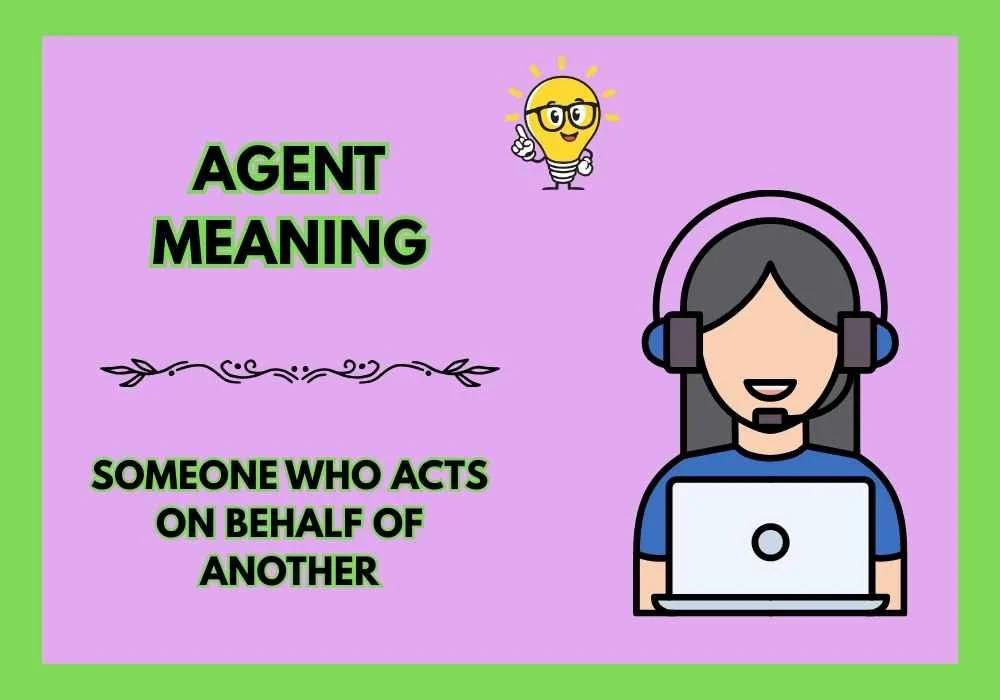
The word agent generally refers to:
A person, thing, or system that acts on behalf of someone else or causes something to happen.
In plain English, an agent is usually someone who performs actions, handles responsibilities, or represents another person or organization.
Quick Examples
- A real estate agent helps people buy and sell homes.
- A talent agent represents actors or musicians.
- A secret agent gathers intelligence.
- An AI agent performs tasks automatically.
- In slang, someone may jokingly call a person “an agent” if they seem suspicious or sneaky.
Because the term is broad, the meaning depends heavily on the conversation.
Full Form of Agent
The word “agent” is not an acronym in standard English. It does not officially stand for anything letter by letter.
However, online users sometimes create humorous fake full forms such as:
- Always Getting Every Necessary Task
- A Guy Executing Necessary Things
These are unofficial and mostly used jokingly in memes or social posts.
Origin and History of the Word Agent
The word comes from the Latin word “agens”, meaning:
“One who acts” or “one who does.”
That root explains why the term appears in so many professional and technical fields. Over time, “agent” evolved into a flexible word used in:
- Law
- Business
- Government
- Entertainment
- Technology
- Gaming
- Internet culture
Today, it can describe both real humans and digital systems.
Agent Meaning in Grammar
In grammar, an agent is the person, animal, or thing that performs an action in a sentence. The agent is usually the subject in active voice sentences. For example, in the sentence
“Sara wrote a letter,” Sara is the agent because she performs the action of writing. Understanding the agent in grammar helps improve sentence structure and language skills.
Agent Meaning in Biology
In biology, an agent refers to a living organism, chemical substance, or factor that causes a biological effect or reaction.
It is often used when discussing diseases, infections, or environmental changes. For example, bacteria and viruses are known as biological agents because they can affect living organisms and spread disease.
Agent Meaning in AI
In artificial intelligence, an agent is a computer program or system that can observe its environment, make decisions, and perform actions automatically.
AI agents are designed to achieve specific goals without constant human control. Examples include virtual assistants, chatbots, self-driving systems, and smart recommendation tools used in modern technology.
Agent Meaning in Chemistry
In chemistry, an agent is a substance that causes a chemical reaction or produces a specific effect. Common examples include oxidizing agents, reducing agents, and cleaning agents.
These substances help change the properties of other chemicals during reactions and are widely used in laboratories, industries, and everyday products.
Agent Meaning in English
In English, the word agent generally means a person or thing that acts on behalf of someone else or causes something to happen.
The term is commonly used in daily conversation, business, law, science, and technology. Depending on the context, an agent can be a representative, helper, operator, or influencing force.
Agent Meaning in Business
In business, an agent is a person or company authorized to act for another business or individual. Business agents often handle sales, negotiations, marketing, or customer relations on behalf of clients.
Real estate agents, travel agents, and insurance agents are common examples found in the business world.
Agent Meaning in Law
In law, an agent is a person legally allowed to act for another person, known as the principal. The agent may sign contracts, make decisions, or represent the principal in legal or financial matters. Agency relationships are important in legal systems because they define rights, responsibilities, and authority.
Agent Meaning in Epidemiology
In epidemiology, an agent is the factor that causes a disease or health condition. This agent may be biological, chemical, physical, or nutritional. Viruses, bacteria, toxins, and harmful chemicals are common disease agents studied in public health and medical research.
Agent Meaning in Texting
In texting, “agent” can mean several things depending on tone.
Common Texting Meanings
| Usage | Meaning |
|---|---|
| “You’re acting like an agent” | Someone seems suspicious or secretive |
| “He’s an agent” | Someone is working for another group/person |
| “Agent mode activated” | Someone is being strategic or sneaky |
| “AI agent” | Automated assistant or bot |
Sometimes the word is playful. Other times it’s sarcastic.
Example Conversations
Friend 1: “How did you know about the surprise?”
Friend 2: “Bro is definitely an agent.”
Text Message:
“Don’t tell Jake anything. He talks like an undercover agent.”
Gaming Chat:
“Need an agent with healing powers.”
In gaming, especially hero-based games, “agent” often refers to a playable character.
Agent Meaning on Snapchat
On Snapchat, the word “agent” is often used jokingly among friends.
Popular Snapchat Uses
- Calling someone suspicious
- Referring to someone who leaks screenshots
- Teasing someone for spying
- Describing someone acting secretive
Example
“Why are you saving every message? You an FBI agent or something?”
This type of humor is extremely common among younger users.
The tone is usually:
- playful
- sarcastic
- teasing
- mildly accusatory
Rarely is it meant literally.
Agent Meaning on TikTok
TikTok gave the word “agent” a whole new personality.
People frequently use it in videos to describe:
- manipulators
- sneaky behavior
- “government agent” jokes
- strategic dating behavior
- undercover-style personalities
Common TikTok Phrases
- “Certified agent behavior”
- “Main character agent arc”
- “Fed agent vibes”
- “Bro moves like an agent”
These phrases are often exaggerated for comedy.
Why It Became Popular
Internet humor loves exaggeration. Calling someone an “agent” instantly creates a dramatic or suspicious vibe without needing a long explanation.
That’s why the term works so well in short-form videos.
Agent Meaning on Instagram
On Instagram, “agent” is commonly used in captions, memes, and comment sections.
Typical Instagram Usage
- Describing strategic people
- Making spy jokes
- Calling out suspicious behavior
- Referring to talent or modeling agents
- Talking about sports agents
Example Captions
- “Agent activities only.”
- “This man definitely works undercover.”
- “No normal person moves like this.”
In influencer culture, the term may also literally refer to:
- brand agents
- talent agents
- management representatives
Different Types of Agents
One reason the word confuses people is because it has many professional meanings.
Here are the most common types.
Real Estate Agent
A professional who helps people:
- buy houses
- sell property
- negotiate deals
Talent Agent
Someone who represents:
- actors
- musicians
- athletes
- creators
Secret Agent
An intelligence operative working undercover.
Popular in movies and pop culture.
AI Agent
A software system designed to:
- complete tasks
- automate work
- answer questions
- make decisions
AI agents became especially popular after the rise of generative AI tools.
Travel Agent
A person who helps organize:
- vacations
- flights
- hotels
- tours
Agent Meaning in Gaming
Gaming communities use “agent” differently from normal English.
In many games, an agent is:
- a playable character
- an operator with unique abilities
- a tactical role
Popular Gaming Contexts
Games like:
- Valorant
- Tom Clancy titles
- spy-themed games
often use the term heavily.
Example
“Which agent do you main?”
This means:
Which playable character do you use most?
Tone and Emotional Meaning of Agent
The emotional tone changes depending on how the word is used.
| Tone | Meaning |
|---|---|
| Serious | Professional representative |
| Funny | Suspicious person |
| Sarcastic | Someone acting fake or sneaky |
| Dramatic | Spy-like behavior |
| Technical | Automated software system |
Understanding tone matters more than the dictionary definition.
That’s why online slang can confuse non-native speakers.
When You Should NOT Use the Word Agent
Even though “agent” is common slang online, there are situations where it can sound rude, paranoid, or offensive.
Avoid Using It:
- in professional meetings
- around law enforcement topics
- when accusing real people
- in serious political discussions
- toward strangers who may misunderstand the joke
Calling someone “an agent” jokingly among friends is very different from making real accusations.
Context matters.
Common Misunderstandings About Agent
It Does NOT Always Mean Spy
A lot of people immediately think of secret agents because of movies.
But most real-world uses are ordinary and professional.
It’s Not Always Slang
Sometimes people mean the literal job title.
Example:
“My sports agent negotiated the contract.”
That’s completely formal.
AI Agents Are Different
Modern AI discussions introduced another meaning entirely.
An AI agent is software capable of:
- planning actions
- interacting with tools
- solving tasks automatically
This has nothing to do with spy culture.
Similar Slang Terms and Related Words
If you’re researching internet slang, these terms are closely related to “agent.”
Related Terms
- undercover
- fed
- op
- informant
- snake
- mole
- bot
- NPC
- handler
These words often appear in memes and social media jokes together.
Internal Linking Opportunities
You could naturally connect this article with:
- fed meaning
- NPC meaning
- bot meaning
- undercover meaning
- op meaning in slang
- handler meaning
Agent vs Spy: What’s the Difference?
People often use these words interchangeably, but they aren’t identical.
| Word | Main Meaning |
|---|---|
| Agent | Someone acting on behalf of another |
| Spy | Someone secretly gathering information |
A secret agent may be a spy, but not every agent is a spy.
For example:
- a travel agent is not a spy
- a talent agent is not undercover
Movies blurred these meanings over time.
Cultural Influence of the Word Agent
Pop culture massively shaped how people interpret the term today.
Major Influences
- spy movies
- action games
- conspiracy memes
- internet humor
- AI technology discussions
Franchises involving secret operations helped make “agent” sound mysterious and cool.
Now the internet uses that vibe for jokes constantly.
Why the Word Agent Feels So Powerful
Some words instantly create imagery.
“Agent” is one of them.
The moment people hear it, they imagine:
- secrecy
- intelligence
- strategy
- hidden motives
- authority
That emotional association explains why the term became popular in memes and social media culture.
It sounds dramatic even in casual conversation.
Real-Life Examples of Agent Usage
Professional Example
“My agent helped negotiate the publishing contract.”
Slang Example
“Bro asked too many questions. He’s definitely an agent.”
AI Example
“This AI agent can automate customer support.”
Gaming Example
“That agent has the strongest abilities in the game.”
Frequently Asked Questions
What does agent mean in slang?
In slang, “agent” usually refers to someone acting suspicious, sneaky, strategic, or undercover-like. It’s commonly used jokingly online.
What does agent mean on TikTok?
On TikTok, “agent” often describes someone behaving secretly, manipulatively, or dramatically in a humorous way.
Is agent a bad word?
No. The word itself is neutral. Depending on tone, it can sound professional, playful, sarcastic, or suspicious.
What does FBI agent mean in texting?
People jokingly say “FBI agent” when someone asks too many questions, saves chats, screenshots messages, or behaves like they’re investigating others.
What is an AI agent?
An AI agent is software designed to perform tasks independently using automation, reasoning, or artificial intelligence tools.
What does agent mean in gaming?
In gaming, an agent is often a playable character with specific skills, abilities, or tactical roles.
Does agent always mean spy?
No. Most uses of “agent” have nothing to do with spying. Many agents work in business, entertainment, real estate, travel, or technology.
Final Thoughts on Agent Meaning
The word “agent” has evolved far beyond its original dictionary definition. Depending on where you hear it, it might describe a professional representative, a secretive person, a gaming character, or even advanced AI software.
That flexibility is exactly why the term stays popular across social media, texting, gaming, and modern internet culture.
In casual online conversations, the word usually carries a humorous or suspicious tone. In professional settings, though, it keeps its traditional meaning connected to representation and responsibility.
The key to understanding “agent” correctly is paying attention to context, tone, and platform usage. A TikTok comment, a business email, and a gaming chat can all use the exact same word in completely different ways.

I am the author, Mitchell, passionate about creating engaging and reliable content that adds real value to readers. With a focus on clarity, accuracy, and insight, I aim to make complex topics easy to understand. I believe in delivering well-researched, practical information that builds trust and helps my audience make informed decisions. Every piece I write is crafted to be informative, meaningful, and impactful, reflecting my commitment to quality and consistency.