Have you ever texted a friend something like “Bro, everything tastes off today 😩” and someone replied, “Sounds like dysgeusia”? If that word stopped you mid-scroll, you’re not alone.
Understanding the dysgeusia meaning is important not just for health awareness, but also because people now casually use medical and technical words in texts, chats, memes, and online discussions. In modern internet culture, knowing what these terms mean helps you avoid confusion, embarrassment, or spreading wrong info.
This guide is Updated for 2026, written in simple, human language, and designed to help you understand what dysgeusia means, how people talk about it online, and how it’s often misunderstood in chats and social media.
What Does Dysgeusia Mean? (Definition & Origin)

Dysgeusia Meaning in Simple Words
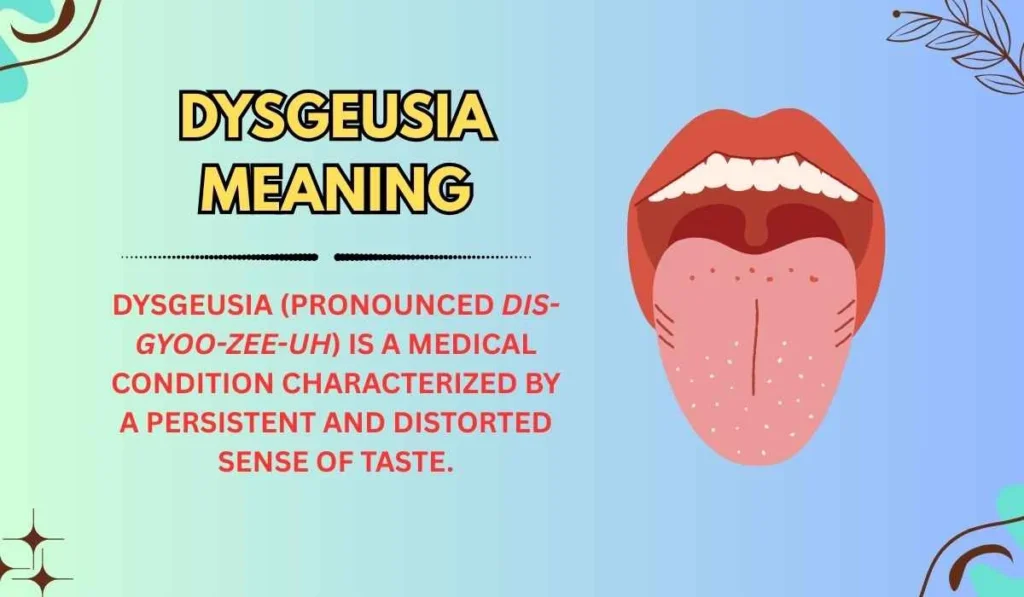
Dysgeusia means a distorted or altered sense of taste. When someone has dysgeusia, food may taste:
- Bitter
- Metallic
- Sour
- Foul
- Completely different than usual
In short, your taste buds are working—but not correctly.
Simple definition:
Dysgeusia = when food doesn’t taste the way it should
Origin of the Word Dysgeusia
The word dysgeusia comes from Greek:
- “Dys” = bad or abnormal
- “Geusis” = taste
So, the literal meaning is “bad taste sensation.”
This term is commonly used in:
- Medical conversations
- Health forums
- Online symptom discussions
- Casual chats after COVID-era awareness
Why Dysgeusia Became Popular in Online Chats

Before 2020, most people never used or heard the word dysgeusia. But after global health discussions, the term entered everyday internet language.
Now you’ll see it used on:
- WhatsApp chats
- Reddit threads
- Twitter X posts
- TikTok health videos
- Meme captions
People often drop it casually to sound informed or relatable.
How to Use “Dysgeusia” in Texts or Chat
Correct Way to Use Dysgeusia
In casual texting, dysgeusia is usually used to explain why food tastes weird.
Correct usage examples:
- “Coffee tastes so metallic today, might be dysgeusia.”
- “Ever since I got sick, I’ve had dysgeusia 😭”
- “Not enjoying food lately, probably dysgeusia.”
Casual vs Medical Tone
Medical tone (formal):
“The patient reports persistent dysgeusia following treatment.”
Casual chat tone:
“Why does pizza taste awful today? Dysgeusia is wild.”
Knowing the tone helps you avoid sounding too serious—or too careless.
Examples of Dysgeusia in Conversations
Real-Life Text Chat Examples
1 Example (Friends Chat):
A: “This chocolate tastes like metal 💀”
B: “That’s dysgeusia, not the chocolate.”
2 Example (Social Media):
“Day 5 of dysgeusia. Even water tastes suspicious.”
3 Example (Funny Usage):
“Ordered my fav burger but dysgeusia said NO today.”
Relatable Scenario
Imagine craving your favorite biryani 🍛, taking the first bite, and thinking:
“Why does this taste… wrong?”
That moment? That’s exactly how people experience dysgeusia, and why they mention it in chats.
Common Causes People Mention Online
When people talk about dysgeusia in texts or forums, they usually link it to:
- Viral infections
- Medications
- Dental issues
- Stress or anxiety
- Smoking or vaping
- Sinus problems
Online, you’ll often see messages like:
“Antibiotics gave me dysgeusia 😐”
Common Mistakes or Misunderstandings
Mistake 1: Confusing Dysgeusia with Loss of Taste
Many people think dysgeusia means no taste at all, but that’s incorrect.
- Dysgeusia = altered or bad taste
- Ageusia = complete loss of taste
💡 This confusion is extremely common in chats and comments.
Mistake 2: Using It for Bad Cooking
Some people jokingly say:
“This food is dysgeusia-level bad.”
While funny, dysgeusia is not about food quality, but about your taste perception.
Mistake 3: Assuming It’s Always Serious
In texts, dysgeusia is often temporary. Not every mention means a serious health issue—sometimes it’s just a short-term taste change.
Related Slangs or Abbreviations
While dysgeusia itself isn’t slang, it’s often mentioned alongside modern chat terms:
- IMO – In my opinion
- Lowkey – Slightly or secretly
- FR – For real
- SMH – Shaking my head
- TF – Expressing confusion
Example:
“Lowkey think I’ve got dysgeusia FR 😩”
How Dysgeusia Is Used on Social Media (2026 Trend)
In 2026, health-aware content is trending. People casually discuss symptoms using correct terminology.
Popular formats include:
- TikTok mini health vlogs
- Twitter symptom updates
- Reddit recovery threads
Example post:
“Week 2 post-flu and dysgeusia is still messing with my taste buds.”
How to Use Dysgeusia Correctly (Quick Guide)
Use dysgeusia when:
✔ Talking about altered taste
✔ Explaining food tasting metallic or bitter
✔ Discussing recovery or side effects
✔ Chatting in health-related conversations
Avoid using it when:
❌ You just dislike food
❌ Complaining about bad cooking
❌ Making fun of someone’s meal
FAQs:
1. What is the simple meaning of dysgeusia?
Dysgeusia means having an abnormal or unpleasant sense of taste, where food tastes different than usual.
2. Is dysgeusia the same as loss of taste?
No. Dysgeusia changes taste, while loss of taste (ageusia) removes it completely.
3. Can dysgeusia be temporary?
Yes. Many people experience temporary dysgeusia due to illness, medication, or stress.
4. Is dysgeusia commonly used in texting?
Yes, especially in health-related chats, memes, and online discussions since people are more health-aware now.
5. Can I use dysgeusia in casual conversation?
Absolutely. Just make sure you’re using it to describe altered taste, not bad food quality.
Conclusion:
Understanding the dysgeusia meaning helps you communicate more clearly in both real-life conversations and online chats. Instead of saying “food tastes weird,” you now know the exact word—and how to use it properly.
As medical terms continue blending into everyday texting culture, knowing their meanings keeps you informed, confident, and relatable. Whether you’re chatting with friends, posting online, or reading forums, dysgeusia is a word you’ll recognize instantly now.

I am the author, Mitchell, passionate about creating engaging and reliable content that adds real value to readers. With a focus on clarity, accuracy, and insight, I aim to make complex topics easy to understand. I believe in delivering well-researched, practical information that builds trust and helps my audience make informed decisions. Every piece I write is crafted to be informative, meaningful, and impactful, reflecting my commitment to quality and consistency.