Debit Card Meaning is simple, but understanding how it works can completely change the way you manage your money online and offline. A debit card lets you pay directly from your bank account without carrying cash, making transactions fast, secure, and incredibly convenient.
Whether you are shopping online, withdrawing cash from ATMs, or paying bills instantly, knowing the real Debit Card Meaning helps you avoid confusion and use your finances more wisely.
In this guide, you will discover the essential features, hidden benefits, daily uses, and key differences between debit and credit cards in the most powerful and easy-to-understand way.
If you are a student, beginner, or online shopper, this complete explanation will help you master modern banking quickly.
What Does Debit Card Meaning Actually Mean?
The debit card meaning refers to a bank-issued payment card that allows you to access and spend money directly from your bank account.
Instead of borrowing money (like a credit card), a debit card uses your existing balance in real time.
Simple Definition:
A debit card is a payment card linked to your savings or current account that lets you:
- Withdraw cash from ATMs
- Pay in stores
- Shop online
- Transfer money digitally
Key Idea:
👉 If you have money in your account you can spend it
👉 If you don’t → the transaction will usually fail (unless overdraft is enabled)
Where It Comes From
Debit cards were introduced as part of banking modernization to replace frequent cash withdrawals. Over time, they evolved into smart chips, contactless cards, and digital wallet integrations (like Apple Pay and Google Pay).
How Does a Debit Card Work?
Understanding how a debit card works helps you use it more confidently.
1. Card is Linked to Your Bank Account
When your bank issues you a debit card, it is directly connected to your:
- Savings account
- Current account
2. You Make a Payment
You swipe, insert, or tap your card at:
- ATMs
- POS machines in stores
- Online payment gateways
3. Bank Verifies Your Balance
The bank checks:
- Do you have enough money?
- Is the card valid?
- Is the transaction safe?
4. Money is Deducted Instantly
If everything is fine:
- The amount is immediately deducted from your account
- Merchant receives payment confirmation
5. Transaction is Completed
You receive:
- SMS alert
- App notification
- Receipt (optional)
👉 This entire process usually takes just a few seconds.
Types of Debit Cards You Should Know (2026 Update)
Not all debit cards are the same. Banks offer different types depending on features and usage.
1. Standard Debit Card
- Basic card for everyday use
- ATM withdrawals + shopping
2. Contactless Debit Card
- Tap and pay feature
- Faster checkout at stores
3. International Debit Card
- Works globally
- Used for foreign transactions and travel
4. Virtual Debit Card
- Digital-only card
- Used mainly for online shopping
5. Premium Debit Card
- Higher withdrawal limits
- Extra rewards and perks
How to Use a Debit Card in Real Life
Let’s break down where and how you can actually use your debit card in daily life.
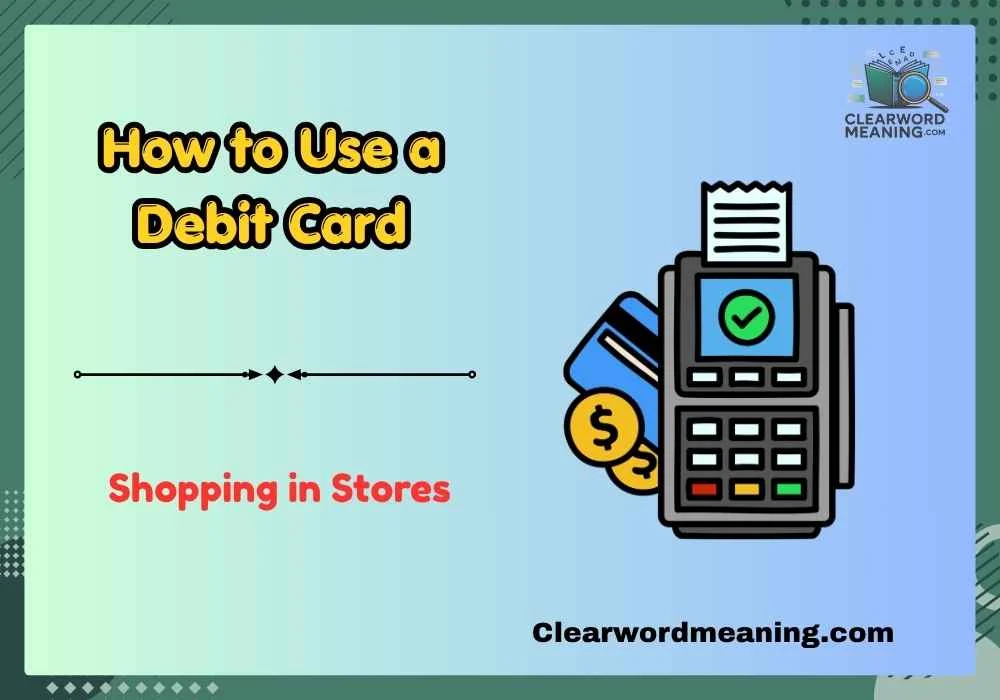
1. Shopping in Stores
- Swipe or tap at POS machines
- Enter PIN for security
2. Online Shopping
- Enter card number, expiry date, CVV
- Verify via OTP (One-Time Password)
3. ATM Withdrawals
- Insert card
- Enter PIN
- Withdraw cash instantly
4. Bill Payments
- Electricity
- Internet
- Mobile recharge
- Subscriptions (Netflix, Spotify, etc.)
5. Money Transfers
- Use mobile banking apps linked to your debit card
Real-Life Examples of Debit Card Usage
To make the debit card meaning even clearer, here are relatable examples:
Example 1: Grocery Shopping
You go to a supermarket, buy groceries worth $50, and swipe your debit card. The money is instantly deducted from your bank account.
Example 2: Online Order
You order shoes online. At checkout, you enter your debit card details and confirm payment using OTP.
Example 3: ATM Cash Withdrawal
You need cash urgently. You insert your debit card into an ATM and withdraw money from your account balance.
Common Mistakes People Make With Debit Cards
Even though debit cards are simple, users often make mistakes that can lead to problems.
1. Sharing PIN or Card Details
Never share:
- PIN number
- CVV code
- OTP
2. Ignoring Fraud Alerts
Always check SMS or app notifications for suspicious activity.
3. Using Public Wi-Fi for Transactions
Avoid making payments on unsecured networks.
4. Not Checking Account Balance
Many failed transactions happen because users forget their balance.
5. Losing Track of Spending
Since money is deducted instantly, overspending can happen easily.
Debit Card vs Credit Card (Key Differences)
Many people confuse debit cards with credit cards. Here’s a simple breakdown:
| Feature | Debit Card | Credit Card |
|---|---|---|
| Money Source | Your bank account | Bank loan/credit |
| Spending Limit | Account balance | Credit limit |
| Interest | No interest | Interest if unpaid |
| Debt Risk | No debt | Can create debt |
| Approval | Easy | Requires credit check |
👉 In short:
- Debit card = your money
- Credit card = borrowed money
Advantages of Using a Debit Card
Debit cards are popular for a reason. Here are the major benefits:
1. No Debt Risk
You only spend what you have.
2. Easy to Use
Works everywhere—online and offline.
3. Instant Transactions
No waiting or approval delays.
4. Secure Payments
Protected by PIN, OTP, and bank security systems.
5. Widely Accepted
Used globally in millions of stores and websites.
Disadvantages of Debit Cards
Despite benefits, debit cards have some limitations:
1. No Credit Building
Doesn’t improve credit score.
2. Limited Fraud Protection (Compared to Credit Cards)
Some banks offer less protection for disputes.
3. Spending is Limited to Balance
No flexibility for emergencies.
4. ATM Fees (in some cases)
Extra charges may apply for out-of-network ATMs.
Related Terms & Abbreviations You Should Know
To better understand banking language, here are related terms:
- ATM – Automated Teller Machine
- PIN – Personal Identification Number
- CVV – Card Verification Value
- IBAN – International Bank Account Number
- POS – Point of Sale machine
- UPI – Unified Payments Interface (popular in digital payments)
How to Keep Your Debit Card Safe
Security is extremely important in 2026 digital banking.
Safety Tips:
- Never share card details
- Enable transaction alerts
- Use secure websites only (https)
- Lock your card from mobile app if lost
- Set spending limits if available
FAQs:
1. What is the simple meaning of a debit card?
A debit card is a bank card that lets you spend money directly from your bank account.
2. Is a debit card safe to use online?
Yes, if you use secure websites and keep your OTP and PIN private.
3. Can I use a debit card without money in my account?
No, unless overdraft is enabled by your bank.
4. What is the main difference between debit and credit cards?
Debit cards use your own money, while credit cards use borrowed money.
5. Can I use a debit card internationally?
Yes, if your card supports international transactions.
6. Do debit cards have limits?
Yes, daily withdrawal and spending limits depend on your bank.
7. What should I do if I lose my debit card?
Immediately block it using your banking app or call your bank.
Conclusion:
To sum it up, the debit card meaning is simple but powerful it’s a financial tool that gives you direct access to your own money anytime, anywhere. It has become an essential part of modern banking, making payments faster, safer, and more convenient than ever before.
Whether you’re shopping online, paying bills, or withdrawing cash, a debit card helps you manage your money easily without debt or complicated processes.
As digital payments continue to grow in 2026 and beyond, understanding how your debit card works will help you make smarter financial decisions and avoid common mistakes.

I am the author, M Brauer, a dedicated and detail-focused professional committed to quality content and clear information. I focus on creating reliable, easy-to-understand material that delivers real value and builds trust with readers.