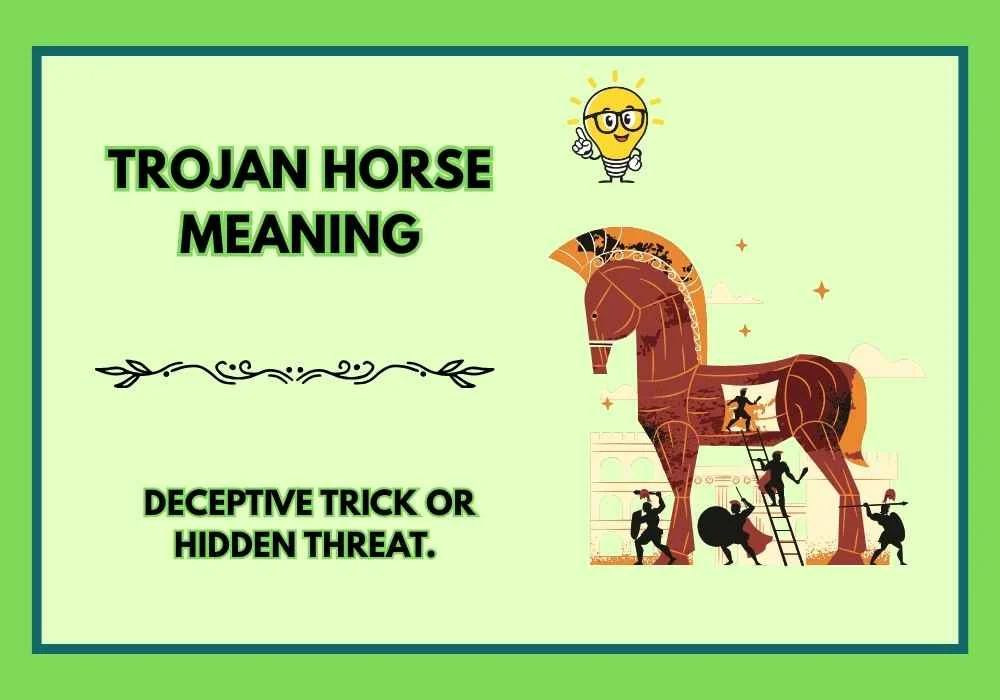
If you’ve ever wondered about the trojan horse meaning in history or modern language, you’re not alone. This term is widely used not only in stories but also in digital security and everyday conversations.
Understanding the trojan horse meaning helps you recognize its impact in technology, pop culture, and even casual texting.
Updated for 2026, this guide dives deep into the origin, usage, and modern examples, giving you a complete understanding of how this term evolved from an ancient trick to a modern-day symbol of hidden surprises.
What Does “Trojan Horse” Mean? (Definition & Origin)
The term “trojan horse” originates from ancient Greek mythology. It refers to the story of the Greeks hiding soldiers inside a large wooden horse to infiltrate Troy. Over time, the term has come to symbolize any deceptive trick or hidden threat.
Digital Meaning
In modern language, especially in cybersecurity, a trojan horse is a type of malware disguised as a legitimate program. It sneaks into computers, giving hackers access without the user knowing. Think of it as a digital sneak attack that looks harmless at first glance.
Everyday Meaning
Beyond tech, people often use trojan horse metaphorically in conversations:
- A surprise gift that contains something unexpected
- A clever tactic in negotiations or competitions
Key Insight: Anytime something seems friendly but hides a risk, it’s like a trojan horse.
How to Use “Trojan Horse” in Texts or Chat

Using trojan horse in messages or social media can make your language clever and relatable. Here’s how:
- Humorous texting: “That cake was a trojan horse… it looked tiny but fed the whole squad!”
- Warning friends online: “That link might be a trojan horse, don’t click it!”
- Metaphorical use: “His friendly advice was a trojan horse for taking over the project.”
Tip: Context is key. Using it in tech discussions or casual jokes will make your messages sound smart and engaging.
Examples of “Trojan Horse” in Conversations

Here are some realistic examples of how people use the term today:
- Friend chat:
- Alex: “He said the meeting would be short…”
- Jordan: “Classic trojan horse, ended up lasting 3 hours!”
- Online forum:
- User1: “Downloaded that game and my antivirus went crazy.”
- User2: “Sounds like a trojan horse, delete it immediately.”
- Social media tweet:
- “This app is a trojan horse, pretending to be fun but stealing data 😅”
Observation: People love using it metaphorically in humor and cautionary contexts.
Common Mistakes or Misunderstandings

Many people misuse trojan horse, especially online. Here’s what to avoid:
- Mistake: Using it for any surprise without hidden intention.
- Correct: Only use it for something deceptively hidden.
- Mistake: Spelling errors like “trojen horse” or “troian horse.”
- Mistake: Confusing it with a simple gift or harmless surprise.
Pro Tip: If you’re referring to tech, ensure your audience understands malware context. If you’re using it metaphorically, make sure the “hidden aspect” is clear.
Related Slangs or Abbreviations
- Malware: General term for harmful software
- Phishing: Tricks people into giving personal info online
- Sneaky move: Casual metaphor similar to a trojan horse
- Trap: Another everyday slang meaning “hidden danger”
Adding these words in conversation can make your tech or slang knowledge sound current and relatable.
FAQs:
What does trojan horse mean in simple words
It’s a trick or something that looks harmless but has hidden dangers, originally from Greek mythology.
Is trojan horse a computer virus
Yes, in digital terms, it refers to malware disguised as legitimate software that sneaks into devices.
Can I use trojan horse metaphorically in text
Absolutely! People often use it to describe hidden surprises, clever tricks, or sneaky actions.
Where is the term commonly used
In texts, social media posts, gaming forums, cybersecurity discussions, and everyday conversations.
How do I avoid being a trojan horse in messages
Be honest and transparent; don’t hide intentions in jokes or advice unless everyone understands the context.
Conclusion
The trojan horse meaning has evolved from an ancient military tactic to a modern-day symbol of hidden threats and clever surprises. Whether in tech, texts, or casual conversations, understanding this term helps you communicate clearly and avoid mistakes.
Remember, when you spot a trojan horse, you can recognize the hidden layer behind the surface. From cybersecurity tips to playful metaphors, this term stays relevant in 2026 and beyond.

I am the author, Brook, dedicated to creating clear and reliable content that informs and engages readers. With a passion for well-researched and valuable information, I focus on delivering content that is both easy to understand and practical. My goal is to build trust with my audience by providing consistent, accurate, and meaningful material. Whether writing for beginners or experts, I strive to make every piece insightful, engaging, and impactful.