In today’s fast-paced digital world, understanding chat abbreviations and internet slang is no longer optional it’s essential.
Whether you’re texting friends, posting on social media, or participating in online forums, knowing what people really mean by certain terms can save you from confusion or even awkward moments. One term that keeps popping up in conversations is “stimulus.”
But what does it really mean? Let’s dive deep into its meaning, origins, and how you can use it correctly in your digital life.
What Does “Stimulus” Mean? (Definition & Origin)
At its core, stimulus generally refers to something that triggers a response or reaction. While it’s often used in scientific, psychological, or economic contexts, it has also found its way into casual online conversations.
- In Psychology: A stimulus is anything that can provoke a reaction in the brain or body. For example, a loud sound may trigger a startle reflex.
- In Economics: The term “stimulus” usually refers to government actions meant to boost the economy, like stimulus checks.
- In Chat/Informal Use: Online, “stimulus” can be used humorously or metaphorically to describe anything that sparks excitement, interest, or a reaction in a conversation.
Origin: The word comes from the Latin word stimulus, meaning “goad” or “incentive,” which perfectly reflects its modern usage—something that gets a reaction from someone.
How to Use “Stimulus” in Texts or Chat
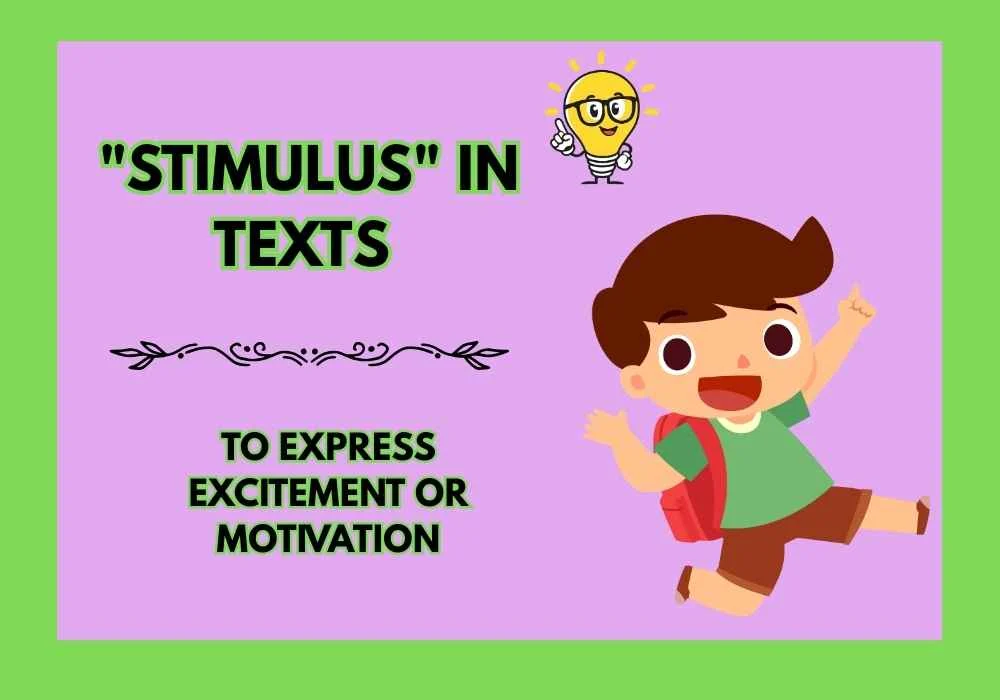
Using stimulus in a conversation depends on your audience and context. Here are some practical ways:
- To express excitement or motivation:
“That meme was the perfect stimulus for my Monday blues 😂” - To react to surprising or stimulating information:
“Her new song was such a stimulus—it got me thinking about my playlist!” - In gaming or hobby chats:
“That boss fight was a real stimulus, kept me on my toes!”
Tips for using it correctly:
- Make sure your audience can relate—avoid using it in highly formal texts unless the context is educational or professional.
- Pair it with emojis or reactions in casual chats to emphasize the feeling.
Examples of “Stimulus” in Conversations
Seeing examples helps solidify understanding. Here’s how stimulus might appear in everyday chats:
- Friend Chat:
A: Did you see the new trailer?
B: Yes! Total stimulus for my weekend binge-watching plans 😂 - Forum/Online Discussion:
“The economic stimulus package was a huge topic this week on r/economics.” - Social Media Post:
“That motivational quote was such a stimulus! Feeling pumped to start my project 💪”
Notice how the word adapts depending on the tone—serious, funny, or casual.
Common Mistakes or Misunderstandings

Many people misuse stimulus online, leading to confusion. Here’s what to watch out for:
- Overusing it in casual chats: Not every exciting thing needs to be called a stimulus—keep it special.
- Mixing contexts: Using it in economic vs. casual settings interchangeably may confuse readers.
- Misinterpreting reactions: A stimulus doesn’t always mean a positive reaction—it can be neutral or negative, like a startling stimulus in psychology.
Related Slangs or Abbreviations
To fully navigate online chats, knowing related terms can help:
- Trigger – Something that causes a strong emotional reaction.
- Boost – Similar to stimulus, often used in gaming or social media contexts.
- Vibes – The feeling or energy a stimulus gives.
- Hype – Excitement generated from a stimulus.
- Motivation – When a stimulus encourages someone to take action.
These words are often used interchangeably with stimulus in casual online conversations.
FAQs:
What is the difference between stimulus and trigger in texting?
A stimulus usually provokes a reaction, which can be positive, neutral, or negative. A trigger often implies a strong, sometimes emotional, reaction.
Can stimulus be used in memes?
Absolutely! Memes thrive on stimuli—funny or relatable content sparks reactions instantly.
Is stimulus commonly used in social media?
Yes, especially in posts, comments, and discussions to express excitement, motivation, or curiosity.
Can I use stimulus in professional texts?
Yes, but only in contexts related to psychology, education, or economics. In casual chats, it’s best to keep it informal or humorous.
How do I know if someone is using stimulus correctly in chat?
Check the context and reaction it generates. If it sparks discussion, laughter, or interest, it’s likely being used correctly.
Conclusion
Understanding stimulus is more than knowing a single word it’s about grasping how reactions, excitement, and motivation are expressed in modern texting and online culture. From psychological roots to casual meme usage, this versatile term adds flavor and clarity to digital conversations.
Next time you see or use the word stimulus, you’ll know exactly how to apply it—and maybe even inspire reactions in your friends!

I am the author, Mitchell, passionate about creating engaging and reliable content that adds real value to readers. With a focus on clarity, accuracy, and insight, I aim to make complex topics easy to understand. I believe in delivering well-researched, practical information that builds trust and helps my audience make informed decisions. Every piece I write is crafted to be informative, meaningful, and impactful, reflecting my commitment to quality and consistency.