In the fast-paced world of texting and online chats, understanding words like “restrain” can be surprisingly important.
Whether you’re chatting with friends, posting on social media, or reading a forum, knowing the correct meaning helps you communicate clearly and avoid misunderstandings.
In this guide, we’ll break down the restrain meaning, explore how it’s used in conversations, highlight common mistakes, and even introduce related slang.
By the end, you’ll be texting like a pro!
What Does “Restrain” Mean? (Definition & Origin)
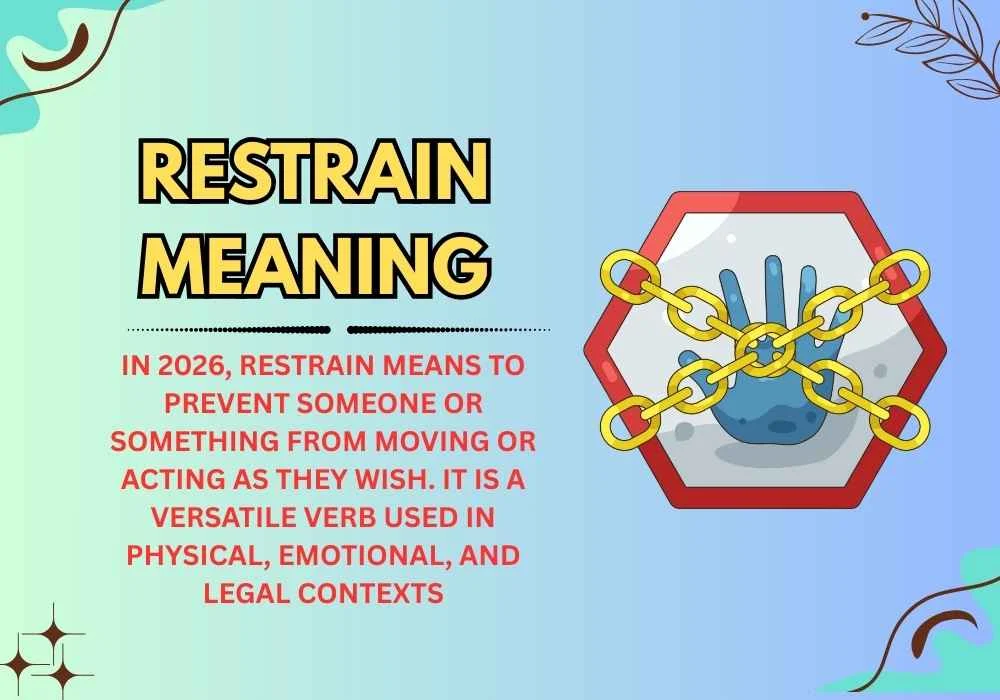
The word “restrain” comes from the Latin word restringere, which means “to bind” or “to hold back.” In modern English, it generally means:
- To hold someone or something back physically
- To control emotions, impulses, or actions
In chats or texting, restrain is sometimes used metaphorically. For example, someone might say, “I had to restrain myself from replying angrily,” meaning they held back their emotions before responding.
Quick Tip: While “restrain” is a formal word, it’s gaining casual usage online in memes, chats, and social media posts.
How to Use “Restrain” in Texts or Chat

Using restrain in messages can make you sound both clear and thoughtful. Here’s how to do it right:
1. Emotional Context
- Example: “I had to restrain my laughter during the Zoom call 😂.”
- Use this when you want to show self-control or hold back emotions.
2. Physical Context
- Example: “He restrained the dog from running into the street.”
- Perfect for situations describing physical control.
3. Humor and Relatability
- Example: “Me trying to restrain myself from buying everything on Black Friday 😅.”
- Online, people often exaggerate the term to make content funny and relatable.
Examples of “Restrain” in Conversations

Seeing real examples makes it easier to understand how restrain works in everyday chats:
- Friend 1: “I wanted to scream at my boss today.”
Friend 2: “Wow, good job restraining yourself 😬.” - Group Chat: “We had to restrain our dog from jumping on the delivery guy lol.”
- Social Media Caption: “Trying to restrain myself from eating all the cookies before Christmas 🎄.”
Notice how these examples mix formal meaning with casual, relatable situations. That’s the key to using restrain effectively in online communication.
Common Mistakes or Misunderstandings
Even experienced texters can misuse restrain. Avoid these common errors:
- Confusing “restrain” with “retain”
- Wrong: “I need to retain my anger.”
- Right: “I need to restrain my anger.”
- Overusing in casual texts
- While it’s fine in chats, using restrain too much can sound stiff. Instead, mix with casual synonyms like hold back, stop, or control.
- Misinterpreting context
- Always consider whether the chat is formal or casual. “Restrained” in memes often means funny self-control, not serious physical restraint.
Related Slangs or Abbreviations
Understanding restrain also means knowing its “chat-friendly” relatives:
- Hold back – informal synonym used in chats
- “I had to hold back my tears 😢.”
- Chill – casual way to imply restraint or control
- “Just chill, don’t overreact 😎.”
- BRB (Be Right Back) – sometimes used humorously as “restraining yourself from replying immediately”
Pro Tip: Mixing formal words like restrain with casual slang can make your texts both clever and readable.
Why “Restrain” Matters in 2026 Text Culture
As texting, social media, and chat apps evolve, words like restrain are more than just dictionary entries—they’re tools to communicate emotion, humor, and context clearly. Updated for 2026, here’s why understanding it is key:
- Avoid Miscommunication: You won’t be misunderstood in sensitive or emotional chats.
- Add Personality: Shows thoughtfulness, humor, or self-control.
- Connect with Trendy Content: Memes and online jokes often reference “holding back” emotions, making restrain highly relatable.
Conclusion
In 2026, mastering words like restrain is part of texting smart. From controlling emotions to adding humor in chats, this versatile word helps you communicate clearly, avoid misunderstandings, and even make your messages more engaging.
Next time you’re texting a friend, posting on social media, or even writing a forum reply, remember: to restrain isn’t just about control—it’s about smart, relatable communication.
Share your favorite text abbreviation in the comments! You might discover new ways to keep your chats fun, clear, and trendy.

I am the author, Mitchell, passionate about creating engaging and reliable content that adds real value to readers. With a focus on clarity, accuracy, and insight, I aim to make complex topics easy to understand. I believe in delivering well-researched, practical information that builds trust and helps my audience make informed decisions. Every piece I write is crafted to be informative, meaningful, and impactful, reflecting my commitment to quality and consistency.