Res judicata meaning is one of those legal terms people often hear in court discussions but rarely understand fully. If you have ever wondered why some cases cannot be filed again after a judge has made a decision, the answer usually lies in res judicata meaning and how this powerful legal rule works.
In simple terms, res judicata prevents the same dispute from being argued in court multiple times once it has been finally decided.
This principle protects courts from endless lawsuits and ensures fairness for everyone involved. In today’s digital age, where legal terms frequently appear in online discussions, forums, and social media, understanding res judicata meaning has become increasingly important.
Explains the concept in clear language, includes real-life examples, and shows how the rule applies in modern legal systems.
What Does Res Judicata Mean? (Definition & Origin)
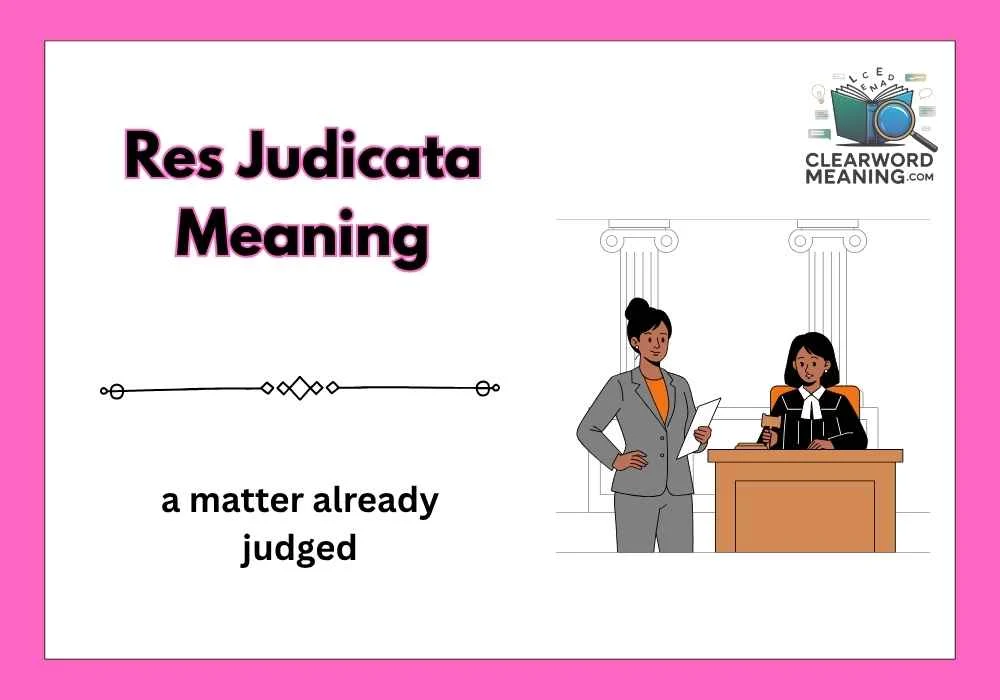
The res judicata meaning comes from Latin and literally translates to “a matter already judged.” In legal systems around the world, this principle means that once a court has issued a final judgment on a case, the same dispute cannot be litigated again between the same parties.
Simple Definition
Res judicata is a legal rule that prevents:
- Re-filing the same lawsuit after a final decision
- Re-arguing the same issue in another court
- Harassing someone with repeated legal actions
In short, once the court has spoken and the case is finalized, the matter is closed.
Why This Rule Exists
Courts use the res judicata doctrine for several important reasons:
- Judicial efficiency – prevents courts from being overloaded with repeated cases
- Legal certainty – ensures decisions remain final and reliable
- Fairness to parties – protects individuals from endless litigation
Without this principle, someone could repeatedly sue another person over the same issue, which would create chaos in the legal system.
Historical Origin
The doctrine of res judicata dates back to Roman law, where courts believed that legal disputes must eventually reach a final conclusion. Over centuries, this rule became a core principle in many modern legal systems, including:
- Common law countries
- Civil law jurisdictions
- International legal frameworks
Today, the rule remains essential in maintaining legal stability and judicial order.
How to Use Res Judicata in Texts or Chat
Even though res judicata meaning comes from formal legal language, people often use it in casual conversations—especially in online debates, legal discussions, and academic forums.
If someone brings up the same issue repeatedly after it has already been settled, another person might say the topic is basically res judicata.
Common Contexts Where It Appears
You may see res judicata used in:
- Legal discussions on social media
- Law school group chats
- Online legal forums
- Political debates
- Court commentary threads
How People Use It in Conversations
Here are a few typical ways the term appears:
- “The court already ruled on this. It’s basically res judicata now.”
- “Stop reopening the debate—it’s res judicata.”
- “That lawsuit can’t move forward because of res judicata.”
Although it’s still mostly used in legal contexts, some people use it humorously in everyday situations when a topic has already been decided.
Example in Casual Context
Friend 1: “Should we rewatch the same movie again tonight?”
Friend 2: “Nope. That decision was made yesterday. Res judicata.”
This playful use shows how legal terms sometimes become part of internet culture.
Examples of Res Judicata in Conversations
Understanding res judicata meaning becomes easier when you see it used in real-life scenarios. Below are some practical examples.
Legal Case Example
Imagine this situation:
- Person A sues Person B over a contract dispute.
- The court reviews the evidence and gives a final judgment.
- Person A later tries to file the same lawsuit again.
In this situation, the court will dismiss the new case because of res judicata.
Workplace Scenario
Employee: “I’m going to complain again about the same issue HR already decided.”
Colleague: “That’s basically res judicata—they already closed the case.”
Online Debate Example
User 1: “We already proved this argument wrong last week.”
User 2: “Exactly. That topic is res judicata now.”
Funny Social Media Example
Roommate 1: “Who should do the dishes tonight?”
Roommate 2: “We settled this yesterday. It’s res judicata—your turn.”
These casual uses show how the phrase sometimes appears in humorous online conversations.
Common Mistakes or Misunderstandings
Many people misunderstand the res judicata meaning, especially when they first encounter the term.
Here are some common mistakes.
Thinking It Applies to Every Case
Not every previous decision triggers res judicata. For the rule to apply, several conditions must exist:
- The case must involve the same parties
- The issue must be the same dispute
- There must be a final judgment from a competent court
If any of these elements are missing, the doctrine may not apply.
Confusing It With Appeal Rights
Some people think res judicata stops appeals. That is incorrect.
An appeal is part of the same legal process and is allowed after a decision.
Res judicata only stops someone from filing a completely new case on the same issue.
Assuming It Works in Informal Arguments
Using res judicata jokingly in everyday debates is fine, but legally speaking, it only applies to formal court decisions.
Ignoring Exceptions
There are rare cases where courts allow a matter to be reopened, such as:
- Fraud in the original trial
- Newly discovered evidence
- Jurisdictional issues
However, these exceptions are limited and carefully evaluated by courts.
Related Legal Terms and Concepts
If you are researching res judicata meaning, you may also come across several related legal concepts.
Understanding these terms can help you better grasp the broader legal framework.
Collateral Estoppel
This doctrine prevents a specific issue from being re-argued if it was already decided in a previous case.
Double Jeopardy
Common in criminal law, double jeopardy prevents someone from being tried twice for the same crime.
Stare Decisis
This principle means courts should follow previous legal precedents when deciding new cases.
Final Judgment
A final judgment is the court’s definitive ruling that ends a legal dispute.
Suggested Internal Linking Topics
For a blog focused on slang or legal terminology, you could link to articles such as:
- Legal terms explained in simple English
- Common Latin phrases used in law
- What “prima facie” means
- Understanding “habeas corpus”
These internal links help readers explore more related legal concepts.
FAQs
What does res judicata mean in simple words
In simple terms, res judicata means that once a court has made a final decision on a case, the same issue cannot be brought to court again between the same parties.
Why is res judicata important in law
This rule protects courts from repeated lawsuits and ensures legal disputes eventually reach a final conclusion. It also protects individuals from being sued repeatedly over the same matter.
Is res judicata used only in civil cases
It is most common in civil law, but similar principles can appear in criminal law through rules like double jeopardy, which prevents repeated prosecution for the same crime.
Can a case ever bypass res judicata
In rare circumstances, courts may reopen a matter if there is strong evidence of fraud, jurisdiction errors, or newly discovered evidence that could change the outcome.
Do people use res judicata outside legal settings
Yes. While it is a formal legal doctrine, some people use the phrase humorously in online discussions or group chats to say that a topic has already been decided.
Conclusion
Understanding the res judicata meaning helps you see how legal systems maintain order and fairness. By preventing the same case from being litigated repeatedly, this doctrine ensures that court decisions remain final, reliable, and respected.
The principle also saves time for courts and protects individuals from facing endless lawsuits. While the term may sound complex at first, the idea behind it is actually simple: once a dispute has been properly judged, it should not be reopened again.

I am the author, M Brauer, a dedicated and detail-focused professional committed to quality content and clear information. I focus on creating reliable, easy-to-understand material that delivers real value and builds trust with readers.