If you’ve seen the term No Sabo Kid Meaning online and felt confused, you’re not alone this viral slang is taking over social media fast.
In today’s digital culture, language evolves quickly, and this phrase has become one of the most controversial, trending, and widely discussed terms among younger audiences.
In simple terms, it refers to identity, language confidence, and cultural perception but there’s much more behind it than people realize.
This guide breaks down the real meaning, emotional context, and why it has become so viral across platforms like TikTok and Instagram.
What Does No Sabo Kid Mean? Definition and Origin
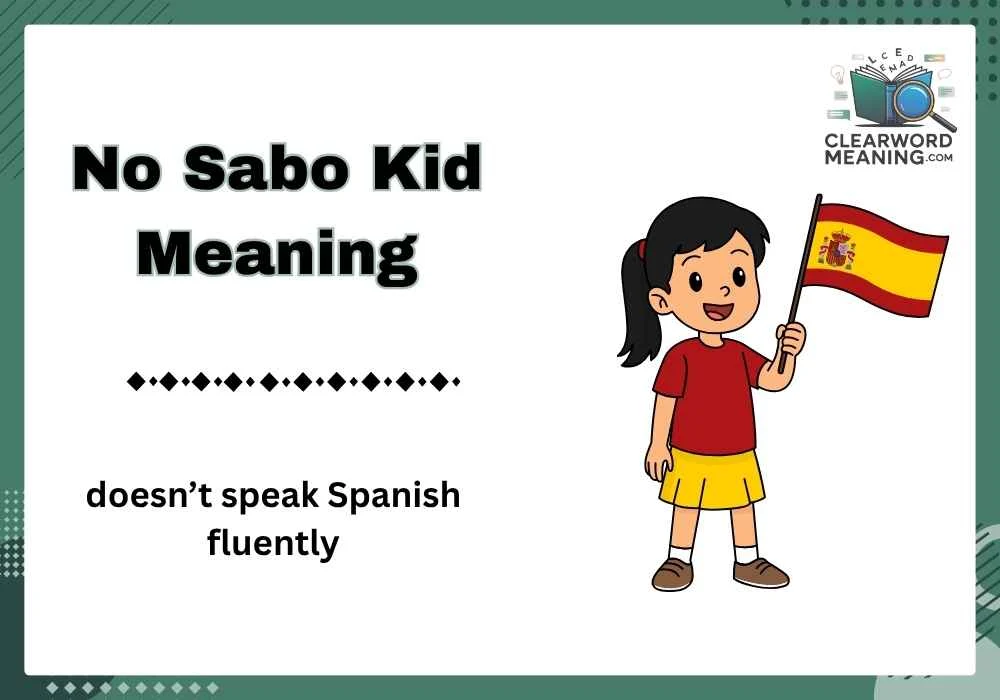
The phrase No Sabo Kid is internet slang often used to describe a Latino or Hispanic person, usually younger, who doesn’t speak Spanish fluently or makes basic grammar mistakes in Spanish.
The term comes from the incorrect phrase “no sabo”, which means “I don’t know” in broken Spanish.
The grammatically correct phrase is “no sé.”
People started using No Sabo Kid online as a humorous label for second-generation Hispanic kids who grew up in English-speaking homes and may understand some Spanish but struggle to speak it correctly.
The cultural origin
The phrase became popular on:
- TikTok videos
- Latino meme pages
- Instagram reels
- X posts
- Reddit cultural discussions
- Family joke content
It’s often tied to relatable moments like:
- Mispronouncing Spanish words
- Mixing English and Spanish
- Forgetting simple vocabulary
- Family members teasing younger relatives
In many cases, it’s used playfully and culturally, but context matters because it can sometimes feel insulting.
How to Use No Sabo Kid in Texts or Chat
You’ll mostly see No Sabo Kid used in jokes, memes, and casual conversations.
Common texting usage
Here’s how people might use it naturally:
- “Bro said yo no sabo 😭 total No Sabo Kid moment.”
- “I understood grandma but couldn’t reply in Spanish… I’m such a No Sabo Kid.”
- “TikTok keeps exposing my No Sabo Kid side.”
The phrase works best in:
- Funny self-jokes
- Meme captions
- Cultural identity posts
- Family chat humor
- Latino community content
Best way to use it
The safest way is self-referential humor.
Example:
“I can understand Spanish perfectly but can’t speak it back. Certified No Sabo Kid.”
This makes it relatable rather than offensive.
Examples of No Sabo Kid in Conversations
Here are some real-life style examples that feel natural and human.
Example in family chat
Mom: Why did you say no sabo to your aunt?
Son: I panicked 😭
Mom: Big No Sabo Kid energy.
Example on TikTok comments
“When abuela asks you a question in Spanish and you answer in English = No Sabo Kid starter pack.”
Example in school friend chat
Friend 1: Do you speak Spanish?
Friend 2: Only enough to order tacos 💀
Friend 1: So basically No Sabo Kid vibes.
These examples make the meaning easy to understand in modern texting culture.
Common Mistakes or Misunderstandings
A lot of people misunderstand this slang.
It does NOT always mean someone is “fake”
Some people use it harshly to question someone’s culture or identity, which is unfair.
Not speaking fluent Spanish does not make someone less connected to their heritage.
That’s why this slang should be used carefully.
It can be offensive in the wrong tone
If used to mock someone publicly, it may sound rude.
Bad example:
“You’re not even Latino, you’re just a No Sabo Kid.”
This crosses from humor into judgment.
It’s better as relatable humor
The phrase works best when used for:
- Shared experiences
- Family jokes
- Community memes
- Personal storytelling
Related Slangs or Abbreviations
If you’re learning internet slang, these related terms may also interest readers.
- Spanglish – mixing Spanish and English
- POV – point of view content
- FR – for real
- NGL – not gonna lie
- IYKYK – if you know, you know
- Main character energy – meme identity phrase
- Starter pack – common meme format
Internal linking suggestions
Great related article ideas:
- What Does IYKYK Mean in Text?
- NGL Meaning in Chat
- POV Meaning on TikTok
- Spanglish Meaning in Social Media
These can help improve your topical authority for slang SEO.
Why No Sabo Kid Became So Popular in 2026
The term keeps trending because identity humor is huge online.
In 2026, short-form videos and meme culture made phrases like No Sabo Kid even more viral.
People connect with it because it reflects:
- bilingual struggles
- family expectations
- second-generation experiences
- funny social pressure
- culture-based humor
It feels personal, funny, and highly shareable.
That’s why it performs well on:
- TikTok meme videos
- YouTube Shorts
- Instagram comment culture
- Reddit storytelling threads
Funny and Relatable Real-Life Scenario
Imagine this:
Your grandma asks in fast Spanish:
“¿Ya comiste?”
You freeze for 5 seconds and reply:
“Yes.”
Everyone at the table laughs.
That exact moment is what the internet calls No Sabo Kid behavior.
This is why the phrase feels so relatable—it captures those awkward but funny bilingual moments many people experience.
FAQs
Is No Sabo Kid offensive?
It depends on the tone. As a self-joke or among close friends, it’s usually playful. Used to shame someone, it can feel offensive.
Where did No Sabo Kid come from?
It comes from the incorrect Spanish phrase “no sabo” instead of “no sé.” Social media turned it into a meme phrase.
Is No Sabo Kid only used on TikTok?
No, it’s common on TikTok, Instagram, X, Reddit, memes, and private group chats.
Can I use No Sabo Kid in a funny caption?
Yes, especially if you’re joking about your own bilingual struggles or relatable family moments.
Why is No Sabo Kid trending in 2026?
Because cultural humor, identity memes, and bilingual content are highly viral on modern social media.
Conclusion
The No Sabo Kid Meaning is simple: it refers to someone, often in a humorous cultural way, who struggles to speak Spanish fluently despite Hispanic roots. The phrase became popular because it perfectly captures relatable bilingual moments, family jokes, and meme culture.
The best way to use it is with light humor and respect, especially in self-referential jokes. Since context matters, always avoid using it to shame someone’s identity or language skills.

I am the author, Brook, dedicated to creating clear and reliable content that informs and engages readers. With a passion for well-researched and valuable information, I focus on delivering content that is both easy to understand and practical. My goal is to build trust with my audience by providing consistent, accurate, and meaningful material. Whether writing for beginners or experts, I strive to make every piece insightful, engaging, and impactful.