Have you ever wondered what people really mean when they type great in a chat or text? The great meaning might seem obvious at first, but in modern texting and online conversations, it can carry subtle emotions, tones, or even sarcasm.
Understanding the great meaning is essential if you want to communicate clearly and avoid misunderstandings in your messages. Whether you’re scrolling through social media, texting friends, or engaging in online forums, knowing how to use great correctly can make your conversations more expressive and relatable.
In this guide, updated for 2026, we’ll break down the definition, examples, common mistakes, and even related slang, giving you all the tools to use great confidently in digital communication.
What Does “Great” Mean? (Definition & Origin)
The word great originally comes from Old English grēat, meaning “big” or “large in size or importance.” Over centuries, it evolved to describe something excellent, impressive, or of high quality.
In modern texting and chat, great can have multiple interpretations depending on tone, context, and even emojis. It can express:
- Genuine excitement: “I got the job! — That’s great!”
- Sarcasm or annoyance: “You forgot my birthday again… great.”
- Polite acknowledgment: “We’ll meet tomorrow? — Great!”
The versatility of great makes it one of the most commonly used words in casual digital communication.
How to Use “Great” in Texts or Chat
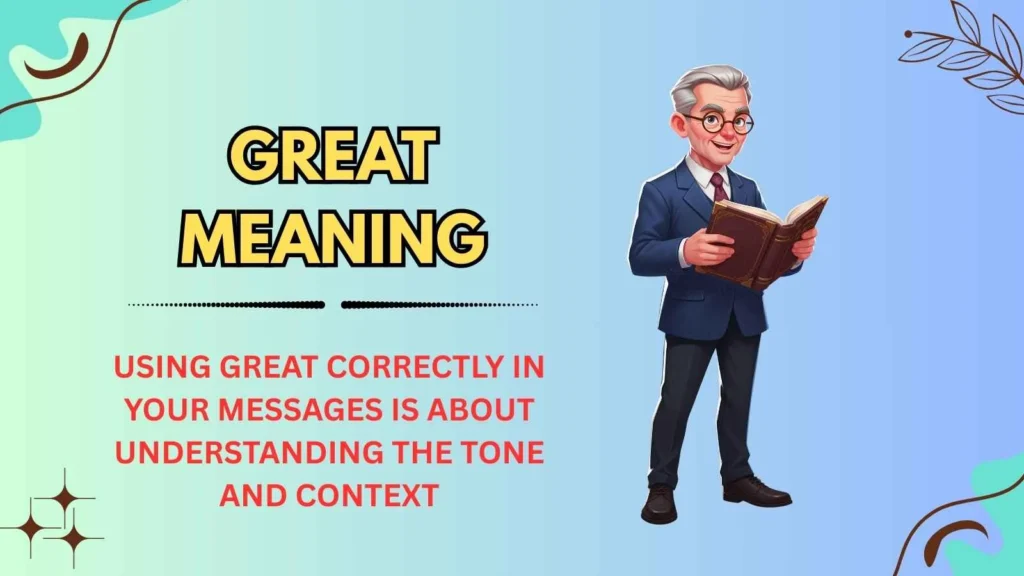
Using great correctly in your messages is about understanding the tone and context. Here’s a simple guide:
Positive Use
- Expressing happiness or approval:
- “Your presentation was great!”
- “I love the new cafe downtown. It’s great!”
Neutral Use
- Acknowledgment without strong emotion:
- “Meeting at 5 PM? Great.”
Sarcastic or Passive-Aggressive Use
- Expressing mild frustration or irony:
- “I spilled coffee on my laptop… great.”
- “You’re late again, great.”
Tip: Pair great with emojis to clarify tone. For example:
- 🙂 = genuine happiness
- 🙃 = sarcasm
- 👍 = casual acknowledgment
Examples of “Great” in Conversations
Here are some real-life texting examples to understand the great meaning in action:
1 Example – Excited Friend:
- Friend: “I got front row tickets to the concert!”
- You: “That’s great! Can’t wait!”
2 Example – Sarcastic Reaction:
- Friend: “I accidentally deleted your file.”
- You: “Oh, great 🙃”
3 Example – Casual Acknowledgment:
- Colleague: “Meeting moved to 3 PM.”
- You: “Great. See you then.”
Pro Tip: The tone often depends on context and punctuation. “Great!” with an exclamation mark usually shows excitement, while “great.” with a period can imply sarcasm.
Common Mistakes or Misunderstandings
Even though great is simple, it’s often misinterpreted. Avoid these mistakes:
- Overusing great: Saying “great” for everything can sound robotic or insincere.
- Ignoring context: A sarcastic great can be misunderstood as positive if read too quickly.
- Missing tone cues: Not using punctuation or emojis can make your intended tone unclear.
Quick Tip: If your goal is clarity, pair great with a few extra words or an emoji.
Related Slangs or Abbreviations
Digital conversations often mix great with other abbreviations or slang:
- GRT – Short form of great in texting (used for speed).
- Gr8 – Popular leetspeak version, combining letters and numbers.
- Awesome / Amazing – Synonyms often used interchangeably with great.
- Lit / Fire – Trendy ways to describe something exciting or top-notch.
By learning these related terms, you can adapt your language to different audiences and platforms.
FAQs:
What does great really mean in texting?
In texting, great can express excitement, approval, sarcasm, or polite acknowledgment depending on context.
Can “great” be used sarcastically?
Yes! When paired with punctuation like a period or an emoji, great can convey irony or frustration.
Is there a shorthand for great in chats?
Yes, people often use gr8 or GRT as quick, informal ways to write great.
How do I know if someone means great positively or sarcastically?
Look at the context, punctuation, and emojis. Exclamation marks usually indicate excitement, while periods or 🙃 suggest sarcasm.
Can great be replaced with other words?
Absolutely! Words like awesome, amazing, lit, or fantastic can often replace great, depending on tone.
Conclusion
Understanding the great meaning in texting and online chats is more than just knowing the dictionary definition. It’s about reading tone, context, and subtle cues that give words life in digital conversations. From expressing excitement to sarcasm, great is versatile, easy to use, and widely understood—just remember to watch for tone and context.
As texting and social media evolve, so do the ways we use great. Experiment with punctuation, emojis, and related slang to make your messages more engaging.

I am the author, Mitchell, passionate about creating engaging and reliable content that adds real value to readers. With a focus on clarity, accuracy, and insight, I aim to make complex topics easy to understand. I believe in delivering well-researched, practical information that builds trust and helps my audience make informed decisions. Every piece I write is crafted to be informative, meaningful, and impactful, reflecting my commitment to quality and consistency.