In today’s fast-moving digital and work-from-anywhere world, you’ll often see the term contingent worker pop up in job posts, HR discussions, LinkedIn threads, and even casual chats. But what does contingent worker meaning actually refer to, and why is it becoming such a big deal in modern work culture?
Whether you’re a student, freelancer, recruiter, or just someone curious about work-related terms, understanding this concept helps you navigate today’s job market smarter. Updated for 2026, this guide breaks it down in simple, human language with real-life examples you can actually relate to.
What Does “Contingent Worker” Mean? (Definition & Origin)
Contingent Worker Meaning Explained Simply
A contingent worker is someone who works for a company without being a permanent employee. Their work is usually temporary, project-based, contract-based, or on-call.
In short:
- They are not on the company’s full-time payroll
- They are hired for a specific time, task, or project
- Their employment depends on business needs (that’s where “contingent” comes from)
Contingent worker meaning in simple words:
👉 A worker hired only when needed, not forever.
Origin of the Term “Contingent Worker”
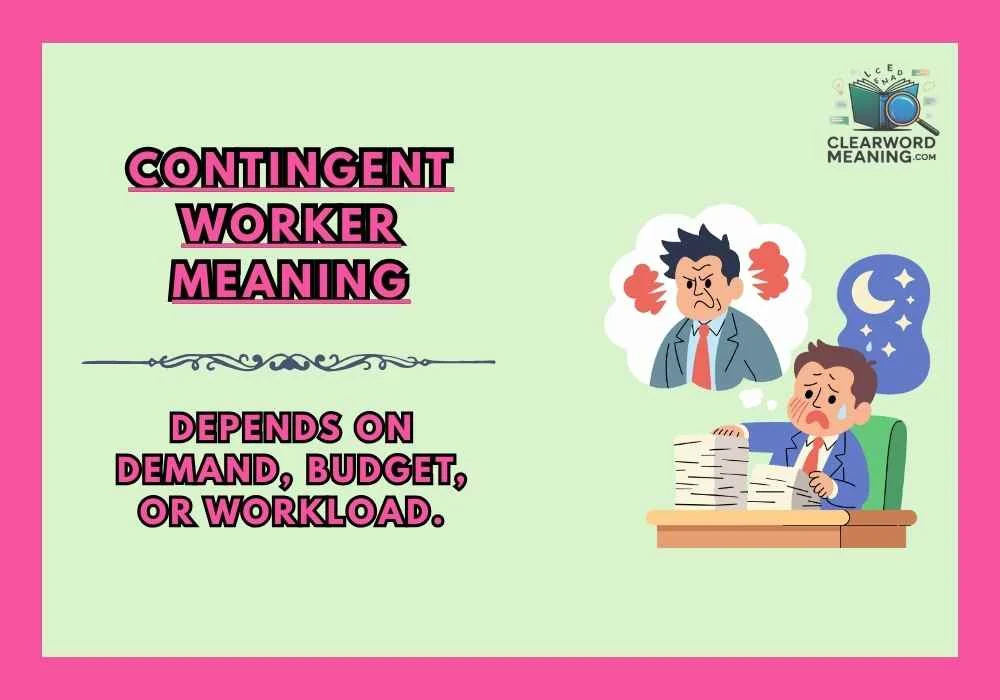
The word contingent comes from Latin contingere, meaning to depend on something else. In the workplace, it means employment that depends on demand, budget, or workload.
This term became popular:
- In corporate HR systems
- During the rise of freelancing and the gig economy
- When companies started hiring flexible talent instead of full-time staff
By 2026, contingent work is no longer “extra” — it’s a core part of how businesses operate globally.
Types of Contingent Workers
Not all contingent workers are the same. Here are the most common types you’ll see today:
Independent Contractors
- Work independently
- Paid per project or contract
- Examples: graphic designers, developers, consultants
Freelancers
- Often work remotely
- Handle multiple clients at once
- Common on platforms like Upwork and Fiverr
Temporary Workers
- Hired for short-term roles
- Often through staffing agencies
- Examples: office temps, seasonal staff
Gig Workers
- Task-based work
- Usually app-driven
- Examples: ride-sharing drivers, delivery partners
On-Call Workers
- Work only when needed
- Common in healthcare and hospitality
All these fall under the broader contingent worker meaning umbrella.
How Contingent Workers Are Used in Modern Workplaces
Companies today use contingent workers to stay flexible and competitive.
Common Situations Where They’re Used
- Short-term projects
- Seasonal workload spikes
- Specialized skill needs
- Cost-saving strategies
- Remote or global hiring
Instead of hiring full-time staff, companies “plug in” talent exactly when needed.
How to Use “Contingent Worker” in Conversations
In Professional Settings
You’ll often hear it in:
- HR meetings
- Job descriptions
- Corporate emails
- LinkedIn posts
Example:
“We’re hiring a contingent worker for a six-month marketing project.”
In Casual or Online Discussions
It may show up in forums, Reddit threads, or career chats.
Example:
“I’m not full-time — I’m a contingent worker, basically contract-based.”
Examples of “Contingent Worker” in Real-Life Conversations
Here are some realistic and relatable examples:
1 Example (Office Talk):
“Since the workload is temporary, management decided to hire a contingent worker instead of a permanent employee.”
2 Example (Freelancer Chat):
“I’ve been a contingent worker for years — projects come and go, but the freedom is worth it.”
3 Example (LinkedIn Post):
“The rise of contingent workers is reshaping the future of work in 2026.”
4 Example (HR Email):
“All contingent workers must complete onboarding documentation before starting.”
Why Companies Prefer Contingent Workers (Pros)
Businesses love contingent workers for several reasons:
- Cost-effective (no long-term benefits required)
- Flexible hiring
- Access to specialized skills
- Quick onboarding
- Scalable workforce
In uncertain economic times, contingent workers help companies stay agile.
Pros and Cons for Contingent Workers
Advantages
- Flexible schedule
- Work-from-anywhere options
- Multiple income streams
- Skill growth across industries
Disadvantages
- No job security
- Limited benefits
- Income instability
- Less career advancement internally
Understanding the contingent worker meaning helps people decide if this lifestyle fits them.
Common Mistakes or Misunderstandings
Many people confuse contingent workers with other roles. Let’s clear that up.
Mistake 1: Contingent Worker = Intern
❌ Wrong. Interns are learners; contingent workers are hired professionals.
Mistake 2: They’re Unskilled
❌ False. Many contingent workers are highly skilled experts.
Mistake 3: It’s Illegal or Informal Work
❌ Not true. Contingent work is legally structured and widely accepted.
Mistake 4: No Career Growth
❌ Many build strong portfolios and long-term success this way.
Contingent Worker vs Full-Time Employee
| Feature | Contingent Worker | Full-Time Employee |
|---|---|---|
| Job Security | Low | High |
| Benefits | Limited or none | Full benefits |
| Flexibility | High | Low |
| Contract Length | Temporary | Permanent |
| Payroll | External or contract-based | Company payroll |
This comparison helps clarify the contingent worker meaning in practical terms.
Related Slangs and Work Abbreviations
While “contingent worker” is a formal term, you may see related slang or shorthand online:
- 1099 worker – US-based contractor
- Gig worker – Task-based worker
- Freelancer – Independent worker
- Contract hire – Short-term professional
- Remote temp – Temporary remote worker
Internal linking tip: You can link to articles explaining freelancer meaning, gig worker meaning, or contract job meaning.
How to Become a Contingent Worker in 2026
If this lifestyle sounds appealing, here’s how most people start:
- Build a skill (writing, design, coding, marketing)
- Create a strong portfolio
- Join freelance platforms
- Network on LinkedIn
- Apply for contract-based roles
By 2026, companies actively seek global contingent talent.
Future of Contingent Workers (2026 and Beyond)
The future looks strong. Trends show:
- Increased remote contingent roles
- AI-driven talent matching
- More legal protections
- Higher pay for specialized skills
Experts predict contingent workers will form a major part of the global workforce.
FAQs:
Is a contingent worker the same as a freelancer?
Not exactly. Freelancers are one type of contingent worker, but not all contingent workers are freelancers.
Do contingent workers get paid hourly or per project?
It depends. Some are paid hourly, others per project or contract.
Can a contingent worker become a full-time employee?
Yes. Many companies convert high-performing contingent workers into permanent staff.
Is contingent work legal in all countries?
Most countries allow it, but laws and protections vary by region.
Is being a contingent worker a good career choice?
It can be great for flexibility and freedom, but it depends on your financial goals and risk tolerance.
Conclusion
Understanding the contingent worker meaning is essential in today’s flexible, digital-first job market. These workers are not temporary in importance — they’re a vital part of how modern businesses function.
From freelancers to contract professionals, contingent workers offer flexibility, specialized skills, and adaptability. At the same time, they face challenges like job security and benefits. Knowing both sides helps you make smarter career or hiring decisions.

I am the author, Brook, dedicated to creating clear and reliable content that informs and engages readers. With a passion for well-researched and valuable information, I focus on delivering content that is both easy to understand and practical. My goal is to build trust with my audience by providing consistent, accurate, and meaningful material. Whether writing for beginners or experts, I strive to make every piece insightful, engaging, and impactful.