Are you often confused when someone drops the word argument in a chat or text? Understanding the argument meaning can save you from misreading messages or taking things too seriously. In modern texting, argument doesn’t always mean a full-blown fight it can be a casual disagreement, a friendly debate, or even playful banter.
This guide breaks down the argument meaning in everyday conversations, shows how to use it properly, and gives you examples that make it super easy to get.
Updated for 2026, this article will make you confident in reading and replying to messages, forums, or social media posts where the word pops up. Say goodbye to confusion and hello to clarity!
What Does “Argument” Mean? (Definition & Origin)
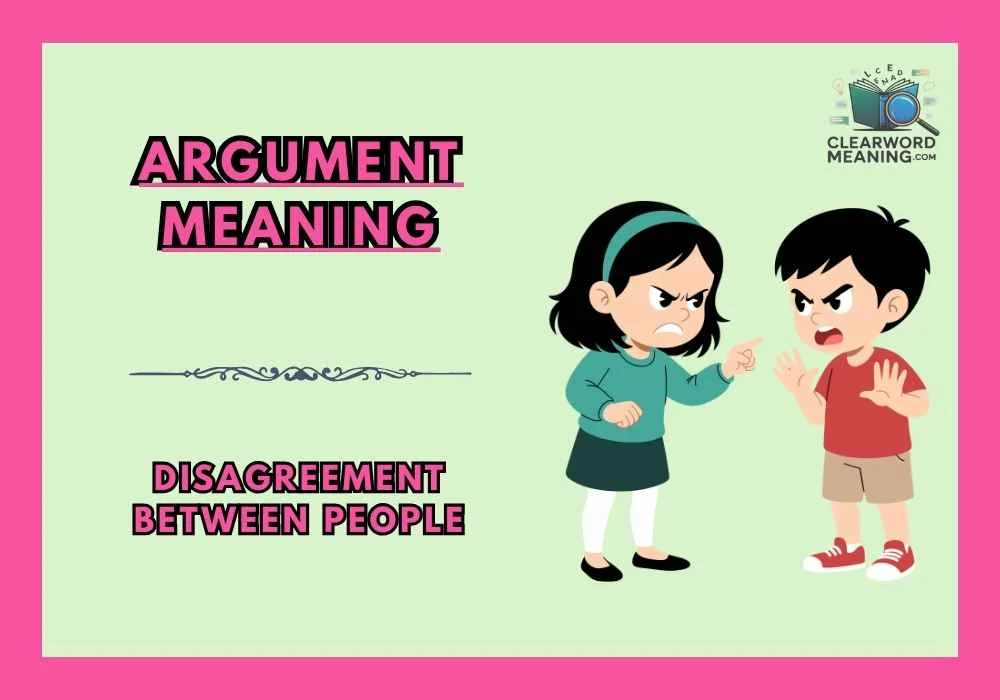
The term argument traditionally refers to a disagreement between people, often involving reasoning or persuasion. In texts and online chats, the meaning can shift slightly depending on tone and context.
- Formal Meaning: A reasoned discussion where two sides present points.
- Casual Chat Meaning: Can be a friendly debate, a minor quarrel, or even sarcastic teasing.
- Origin: Comes from Latin argumentum, meaning “evidence or proof.” Over time, it evolved to signify both serious disputes and informal disagreements in daily conversations.
Understanding this helps you read between the lines in digital conversations where tone and emojis play a big role.
How to Use “Argument” in Texts or Chat
Using argument correctly in messages can make your conversation smoother and prevent misunderstandings. Here’s how:
- Use argument to describe a disagreement politely:
- “We had an argument about the movie, but it was all friendly.”
- Add context for clarity:
- “No need for a big argument; let’s just agree to disagree.”
- Combine with emojis for tone:
- “Minor argument 😅, nothing serious.”
- Avoid overusing it in casual chats—it can sound heavier than intended.
Examples of “Argument” in Conversations
Here are real-life texting scenarios that show argument meaning:
- Friend Group Chat:
- Alex: “I think pineapple on pizza is awesome!”
- Jamie: “Argument! That’s gross 😆”
- Sibling Texting:
- “We had an argument over who gets the last cookie 🍪”
- Social Media DM:
- “Not trying to start an argument, but I think your post is misleading.”
Notice how the word adapts depending on tone and context.
Common Mistakes or Misunderstandings
Many people misinterpret argument in texting:
- Thinking it always means a fight: In casual chats, it’s often playful.
- Using it too aggressively: Saying “We had an argument!” can sound serious even if it’s minor.
- Ignoring context clues: Emojis, punctuation, and tone affect the meaning significantly.
Tip: Pay attention to emojis and phrasing—they often signal whether the argument is serious or lighthearted.
Related Slangs or Abbreviations
Digital conversations often mix argument with slang:
- debate – often a polite or intellectual disagreement
- drama – exaggerates conflict, usually humorous
- salty – someone still annoyed after a small argument
- lol or lmao – signals joking or playful arguments
- clapback – a witty response during an argument
These terms help you interpret messages more accurately in 2026 texting culture.
FAQs:
What does argument mean in texting?
It usually refers to a disagreement, which can range from playful banter to serious discussion depending on context.
Can argument be friendly?
Yes! Many arguments in chats are just debates or teasing among friends, not serious fights.
How do I avoid misunderstandings?
Use tone indicators, emojis, and clarify context when mentioning an argument in texts.
Is argument the same as fight?
Not always. In texting, an argument can be mild or humorous, unlike a real fight.
Are there slang alternatives to argument?
Yes, words like debate, drama, clapback, or salty are often used to describe arguments casually.
Conclusion
Understanding argument meaning in modern texts is key to reading chats correctly and replying confidently. Whether it’s a casual debate, playful banter, or a minor disagreement, knowing how to use argument appropriately prevents confusion.
Remember to watch for context, emojis, and tone—it’s all part of digital communication in 2026. Share your favorite text abbreviation in the comments and see how your friends interpret it too!

I am the author, Brook, dedicated to creating clear and reliable content that informs and engages readers. With a passion for well-researched and valuable information, I focus on delivering content that is both easy to understand and practical. My goal is to build trust with my audience by providing consistent, accurate, and meaningful material. Whether writing for beginners or experts, I strive to make every piece insightful, engaging, and impactful.