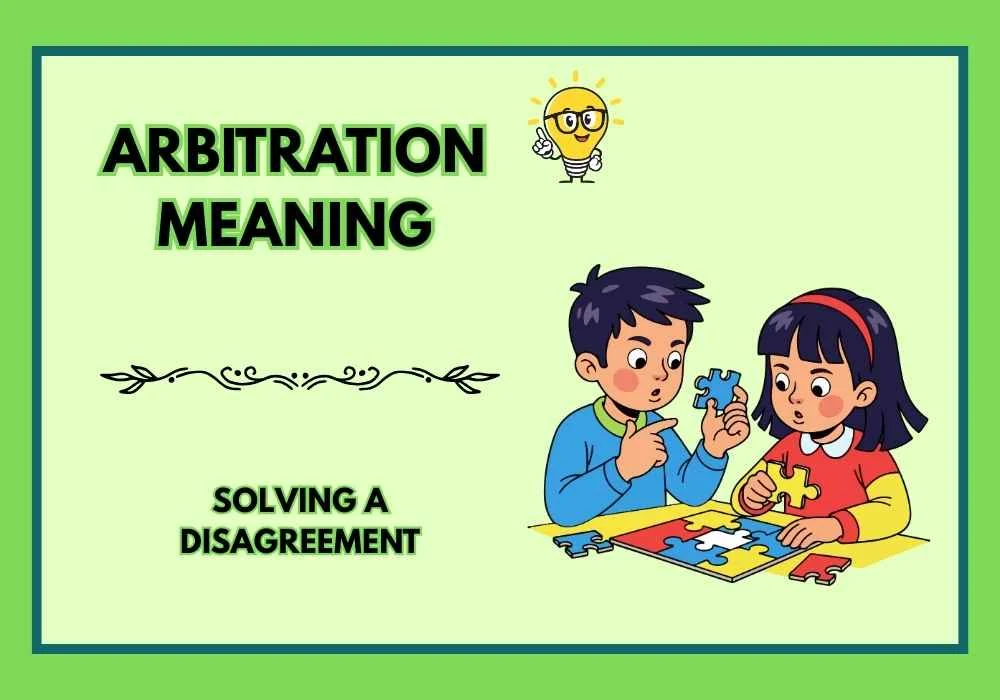
Arbitration meaning is something many people search for when they see this word in messages, online discussions, or legal conversations. In simple terms, arbitration meaning refers to a process where a neutral person helps resolve a dispute without going to court. Today, this word is not limited to law books only.
You may see it in emails, workplace chats, online forums, or even social media debates. Understanding arbitration meaning helps you sound smarter, avoid confusion, and respond correctly in conversations. This guide explains everything in plain language, with real examples, modern usage, and practical tips.
Updated for 2026, this article is written to help beginners, students, employees, and anyone curious about what arbitration really means and how it is used today.
What Does Arbitration Mean? Definition and Origin
Arbitration meaning comes from a formal system of dispute resolution. At its core, arbitration means solving a disagreement with the help of a neutral third person called an arbitrator.
Instead of going to court, both sides agree to let the arbitrator listen to the issue and make a final decision.
Simple Definition
- Arbitration is a private way to settle disputes
- It avoids long court cases
- The decision is usually binding
Origin of the Word
The word arbitration comes from Latin roots related to judgment and decision-making. Over time, it became popular in legal systems and later entered business, workplace policies, and now everyday online conversations.
Why People Use Arbitration
- Saves time
- Costs less than court
- Keeps matters private
- Faster results
In modern chats, arbitration is often used to sound professional or serious when discussing conflicts.
Arbitration Meaning in Texts and Online Chat
While arbitration is a legal term, people now use it casually in digital communication.
In chats, arbitration usually implies:
- Bringing in a neutral person
- Settling an argument fairly
- Making a final call on a disagreement
Common Chat Contexts
- Workplace Slack messages
- Email discussions
- Online forums
- Business WhatsApp groups
Example:
“We should take this issue to arbitration instead of arguing all week.”
Here, the speaker means resolving the problem calmly and fairly.
How to Use Arbitration in Text Messages
Using arbitration correctly makes you sound mature and professional.
Correct Usage Tips
- Use it when talking about conflicts
- Works best in formal or semi-formal chats
- Avoid using it jokingly unless context is clear
Examples in Texts
- “HR suggested arbitration to settle the salary dispute.”
- “Let arbitration decide who is right.”
- “This argument needs arbitration before it gets worse.”
Tone Matters
Using arbitration gives a serious tone. It signals you want fairness, not drama.
Examples of Arbitration in Real Conversations
Workplace Example
Manager: “We can’t agree on this issue.”
Employee: “Let’s go for arbitration and move forward.”
Online Forum Example
User A: “This policy is unfair.”
User B: “Arbitration might help resolve it objectively.”
Casual Chat Example
Friend 1: “We both think we’re right.”
Friend 2: “Fine, let arbitration decide.”
Even casually, arbitration implies fairness and finality.
Arbitration vs Court Cases
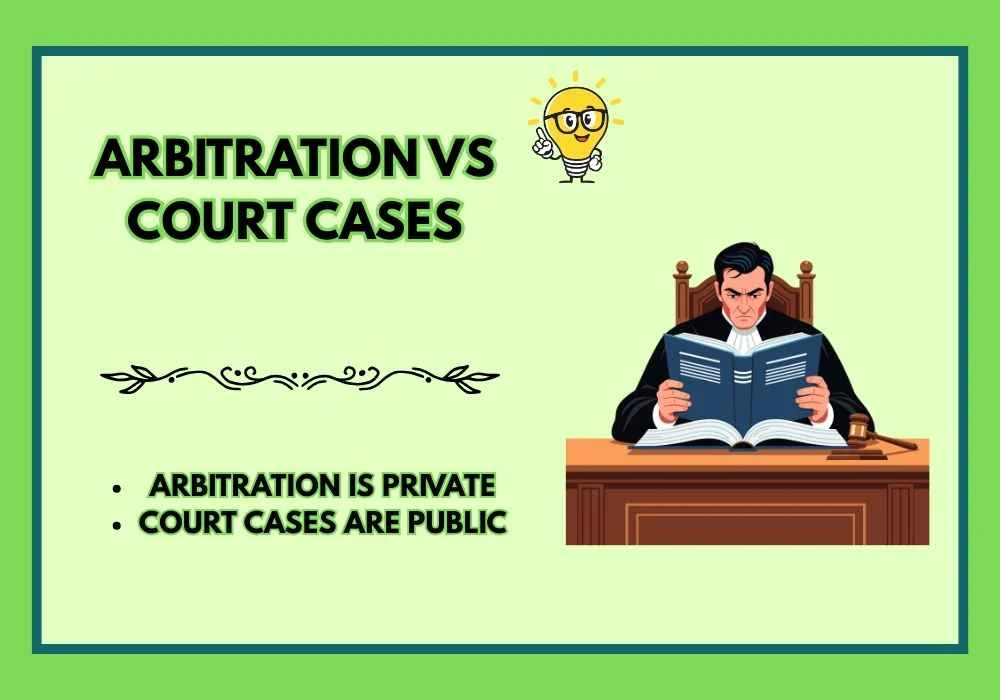
Many people confuse arbitration with lawsuits.
Key Differences
- Arbitration is private
- Court cases are public
- Arbitration is faster
- Court cases take longer
Why People Prefer Arbitration
- Less stress
- Fewer legal formalities
- Faster decisions
This is why the word arbitration appears frequently in contracts and discussions.
Common Mistakes or Misunderstandings
Many people misuse arbitration in chats.
Mistake One
Using arbitration when mediation is meant
Mediation is discussion-based, arbitration is decision-based.
Mistake Two
Thinking arbitration is informal
It is legally structured and serious.
Mistake Three
Assuming arbitration is optional
In many contracts, it is mandatory.
Understanding these differences avoids embarrassment in conversations.
Arbitration Meaning in Social Media and Forums
On platforms like Reddit or X, arbitration is often used metaphorically.
Example:
“Let the mods act as arbitration in this debate.”
Here, arbitration means someone neutral should step in.
Popular Uses Online
- Moderator decisions
- Community disputes
- Policy disagreements
The term adds authority and neutrality to the discussion.
Related Slangs or Abbreviations
Although arbitration itself is not slang, it appears alongside related terms.
Similar or Related Terms
- Mediation
- Settlement
- Resolution
- Judgment
- Decision
In chats, people may shorten sentences like:
“Take it to arb” meaning arbitration in professional circles.
Why Arbitration Is Trending in 2026
With remote work and online businesses growing, arbitration is becoming more common.
Reasons for Popularity
- Online contracts
- Freelance disputes
- International clients
- Faster digital resolutions
People now see arbitration as a smart alternative to courts.
When You Should Use Arbitration in Real Life
Use arbitration when:
- A conflict cannot be resolved directly
- Both parties want fairness
- Legal action seems excessive
Avoid it when:
- Communication can fix the issue
- The matter is minor
Personal Insight on Arbitration
From experience, arbitration often prevents long-term resentment. It creates closure. In chats, even mentioning arbitration can calm heated arguments because it signals fairness and structure.
FAQs:
Is arbitration legally binding
Yes, arbitration decisions are usually final and enforceable by law.
Can arbitration be used outside legal cases
Yes, it is used in workplaces, online platforms, and contracts.
Is arbitration expensive
It is generally cheaper than court cases but may still involve fees.
Can arbitration happen online
Yes, many arbitrations are now conducted digitally.
Is arbitration better than mediation
It depends. Arbitration gives a final decision, mediation focuses on discussion.
Conclusion
Arbitration meaning goes beyond legal textbooks. It represents fairness, neutrality, and resolution in modern communication. Whether you see it in a contract, workplace chat, or online debate, understanding arbitration helps you respond confidently and correctly.
As digital interactions grow, arbitration continues to gain relevance. Updated for 2026, this guide ensures you stay informed and accurate in both professional and casual settings.

I am the author, Mitchell, passionate about creating engaging and reliable content that adds real value to readers. With a focus on clarity, accuracy, and insight, I aim to make complex topics easy to understand. I believe in delivering well-researched, practical information that builds trust and helps my audience make informed decisions. Every piece I write is crafted to be informative, meaningful, and impactful, reflecting my commitment to quality and consistency.