In today’s fast-moving texting, chat, and social media culture, words often lose their depth. But some terms carry timeless meaning, even when they show up in modern conversations, captions, or quotes. One such powerful phrase is agape love.
You may have seen it in WhatsApp messages, Instagram quotes, Bible verses, relationship posts, or deep conversations, and wondered: What does agape love really mean? Why do people still use it in 2026 when slang and abbreviations change so fast?
This Updated for 2026 guide explains the agape love meaning in simple, human language, with real-life examples, modern usage, and practical context so you can understand it and use it correctly without sounding confusing or outdated.
What Does “Agape Love” Mean? (Definition & Origin)
Agape Love Meaning (Simple Definition)
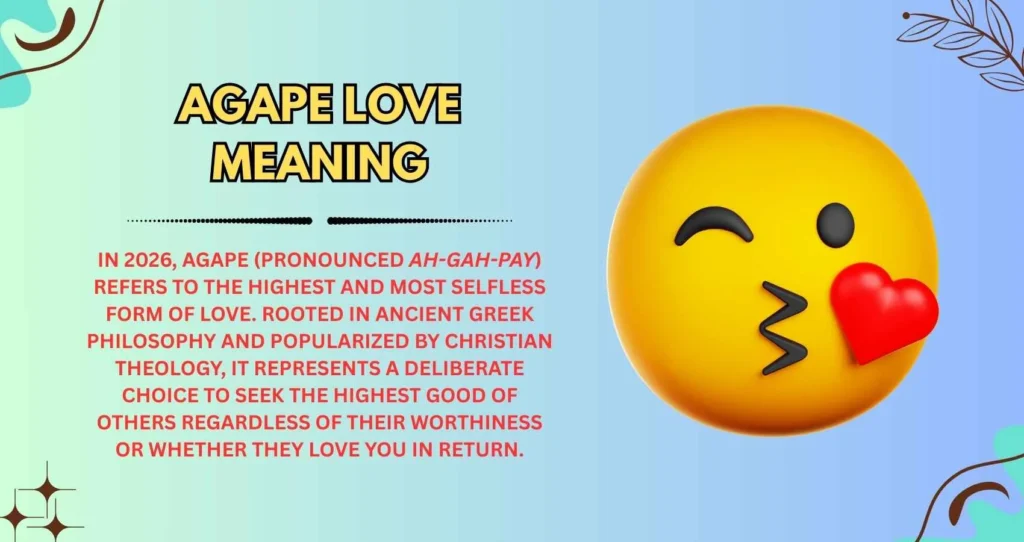
Agape love means selfless, unconditional, and pure love—love that expects nothing in return.
Unlike romantic love or friendship love, agape love is about giving, not receiving. It’s the kind of love that says:
“I care about your well-being, even if I get nothing back.”
In short:
- ❤️ No conditions
- ❤️ No selfish motives
- ❤️ No expectations
Origin of Agape Love

The word agape comes from Ancient Greek, where multiple words existed for love:
- Eros – Romantic or passionate love
- Philia – Friendship or brotherly love
- Storge – Family love
- Agape – Unconditional, divine love
Historically, agape love was used heavily in religious and philosophical texts, especially Christianity, to describe God’s unconditional love for humanity.
But in modern times, its meaning has expanded beyond religion.
Agape Love Meaning in Modern Texting & Chat Culture

Even though agape love isn’t an abbreviation like LOL or BRB, it’s increasingly used in:
- 💬 Deep text messages
- 📱 Instagram captions
- 🧠 Mental health discussions
- 💍 Relationship advice
- 📖 Motivational quotes
In chats, it often signals emotional maturity, empathy, or deep care.
Example:
“What I feel for you isn’t obsession or attachment—it’s agape love.”
This instantly tells the reader the love is pure, respectful, and non-toxic.
How to Use “Agape Love” in Texts or Chat
Using agape love correctly helps you sound thoughtful, emotionally intelligent, and clear.
Best Contexts to Use Agape Love
You can use it when talking about:
- Spiritual growth
- Healing relationships
- Self-love journeys
- Unconditional care
- Letting go without hatred
Correct Ways to Use Agape Love
Here are natural, modern examples 👇
- “I learned to love people with agape love, not attachment.”
- “True parenting is rooted in agape love.”
- “Even after everything, I still choose agape love.”
Where Agape Love Is Commonly Used
- 📱 Text messages (deep or emotional chats)
- 🌍 Social media captions
- 💬 Online forums
- 🧘 Therapy & self-growth spaces
- ⛪ Religious discussions
Examples of Agape Love in Real Conversations
To make the agape love meaning crystal clear, here are relatable conversation examples.
1 Example: Friendship
A: “Why are you helping him after he hurt you?”
B: “Because I believe in agape love, not revenge.”
2 Example : Relationship
“I don’t need control or validation anymore—what I feel now is agape love.”
3 Example: Family
“A mother’s care is the purest example of agape love.”
4 Example: Self-Growth
“Choosing peace over ego is a form of agape love toward yourself.”
Agape Love vs Romantic Love (Important Difference)
Many people confuse agape love with romantic love—but they are not the same.
Key Differences
| Type of Love | Meaning |
|---|---|
| Agape Love | Selfless, unconditional, no expectations |
| Romantic Love | Emotional, passionate, mutual |
| Friendship Love | Loyalty, trust, shared bonds |
👉 Agape love can exist without a relationship, while romantic love usually cannot.
Common Mistakes or Misunderstandings
Let’s clear up popular myths about agape love.
Mistake 1: Agape Love Means Accepting Abuse
Wrong.
Agape love does not mean tolerating disrespect or harm.
✔ You can love someone from a distance.
Mistake 2: Agape Love Is Only Religious
Not true.
While it has spiritual roots, today it’s widely used in psychology, self-help, and relationships.
Mistake 3: Agape Love Is Weak
Actually, agape love is emotionally strong.
It requires self-control, empathy, and maturity.
Related Slangs, Terms & Love Expressions
If you’re exploring the agape love meaning, you may also encounter these related terms:
- Unconditional love – Closely related to agape
- Self-love – Loving yourself without guilt
- Emotional detachment – Caring without obsession
- Pure intentions – Giving without manipulation
- Divine love – Spiritual form of agape love
💡 Internal linking tip: You can link this article with posts like:
- “Unconditional Love Meaning in Text”
- “Self Love Meaning in Chat Culture”
- “Different Types of Love Explained”
Why Agape Love Still Matters in 2026
In an era of:
- 🚀 Fast relationships
- 💔 Emotional burnout
- 📲 Shallow interactions
Agape love stands out as a reminder that love doesn’t always mean possession.
It promotes:
- Emotional health
- Peaceful connections
- Mature communication
- Respectful boundaries
That’s why it’s trending again in 2026, especially in mental health and self-growth communities.
Agape Love Meaning in One Line (Quick Summary)
Agape love means loving selflessly, purely, and unconditionally—without expecting anything in return.
Final Thoughts on Agape Love Meaning (2026 Update)
Understanding the agape love meaning helps you communicate deeper emotions without confusion. Whether you’re texting, writing a caption, or having a heartfelt conversation, using this term correctly shows emotional intelligence and clarity.
In a world obsessed with instant reactions and validation, agape love reminds us that real care is calm, patient, and free from ego. And that’s exactly why this ancient word still feels powerful today.

I am the author, Mitchell, passionate about creating engaging and reliable content that adds real value to readers. With a focus on clarity, accuracy, and insight, I aim to make complex topics easy to understand. I believe in delivering well-researched, practical information that builds trust and helps my audience make informed decisions. Every piece I write is crafted to be informative, meaningful, and impactful, reflecting my commitment to quality and consistency.