In today’s fast-paced digital world, understanding financial and business jargon like “sweat equity” is more important than ever.
Whether you’re a budding entrepreneur, a startup founder, or just curious about investment terms in texts, chats, or online forums, knowing what sweat equity means can save you confusion and help you communicate smarter.
Updated for 2026, this guide will break down everything you need to know in a simple, relatable way.
What Does “Sweat Equity” Mean? (Definition & Origin)
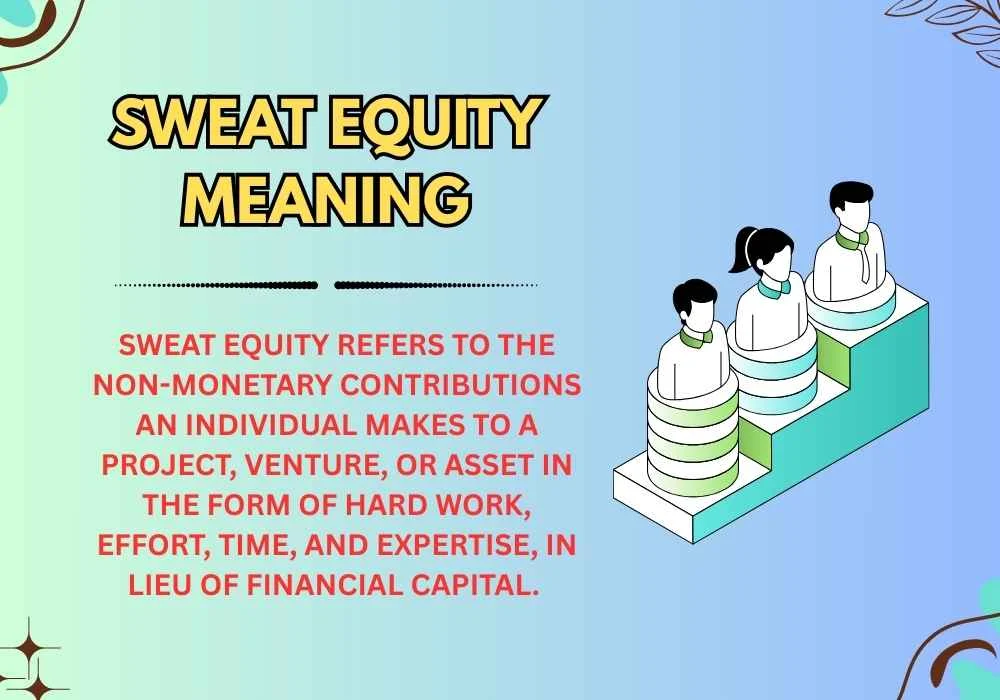
Sweat equity refers to the non-monetary investment you make in a business or project through your time, effort, and skills instead of cash. Think of it as the hard work you put in to increase the value of something you have a stake in.
- Origin: The term became popular in the 1970s during the rise of startups and small businesses, where founders contributed effort rather than money to grow their companies.
- Simple Example: If you start a small bakery and bake all the bread yourself instead of hiring someone, the value of your work counts as sweat equity.
It’s essentially your “blood, sweat, and tears” turning into a measurable stake in a project or business.
How to Use “Sweat Equity” in Texts or Chat

In casual conversations, especially in business, startup, or entrepreneur circles, sweat equity is often used to acknowledge hard work that isn’t directly paid for. Here’s how to use it naturally:
- Professional Chat: “I’m putting in serious sweat equity on this project, so I hope my contributions are recognized in the share distribution.”
- Casual Social Media Post: “Spent all weekend coding the app—definitely building some serious sweat equity here 😅”
- Text Message: “Can we split the profits based on sweat equity since I’ve been handling all the marketing?”
💡 Pro Tip: When using it in texts or chats, you can make it relatable by pairing it with emojis or short explanations to ensure everyone understands, especially if your audience isn’t business-savvy.
Examples of “Sweat Equity” in Conversations
Here are some real-life scenarios where people might mention sweat equity:
- Startup Team Chat:
Alex: “I’ve been designing the website and doing customer support all week.”
Sam: “Nice, your sweat equity is really helping the company grow!” - Investor Conversation:
Investor: “We usually ask founders to contribute some cash, but your time and effort count as sweat equity.”
Founder: “Exactly, I’ve been working 60-hour weeks on this!” - Friendly Banter:
Friend 1: “You cooked all the meals for the party?”
Friend 2: “Yep, that’s my sweat equity contribution!”
These examples show how the term can be applied in professional, semi-professional, and casual contexts.
Common Mistakes or Misunderstandings
Even though sweat equity seems straightforward, people often misinterpret it. Here’s what to watch out for:
- Confusing Sweat Equity with Ownership: Just because you contribute effort doesn’t automatically guarantee ownership. Formal agreements are key.
- Ignoring Documentation: Many startups fail to properly document sweat equity contributions, leading to disputes.
- Overestimating Value: Don’t overvalue your time compared to actual financial investments without a clear metric.
✅ Quick Tip: Always agree on the scope of work and equity split before investing significant time.
Related Slangs or Abbreviations
While sweat equity is a formal term, here are a few modern equivalents or related expressions you might see in chats:
- Hustle hard: Putting in relentless effort to grow something.
- Blood, sweat, and tears (BST): Classic phrase emphasizing hard work.
- Bootstrapping: Starting a business with minimal external resources.
- ROI on time: Informal way of talking about the value of your effort.
Using these in texting or social media adds flavor and keeps the conversation relatable.
Why Sweat Equity Matters in 2026

- For Entrepreneurs: It shows potential investors that you are committed beyond money.
- For Employees: Contributing sweat equity can earn you stakes in a company without upfront investment.
- For Everyone Else: Recognizing and leveraging your effort as equity ensures your work translates into tangible value.
💬 Example: If you volunteer to develop a mobile app for a friend’s startup, that time can be negotiated for ownership shares—your sweat equity becomes actual value.
FAQs:
Can sweat equity be counted as money?
Yes, indirectly. While it’s not cash, its value can be converted into shares or ownership stakes.
How do startups track sweat equity?
Startups often use formal agreements, spreadsheets, or equity management platforms to assign value to time and effort.
Is sweat equity risky?
It can be, especially if the business fails or if contributions aren’t documented clearly.
Can anyone earn sweat equity?
Yes, as long as there’s an agreement recognizing your effort as part of ownership or stake.
How is sweat equity different from regular investment?
Regular investment is money upfront, while sweat equity is effort and skills instead of cash.
Conclusion
Understanding sweat equity meaning is essential in today’s entrepreneurial and digital world. It highlights the importance of effort, time, and dedication as measurable value. By using it correctly in texts, chats, or professional discussions, you can communicate your contributions clearly and effectively.
Remember, sweat equity isn’t just about hard work—it’s about turning effort into real value. Whether in a startup, freelance project, or social venture, acknowledging sweat equity ensures everyone’s efforts are recognized.

I am the author, Mitchell, passionate about creating engaging and reliable content that adds real value to readers. With a focus on clarity, accuracy, and insight, I aim to make complex topics easy to understand. I believe in delivering well-researched, practical information that builds trust and helps my audience make informed decisions. Every piece I write is crafted to be informative, meaningful, and impactful, reflecting my commitment to quality and consistency.