In today’s fast-moving digital world, words from law, news, and court cases often jump straight into texts, group chats, and social media. One such term is mistrial. You might see someone texting “Looks like the case ended in a mistrial 👀” or posting about it on X, Reddit, or WhatsApp groups.
So what does mistrial actually mean, and why are people using it more often in casual conversations?
This updated-for-2026 guide explains the mistrial meaning in clear, human language, shows how it’s used in chats, and helps you understand it without sounding like a law student.
What Does Mistrial Mean? (Definition & Origin)
Simple Definition of Mistrial
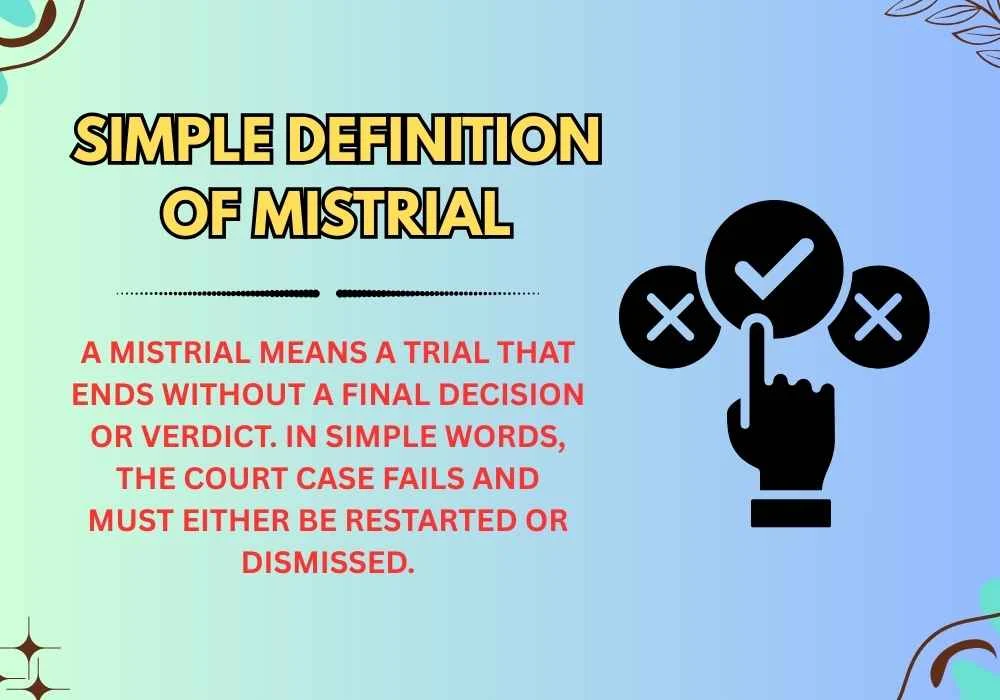
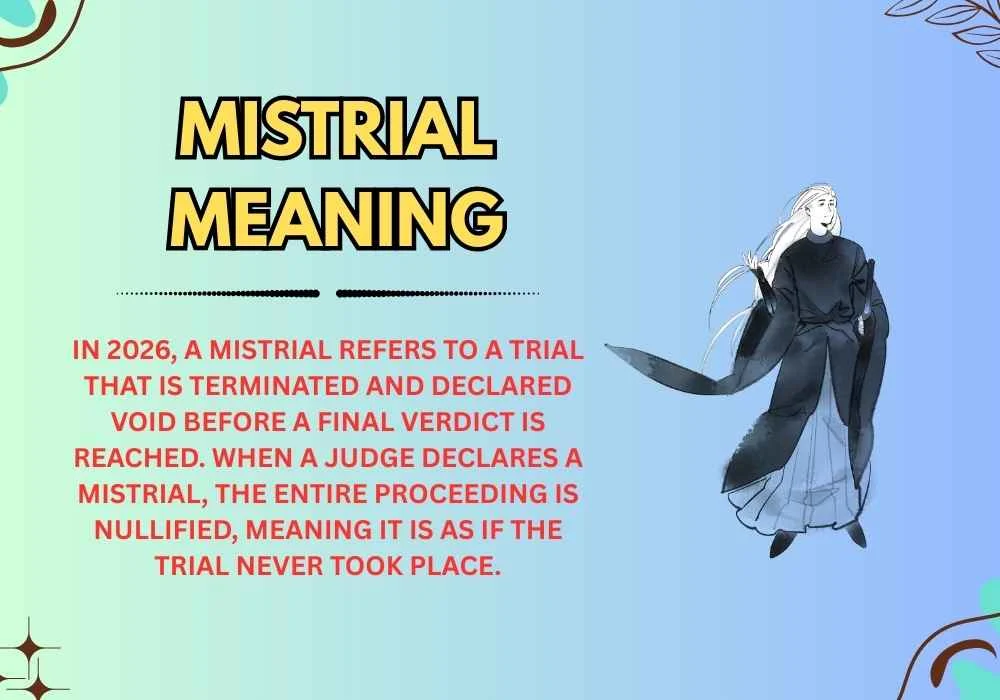
A mistrial means a trial that ends without a final decision or verdict. In simple words, the court case fails and must either be restarted or dismissed.
👉 Mistrial meaning:
When a judge stops a trial because something went wrong, making it unfair or invalid.
Legal Origin of the Term
The word mistrial comes from:
- “Mis” meaning wrong
- “Trial” meaning a legal court proceeding
So, a mistrial literally means a trial gone wrong.
Courts declare a mistrial when:
- The jury cannot agree (hung jury)
- New evidence appears too late
- A lawyer breaks serious rules
- A juror is biased or influenced
- A major procedural error happens
Why Is “Mistrial” Trending in Texts and Online Chats?
In recent years, legal terms like appeal, verdict, indictment, and mistrial have become common in everyday language.
You’ll often see mistrial used:
- On Twitter/X during live court cases
- In Reddit discussions
- In WhatsApp group debates
- In news comment sections
- In true crime chats
People now use mistrial not just legally, but also metaphorically.
How to Use Mistrial in Texts or Chat
Literal Use (Legal Context)
This is the correct and formal usage.
Example:
- “The judge declared a mistrial because the jury couldn’t agree.”
- “That court case ended in a mistrial, so it may be retried.”

Casual or Metaphorical Use (Modern Chat Style)
In texting culture, mistrial can also mean:
- A total failure
- Something that went completely wrong
- A situation with no clear outcome
Examples:
- “That group project was a complete mistrial 😭”
- “My presentation today? Yeah… full mistrial.”
⚠️ This casual use is not official, but very common online.
Examples of Mistrial in Real Conversations
Text Message Examples
- “Did you follow the celebrity case?”
“Yeah, it ended in a mistrial. No verdict.” - “How was your date?”
“Bro… mistrial 💀”
Social Media Examples
- “Another day, another high-profile case ending in a mistrial.”
- “This whole meeting was a mistrial from start to finish.”
Group Chat Example
Ali: Did the jury decide?
Sara: Nope, judge called a mistrial
Ali: Wow, wasted months 😐
Common Mistakes or Misunderstandings
Many people misunderstand the mistrial meaning, especially online.
Mistake 1: Thinking Mistrial Means Innocent
❌ Wrong:
“Mistrial means the person is not guilty.”
✅ Correct:
A mistrial does NOT mean innocent or guilty. It simply means no decision was reached.
Mistake 2: Confusing Mistrial with Acquittal
- Acquittal = officially found not guilty
- Mistrial = trial failed, may restart
They are very different outcomes.
Mistake 3: Using It for Small Mistakes
Calling minor issues a mistrial can sound exaggerated.
❌ “I forgot my pen, total mistrial”
✅ Better: “That exam situation turned into a mistrial.”
When Can a Mistrial Happen?

A mistrial may be declared if:
- The jury is deadlocked
- A juror discusses the case outside court
- Improper evidence is shown
- A witness lies under oath
- A lawyer makes forbidden statements
Judges declare mistrials to protect fairness and justice.
Related Slangs or Abbreviations You Should Know
If you’re interested in chat and legal slang, here are related terms often used with mistrial:
- Hung jury – jury can’t agree
- Verdict – final decision
- Appeal – request to review the case
- Case dismissed – case closed without trial
- Objection! – lawyer challenges a statement
- No contest – defendant doesn’t admit guilt
👉 Internal linking tip: You can link this article to pages like “Verdict Meaning in Chat” or “Hung Jury Explained”.
Is Mistrial Formal or Casual?
Mistrial is:
- ✔️ Formal in legal settings
- ✔️ Semi-casual in online discussions
- ⚠️ Informal/metaphorical in texting
Use it wisely depending on your audience.
Why Understanding Mistrial Meaning Matters
Understanding terms like mistrial helps you:
- Follow court cases accurately
- Avoid spreading misinformation
- Sound informed in discussions
- Understand news headlines clearly
- Use modern chat language correctly
In 2026, where news meets memes, knowing meanings matters more than ever.
FAQs:
What does mistrial mean in simple English?
A mistrial means the court case ended without a final decision because something went wrong during the trial.
Does a mistrial mean the case is over?
No. A mistrial means the case may be retried with a new jury.
Can mistrial be used in texting?
Yes, people often use mistrial in chats to describe something that failed badly or had no clear outcome.
Is mistrial good or bad?
It depends. Legally, it protects fairness. For victims or defendants, it can be frustrating.
Is mistrial the same as not guilty?
No. Not guilty is a verdict. A mistrial means there was no verdict at all.
Conclusion
To sum it up, the mistrial meaning is simple: a trial that ends without a verdict due to serious issues. While it’s a legal term, it has found a place in modern texting, social media, and casual conversation.
Whether you’re following court news or joking with friends about a failed plan, understanding mistrial helps you use it correctly and confidently. This guide is updated for 2026, reflecting how language evolves online.

I am the author, Mitchell, passionate about creating engaging and reliable content that adds real value to readers. With a focus on clarity, accuracy, and insight, I aim to make complex topics easy to understand. I believe in delivering well-researched, practical information that builds trust and helps my audience make informed decisions. Every piece I write is crafted to be informative, meaningful, and impactful, reflecting my commitment to quality and consistency.