Ever wondered what people really mean when they talk about signs, symbols, or hidden meanings? The semiotics meaning might be your answer.
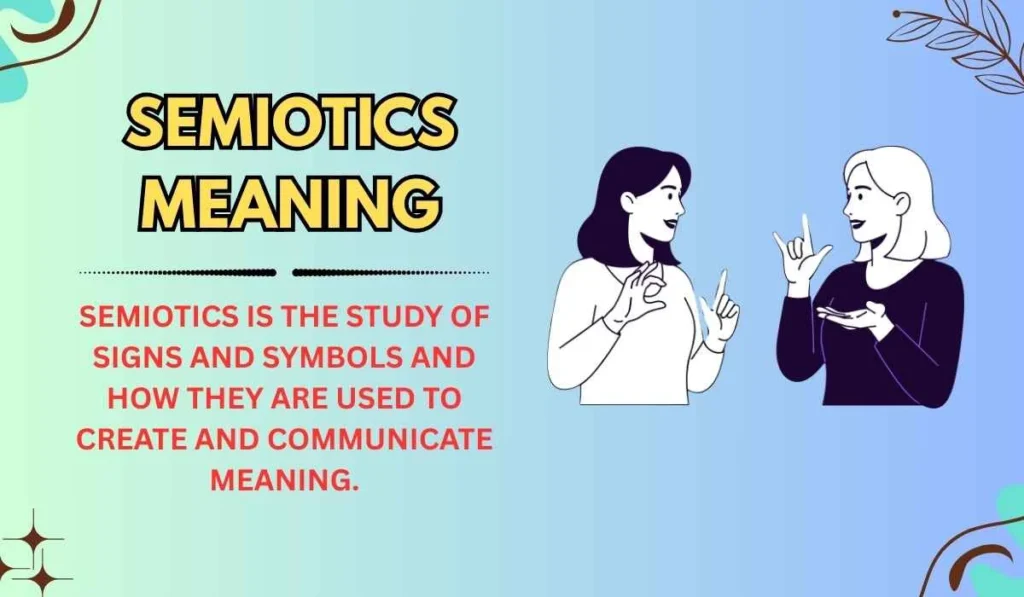
In the simplest terms, semiotics is the study of how signs and symbols convey messages in everyday life, from texts and memes to advertising and social media.
Understanding the semiotics meaning can transform the way you interpret everything around you, giving you insights into culture, communication, and even human behavior.
Updated for 2026, this guide will break down the concept in a fun, easy-to-understand way, with practical examples and tips so you can start spotting semiotic signals in conversations, posts, and chats like a pro.
What Does “Semiotics” Mean?
Semiotics is the study of signs, symbols, and the ways they communicate meaning. At its core, it’s about understanding how humans interpret and respond to symbols, whether spoken, written, or visual.
- Origin: The term comes from the Greek word sēmeiotikós, meaning “observant of signs.”
- Key Idea: Everything around us can be a sign traffic lights, emojis, brand logos, or even slang in texting.
- Why It Matters: By studying semiotics, you can decode hidden messages in culture, media, and online interactions.
Think of it like having a secret decoder ring that helps you read between the lines in communication everywhere.
Semiotics Meaning in Communication
Semiotics in communication is the study of how people use signs, symbols, gestures, words, and images to share meaning.
It explains how messages are understood in conversations, advertisements, social media, and daily interactions.
In communication, semiotics helps people understand hidden meanings, emotions, and cultural signals behind words and visuals.
Semiotics Theory
Semiotics theory is a concept that explains how signs and symbols create meaning. The theory focuses on how people interpret words, images, sounds, and gestures in different situations.
Famous thinkers like Ferdinand de Saussure and Charles Sanders Peirce developed semiotics theory to show how communication works through symbols and signs in society.
Semiotics Meaning in Literature
Semiotics in literature refers to analyzing symbols, themes, words, and signs used in stories, poems, and novels to uncover deeper meanings.
Writers often use objects, colors, or characters as symbols to express emotions, ideas, or hidden messages. Semiotics helps readers better understand the true meaning behind literary works.
Semiotic Synonym
Common synonyms for semiotic include symbolic, representational, communicative, meaningful, and sign-based.
These words are often used when describing symbols, signs, meanings, or forms of communication that represent ideas or messages.
What Is Semiotics in Linguistics
Semiotics in linguistics is the study of how language creates meaning through signs, words, sounds, and symbols. It explores how people understand spoken and written communication.
In linguistics, semiotics helps explain how words represent ideas, emotions, objects, and social meanings in different languages.
Semiotics Meaning in Film
Semiotics in film is the study of symbols, visuals, sounds, colors, camera angles, and actions used in movies to communicate meaning. Directors use semiotic elements to create emotions, themes, and hidden messages.
Film semiotics helps viewers understand deeper meanings behind scenes, characters, and cinematic techniques.
Types of Semiotics
The main types of semiotics include semantic semiotics, syntactic semiotics, and pragmatic semiotics.
Semantic semiotics focuses on meaning, syntactic semiotics studies relationships between signs, and pragmatic semiotics examines how people interpret signs in real-life situations. These types help explain how communication and symbolism work.
Semiotic Analysis Meaning
Semiotic analysis is the process of studying signs, symbols, images, words, and messages to understand their deeper meaning.
It is commonly used in media, literature, advertising, films, and communication studies. Semiotic analysis helps uncover hidden ideas, cultural messages, and emotional influences behind content.
How to Use “Semiotics” in Texts or Chat
Using the word semiotics in conversation or text may seem formal, but you can make it casual and relatable:
- “I love analyzing memes; the semiotics behind them is hilarious!”
- “Have you noticed the semiotics in TikTok trends? It’s all symbols and hidden meanings.”
Tips for casual use:
- Explain it quickly if the reader isn’t familiar.
- Use it in discussions about culture, media, marketing, or psychology.
- Pair it with examples like emojis, memes, or fashion trends to make it relatable.
Examples of “Semiotics” in Conversations
Here are real-life scenarios where semiotics comes into play:
- Text Example:
Friend: “Why do you always use that laughing emoji?”
You: “It’s all about the semiotics—it signals humor, even sarcasm sometimes.” - Social Media Example:
An influencer posts a photo of a coffee cup with a brand logo. Fans discuss it: “The semiotics here scream luxury and lifestyle.” - Forum Example:
“The semiotics of gaming avatars can reveal personality traits or group belonging.”
Common Mistakes or Misunderstandings
People often confuse semiotics with just symbols or overcomplicate it. Here’s what to avoid:
- Mistake: Thinking it only applies to academic studies.
Correction: Semiotics is everywhere—from tweets to TikTok captions. - Mistake: Overanalyzing simple signs.
Correction: Focus on context; the meaning depends on culture and situation. - Mistake: Using it as a synonym for “meaning.”
Correction: Semiotics studies how meaning is constructed, not just the meaning itself.
Related Slangs or Abbreviations
Even online language has its semiotics:
- LOL, BRB, FOMO: Each is a symbolic shortcut conveying emotion, action, or culture.
- Emoji Usage: 😂, ❤️, 🔥—these are modern symbols interpreted semiotically.
- Memes as Semiotics: A picture with text conveys cultural commentary or humor.
Understanding these signs helps you decode messages faster in chats, social media, and forums.
FAQs:
What is the difference between semiotics and semantics?
Semiotics studies signs and symbols in general, while semantics focuses specifically on meaning in language.
How can I apply semiotics in everyday life?
Observe signs around you—advertisements, emojis, memes—and think about the message they convey.
Is semiotics only for academics?
No! Semiotics is everywhere, from social media posts to marketing campaigns.
Can understanding semiotics improve my communication?
Yes! Knowing how symbols work helps you send clearer messages and interpret others better.
Are emojis considered part of semiotics?
Absolutely. Emojis are modern signs that carry meaning in digital conversations.
Conclusion
Understanding the semiotics meaning gives you a lens to interpret signs, symbols, and hidden messages in everyday life. Whether you’re analyzing texts, memes, or social media trends, semiotics helps you communicate smarter and decode the world around you.
In 2026, staying semiotically savvy is more important than ever texts, posts, and chats are filled with symbols waiting to be interpreted. Start noticing the signs in your daily interactions and see the subtle messages you’ve been missing.

I am the author, Mitchell, passionate about creating engaging and reliable content that adds real value to readers. With a focus on clarity, accuracy, and insight, I aim to make complex topics easy to understand. I believe in delivering well-researched, practical information that builds trust and helps my audience make informed decisions. Every piece I write is crafted to be informative, meaningful, and impactful, reflecting my commitment to quality and consistency.