If you’ve come across the word “largesse” in a book, article, or even a formal speech, you might’ve paused for a second. It sounds elegant, almost old-fashioned, and not something people casually drop in everyday conversation.
That’s because it is.
Largesse is one of those words that shows up more in literature, journalism, and formal writing than in casual texting or social media. But its meaning is actually simple once you break it down.
Let’s understand it in a clear, practical way so you can recognize it instantly—and even use it correctly when needed.
Meaning Overview of Largesse
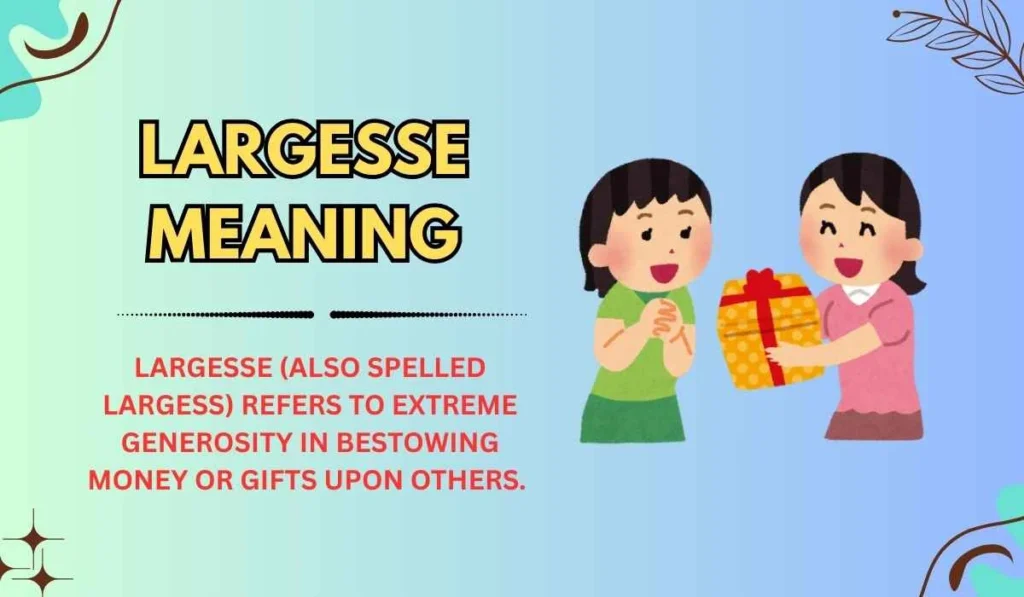
At its core, largesse means generosity, especially when someone gives money, gifts, help, or resources freely and often in large amounts.
But there’s a subtle twist.
Largesse doesn’t just mean ordinary kindness. It usually implies:
- generosity from someone powerful or wealthy
- giving in a noticeable or grand way
- sometimes a sense of authority behind the giving
In simple words:
Largesse = generous giving, often in a grand or influential way
Simple Definition
Largesse (noun):
Generosity in giving money, gifts, or help, often in a liberal or impressive manner.
Where Does the Word “Largesse” Come From?
The word has deep historical roots.
It comes from Old French largesse, which itself comes from Latin largus, meaning:
- abundant
- plentiful
- liberal
Originally, it was used in medieval times when kings, nobles, or wealthy patrons would distribute money or gifts to the public or their followers.
Think of:
- kings giving gold coins to citizens
- nobles rewarding soldiers
- wealthy patrons supporting artists
That historical background still influences how the word feels today—formal, rich, and slightly royal in tone.
How Largesse Is Used in Modern English
Even though it sounds old-fashioned, largesse is still used in modern writing—especially in:
- journalism
- political commentary
- literature
- business writing
It usually describes situations where someone with power or wealth gives generously.
Example meanings in context:
- government funding programs
- billionaire donations
- corporate sponsorships
- elite philanthropy
Real-Life Examples of Largesse
Understanding a word becomes easier when you see it in action.
Example 1: Wealthy Philanthropy
“The university expanded its campus thanks to the largesse of a major donor.”
Meaning:
A wealthy person donated a large amount of money.
Example 2: Government Support
“The city benefited from the government’s largesse during the crisis.”
Meaning:
The government provided financial help or aid.
Example 3: Corporate Donations
“The festival survived due to corporate largesse.”
Meaning:
Companies funded or supported the event.
Example 4: Political Tone
“The policy was criticized as relying too heavily on the president’s largesse.”
Meaning:
Support depended on personal generosity rather than structured systems.
Largesse vs Simple Generosity
People often confuse largesse with general kindness, but there’s a difference.
| Term | Meaning | Tone |
|---|---|---|
| Generosity | Simple kindness or giving | Neutral |
| Largesse | Grand, often powerful or wealthy giving | Formal, elevated |
So while all largesse is generosity, not all generosity is largesse.
Emotional Tone Behind Largesse
The word carries a very specific emotional feel:
- formal
- respectful
- slightly political or economic
- sometimes slightly critical depending on context
Interestingly, it can be both positive and neutral—or even mildly skeptical.
For example:
- Positive: “generous donation”
- Neutral: “financial support from elites”
- Critical: “dependence on wealthy largesse”
Common Contexts Where You’ll See Largesse
1. Politics
Used when discussing government spending or aid.
“The program depends on state largesse.”
2. Business and Economy
Used when companies donate or fund initiatives.
“Tech industry largesse supports many startups.”
3. Arts and Culture
Often used for patronage.
“The museum exists thanks to private largesse.”
4. Education
Used in funding discussions.
“Scholarships were made possible through alumni largesse.”
Situations Where You Should NOT Use Largesse
Even though it’s a useful word, it doesn’t fit everywhere.
Avoid using it in:
- casual conversations
- texting or social media slang
- informal storytelling
- simple everyday speech
Instead of saying:
“Thanks for your largesse!”
You would normally say:
“Thanks for your help!” or “Thanks for your generosity!”
Largesse sounds too formal for casual situations.
Common Misunderstandings About Largesse
1. Thinking it means arrogance
Some people assume it implies showing off wealth. It doesn’t always.
It depends on context—it can be neutral or positive.
2. Confusing it with charity only
Largesse is broader than charity. It includes:
- donations
- financial support
- gifts
- institutional funding
3. Assuming it’s modern slang
It is not slang. It is a formal English noun.
Synonyms of Largesse
Here are similar words that may help you understand it better:
- generosity
- charity
- philanthropy
- bounty
- donation
- benefaction
- support
But remember, none of these carry the same formal “grand” tone exactly.
Differences Between Similar Words
| Word | Key Difference |
|---|---|
| Largesse | Formal, often wealthy or institutional giving |
| Charity | Emotional/help-based giving |
| Philanthropy | Organized large-scale giving |
| Generosity | General kindness or willingness to give |
Cultural and Historical Context
Historically, largesse was associated with:
- kings rewarding loyalty
- feudal systems
- aristocratic generosity
In modern culture, it has shifted to:
- billionaire donations
- government aid
- corporate sponsorships
- elite philanthropy programs
So while the word is old, its meaning still fits modern society.
FAQ: Largesse Meaning
What does largesse mean in simple words?
It means generous giving, especially large or formal donations of money, help, or resources.
Is largesse positive or negative?
It can be both. It is usually positive, but sometimes used critically when dependence on wealthy donors is discussed.
Is largesse a common word?
No, it is more formal and mostly used in writing, journalism, and academic contexts.
Can I use largesse in daily conversation?
You can, but it may sound overly formal or unnatural in casual speech.
What is the synonym of largesse?
Common synonyms include generosity, charity, philanthropy, and donation.
Final Thoughts
Largesse is a refined, formal word that describes generous giving often on a large or influential scale. While it’s not part of everyday casual speech, it plays an important role in formal writing, especially when discussing money, aid, or support from powerful individuals or institutions.
If you think of it simply, imagine:
- a wealthy donor funding a hospital
- a government supporting citizens
- a company sponsoring a major event
That kind of structured or large-scale generosity is exactly what largesse represents.

I am the author, Mitchell, passionate about creating engaging and reliable content that adds real value to readers. With a focus on clarity, accuracy, and insight, I aim to make complex topics easy to understand. I believe in delivering well-researched, practical information that builds trust and helps my audience make informed decisions. Every piece I write is crafted to be informative, meaningful, and impactful, reflecting my commitment to quality and consistency.