Ever wondered what “disenfranchised” really means and why people keep using it online? The term disenfranchised meaning can be confusing at first, especially if you’re trying to understand it in everyday conversations or social media posts.
In simple words, disenfranchised describes someone who feels excluded, powerless, or stripped of certain rights. In this article, we’ll explore the disenfranchised meaning, how it’s used in texts and chats, and why it’s become more relevant than ever in 2026.
Whether you’re texting a friend, commenting online, or learning new vocabulary, this guide has everything you need to use the word correctly and confidently.
What Does “Disenfranchised” Mean? (Definition & Origin)
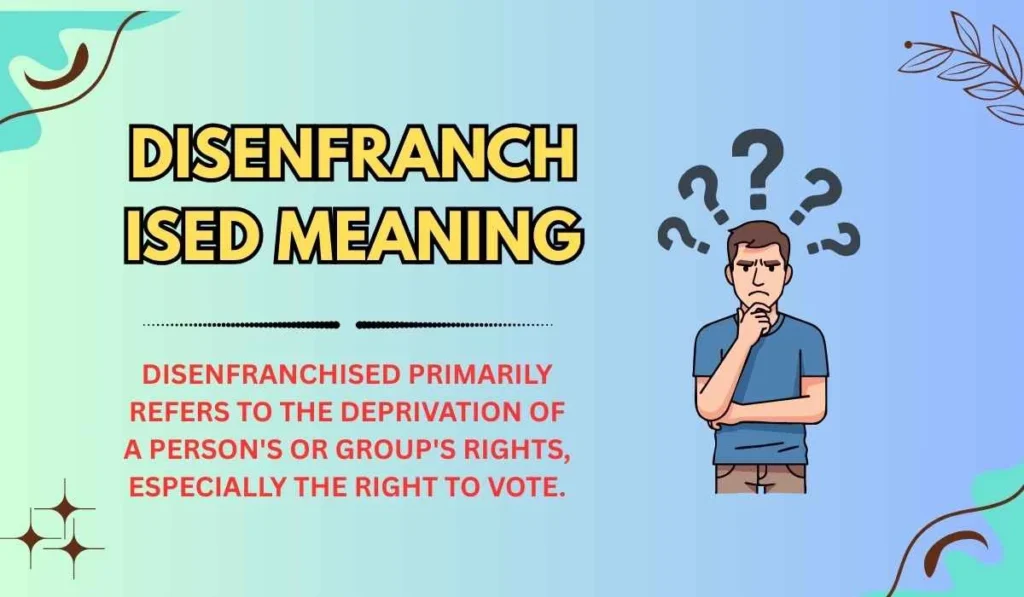
The word disenfranchised comes from the prefix “dis-” meaning “not” or “opposite of,” and “franchise”, which historically referred to the right to vote or privileges. So, at its core, disenfranchised literally means deprived of rights or power.
In modern usage, it often describes people who feel marginalized, ignored, or powerless in society, workplaces, or social groups.
Example in context:
- “Many young voters feel disenfranchised because their opinions aren’t represented in politics.”
It’s a formal word but increasingly appearing in casual chats, social commentary, and online discussions.
How to Use “Disenfranchised” in Texts or Chat
Even though disenfranchised is a formal term, it can be used in texts, tweets, or messaging apps when discussing feelings of exclusion or unfair treatment. Here’s how:
- Highlight social issues: “Feeling a bit disenfranchised after that group chat ignored my suggestions.”
- Express personal feelings: “Honestly, I feel disenfranchised when my ideas are dismissed at work.”
- Add humor or sarcasm: “Me, being disenfranchised from the last slice of pizza 🍕.”
In casual conversations, people might shorten it to phrases like “left out” or “ignored,” but knowing the full word shows strong vocabulary skills and clarity.
Examples of “Disenfranchised” in Conversations
Using disenfranchised in real-life scenarios makes it easier to remember. Here are some examples you might see in texts or social media:
- Group Chat: “Why didn’t anyone vote for my idea? I feel so disenfranchised.”
- Social Media Post: “The new policy left a lot of employees disenfranchised.”
- Forum Comment: “Many fans are disenfranchised after the game was canceled last minute.”
Notice how it works in both serious discussions and lighthearted conversations.
Common Mistakes or Misunderstandings
Even though it seems straightforward, people often misuse or overcomplicate the word disenfranchised. Here’s what to avoid:
- Mixing it up with “disenchanted” – “Disenchanted” means disappointed or disillusioned, not necessarily deprived of rights.
- Overusing it in casual slang – It works best in contexts of exclusion or powerlessness.
- Using it incorrectly for minor annoyances – Feeling left out of a group text isn’t always serious enough to call yourself disenfranchised, unless joking.
Related Slangs or Abbreviations
While disenfranchised doesn’t have a common texting abbreviation, people often express the same sentiment with shorter words or phrases:
- Left out – Casual alternative in texts.
- Ignored – Often used in chat when someone feels excluded.
- OOP (Out of Place) – Used in forums or gaming communities.
- FWIW (For What It’s Worth) – Can preface a statement about feeling powerless.
- Feeling sidelined – Another casual alternative.
These can help you blend formal vocabulary with casual chat language.
Updated for 2026: Why “Disenfranchised” Still Matters
In 2026, disenfranchised meaning isn’t just academic—it’s trending in social media discussions, political debates, and workplace conversations. People are more vocal about their feelings of exclusion, and understanding this term helps you join meaningful conversations online.
Recent examples:
- TikTok videos highlighting disenfranchised communities.
- Twitter threads where users express being disenfranchised at work or school.
- Reddit discussions about disenfranchised voters in recent elections.
FAQs:
What does disenfranchised really mean in casual texts?
It usually means feeling left out, ignored, or powerless in a situation, even if it’s just online.
Can I use disenfranchised humorously?
Yes! You can exaggerate small exclusions for comedic effect, like missing a slice of pizza.
Is there a short version for texting?
Not really—people usually replace it with phrases like “left out” or “ignored” for casual chats.
Is disenfranchised the same as oppressed?
Not exactly. Oppressed is often more serious and systemic, while disenfranchised can be personal or situational.
Where is this word most commonly used online?
Social media, forums, political discussions, and workplace messaging are the most common places.
Conclusion
Understanding the disenfranchised meaning is essential for expressing feelings of exclusion or powerlessness clearly. Whether in texts, social media, or professional conversations, using this word correctly shows awareness and sophistication.
Remember, you can blend formal vocabulary like disenfranchised with casual chat phrases to fit any conversation naturally. Stay aware of context, avoid overuse, and have fun using it in creative ways.

I am the author, Mitchell, passionate about creating engaging and reliable content that adds real value to readers. With a focus on clarity, accuracy, and insight, I aim to make complex topics easy to understand. I believe in delivering well-researched, practical information that builds trust and helps my audience make informed decisions. Every piece I write is crafted to be informative, meaningful, and impactful, reflecting my commitment to quality and consistency.