Are you tired of feeling stuck in repetitive routines or endless dull tasks? Understanding the true monotonous meaning can help you identify what makes your day feel boring and how to make it more engaging.
In this article, we’ll dive deep into the monotonous meaning, explore real-life examples, and show you how to use this word correctly in conversation, texts, or writing.
Updated for 2026, this guide is perfect for students, writers, and anyone curious about language and expression.
What Does “Monotonous” Mean? (Definition & Origin)

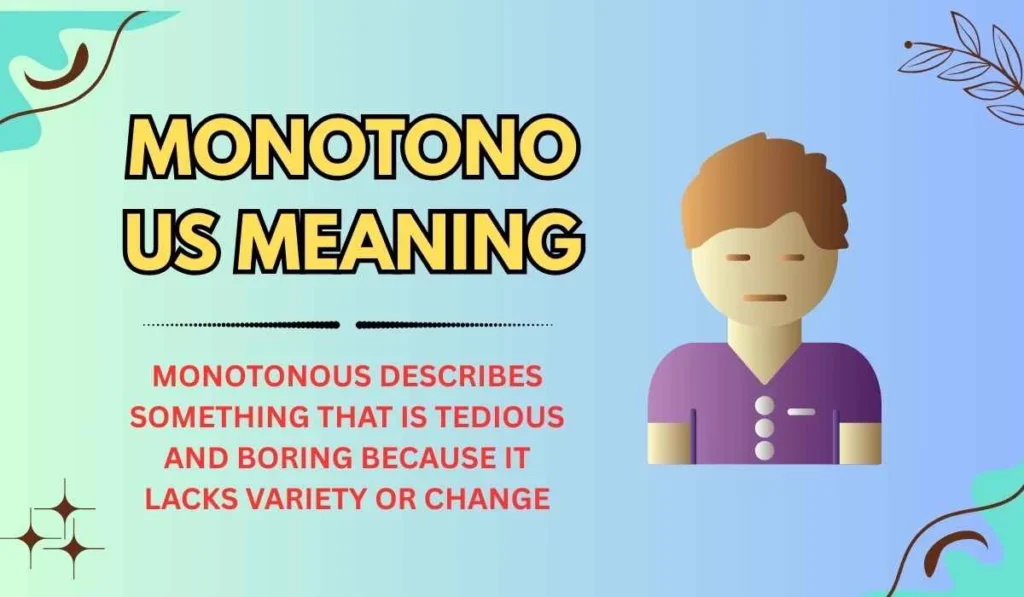
The word monotonous refers to something that is dull, repetitive, and lacking in variety. When a task, sound, or experience feels unvaried and boring, it can be described as monotonous.
- Origin: Derived from the Greek word monotonos, meaning “one tone,” it initially described a single, unchanging musical note. Over time, it evolved to describe repetitive actions or experiences in daily life.
Example: Listening to the same lecture for hours can feel utterly monotonous.
This word is commonly used in English writing, conversations, and even in informal texting to describe boring or repetitive situations.
How to Use “Monotonous” in Texts or Chat
Using monotonous in casual conversation or chat can make your language sound more descriptive and precise. Here’s how to do it naturally:
- Texting a friend about your day: “Work was so monotonous today, I couldn’t stay focused.”
- Social media post: “The rainy weather is making everything feel monotonous. Need some excitement!”
- Messaging colleagues: “This routine report is becoming a bit monotonous, maybe we can add some new elements.”
💡 Tip: Pair it with emojis to convey tone: “This meeting is so monotonous 😩”
Examples of “Monotonous” in Conversations
Here are some realistic scenarios where you might hear or use monotonous:
- At work:
- A: “Did you enjoy today’s training?”
- B: “Not really, it was monotonous and long.”
- With friends:
- A: “How was your weekend?”
- B: “Pretty monotonous, just stayed home and watched TV.”
- Online forums:
- “Scrolling through the same news every day is so monotonous, I need variety!”
Common Mistakes or Misunderstandings
Even though monotonous is straightforward, some people misuse it. Avoid these pitfalls:
- Mistaking it for “monotone”: Monotone refers to voice or sound lacking pitch variation, while monotonous can describe any repetitive or dull experience.
- Overusing in casual chats: Using it in every boring situation can sound exaggerated.
- Spelling errors: Common misspellings include monotnous or monotonus. Always remember it has two “o’s.”
Related Slangs or Abbreviations
While monotonous is formal, some slang or chat-friendly alternatives include:
- Boring AF: “This lecture is boring AF 😩”
- Same old: “Just another same old Monday.”
- Yawnfest: “The meeting was a total yawnfest!”
- Deadly dull: “This assignment is deadly dull.”
These can be used interchangeably in casual texts or social media posts to describe tedious or repetitive situations.
FAQs:
What is the opposite of monotonous?
The opposite is something lively, exciting, or varied. Words like interesting, dynamic, engaging, or stimulating are good alternatives.
Can monotonous describe music?
Yes! Music that repeats the same notes or rhythms without variation is considered monotonous.
Is monotonous always negative?
Usually, yes. It implies boredom or lack of excitement. However, in some contexts, like meditation or routine work, it might be neutral or even relaxing.
How do I make a monotonous task interesting?
Add variety, set small goals, take breaks, or gamify the activity to break the monotony.
Can monotonous describe a person?
Yes, if someone’s personality seems predictable, unvarying, or dull, they might be described as monotonous.
Conclusion
Understanding the monotonous meaning helps you express boredom and repetitive situations clearly in writing, chats, or everyday conversation. By recognizing what makes things monotonous, you can take steps to add excitement, variety, and creativity to your life.
Next time your day feels repetitive, try changing your routine, exploring new hobbies, or just texting a friend with the perfect monotonous caption

I am the author, Mitchell, passionate about creating engaging and reliable content that adds real value to readers. With a focus on clarity, accuracy, and insight, I aim to make complex topics easy to understand. I believe in delivering well-researched, practical information that builds trust and helps my audience make informed decisions. Every piece I write is crafted to be informative, meaningful, and impactful, reflecting my commitment to quality and consistency.