Ever wondered why you feel extremely sleepy after eating? Food Coma Meaning explains that heavy, carb-rich, or large meals can leave your body feeling tired, sluggish, and mentally slow.
This ultimate guide reveals the surprising causes, common symptoms, and the real science behind that post-meal crash including how blood sugar and digestion affect energy.
If you want an easy, proven, and must know explanation, this is the complete answer to help you understand why it happens and how to avoid it.
What Does Food Coma Meaning Mean? Definition and Origin
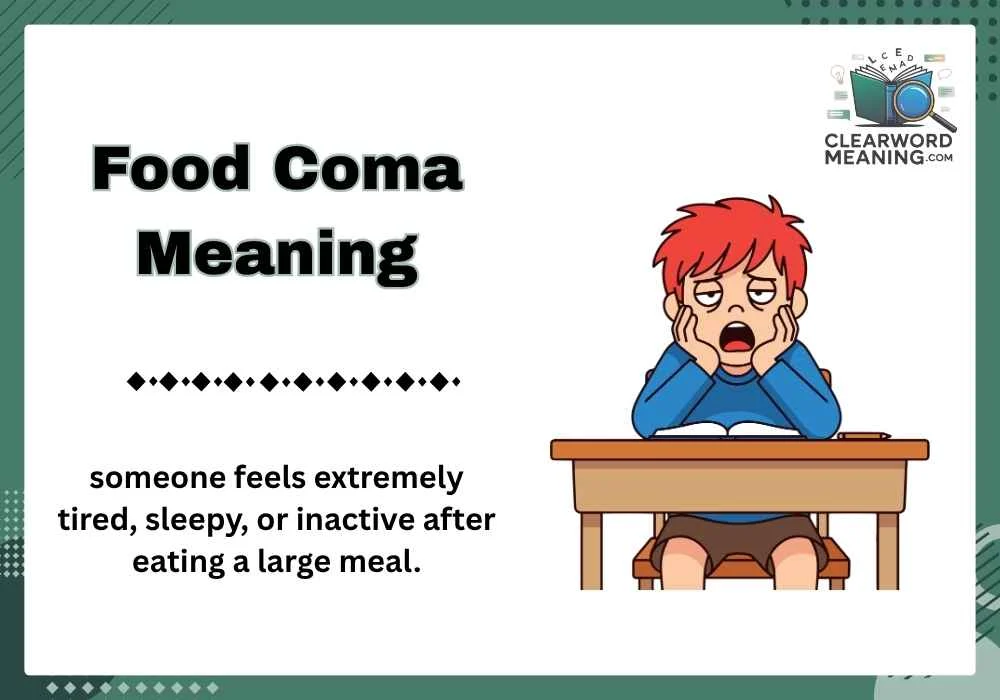
The phrase food coma is an informal slang term used when someone feels extremely tired, sleepy, or inactive after eating a large meal.
It does not mean a real medical coma. Instead, it’s a funny exaggeration people use in texting and social conversations.
Simple Definition
Food coma meaning = the sleepy, lazy, overfull feeling after eating too much.
Where It Came From
The phrase became popular through:
- social media memes
- family dinner jokes
- holiday meal captions
- texting after restaurant visits
- TikTok and Instagram food videos
People often say it after:
- weddings
- Eid dinners
- Thanksgiving meals
- pizza nights
- buffet lunches
- fast-food challenges
It became viral because it perfectly describes a feeling almost everyone has experienced.
How to Use Food Coma Meaning in Texts or Chat
This slang is usually used in a funny and casual way.
Common Text Uses
People use it when:
- they just ate too much
- they feel sleepy after food
- they want to cancel plans
- they are joking about overeating
- they post food pictures online
Example Chat Lines
- “Bro that biryani gave me a food coma 😴”
- “I can’t move… total food coma meaning unlocked 😂”
- “Post-Eid food coma is real.”
- “After that burger challenge, I’m in a food coma.”
Best Platforms for Usage
This phrase is common on:
- Snapchat
- TikTok comments
- Instagram captions
- Discord chats
- Reddit food threads
It works best in casual texting language, not formal writing.
Examples of Food Coma Meaning in Conversations
Here are some relatable conversation examples.
Friends Chat
A: How was dinner?
B: Amazing, but now I’m in a food coma.
Family Group
Mom: Who wants dessert?
You: No chance, already in a food coma 😅
Social Media Caption
“Buffet was so good I entered a food coma instantly.”
Funny Gaming Chat
“AFK for 20 mins, food coma after shawarma.”
These examples make the phrase feel natural and easy to copy in real chats.
Common Mistakes or Misunderstandings
A lot of readers misunderstand this slang.
Thinking It’s Medical
The biggest mistake is assuming it refers to an actual medical condition.
It’s just a humorous expression, not a health diagnosis.
Using It in Serious Situations
Avoid using it in:
- professional emails
- school assignments
- formal business chats
- medical discussions
Overusing It
If every meal becomes a “food coma,” the phrase can lose its funny impact.
Use it after:
- cheat meals
- celebrations
- special dinners
- heavy desi food nights
That makes it more relatable.
Related Slangs or Abbreviations
Here are similar expressions people use with food coma meaning.
Stuffed
Means you ate so much you feel full and heavy.
Example:
“I’m totally stuffed after dinner.”
Passed Out After Food
A more dramatic way to say you became sleepy.
Nap Mode
Popular in memes after lunch.
Thanksgiving Mode
Common in western meme culture.
Meat Sweats
A funny phrase used after eating too much meat.
Internal linking ideas:
- stuffed meaning in text
- AFK meaning
- lowkey meaning
- no cap meaning
- slay meaning
These related slang terms can help build topical authority for your site.
When People Commonly Use Food Coma Meaning
The phrase is super common in modern online culture.
Social Media Captions
- “Sunday brunch = instant food coma”
- “This ramen got me in a food coma”
Meme Culture
Memes often show:
- sleeping cats after food
- lazy couch photos
- post-buffet reactions
- before and after eating jokes
Texting Friends
It’s especially common after:
- restaurant meetups
- family Dawat
- Eid feasts
- midnight snacks
- iftar parties
This makes the phrase highly searchable and evergreen.
Funny Real-Life Scenarios for Better Understanding
Imagine this:
You order:
- 2 burgers
- fries
- loaded pizza slices
- brownie shake
- ice cream
After finishing, your friend asks if you want to walk.
You reply:
“Walk? Bro, I’m in a food coma.”
That is exactly how the slang works in real life.
Another relatable example:
After a huge desi wedding dinner, everyone sits silently on chairs checking phones because they are too full to move.
That sleepy silence = food coma meaning in action.
Why Food Coma Meaning Is Trending in 2026
The phrase is still trending because food content is exploding online.
Popular reasons:
- TikTok mukbangs
- restaurant reels
- buffet challenge videos
- fast food review channels
- meme pages
- family feast content
In 2026, creators use food coma in:
- captions
- hashtags
- comments
- post-meal reaction memes
It remains highly relevant for SEO traffic around texting meanings and slang phrases.
FAQs:
Is food coma a real medical condition?
Not exactly. It’s mostly a fun slang phrase people use to describe feeling sleepy after a heavy meal.
Can I use food coma in text messages?
Yes, it’s perfect for casual chats, memes, and social media captions.
Is food coma rude or offensive?
No, it’s generally harmless and funny.
Where is food coma used most?
It’s commonly used on WhatsApp, TikTok, Instagram, Reddit, and Snapchat.
What is another way to say food coma?
You can say stuffed, sleepy after eating, nap mode, or too full to move.
Conclusion
Food Coma Meaning is a fun and highly relatable slang phrase used when someone feels sleepy, lazy, and completely full after a big meal. It’s popular in chats, memes, captions, and everyday texting because it instantly paints a funny picture everyone understands.
The best way to use it is in casual online conversations after buffets, family dinners, cheat meals, or food challenges. Updated for 2026, this phrase remains trendy across social media and texting culture.

I am the author, M Brauer, a dedicated and detail-focused professional committed to quality content and clear information. I focus on creating reliable, easy-to-understand material that delivers real value and builds trust with readers.