Looking for the best explanation of tinge meaning in chats, texts, and online slang? You’re in the right place. Tinge meaning is often used to describe a slight feeling, hint, or touch of something, and in texting it can make conversations feel more expressive and natural.
Whether you spotted it on social media, in a DM, or while texting friends, understanding tinge meaning helps you reply the right way and avoid awkward misunderstandings. In modern chat culture, even simple words like this can carry emotion, sarcasm, or humor depending on context.
Breaks it down in the easiest way possible with examples, usage tips, and relatable chat situations so you can confidently use it anywhere online.
What Does Tinge Mean? Definition and Origin
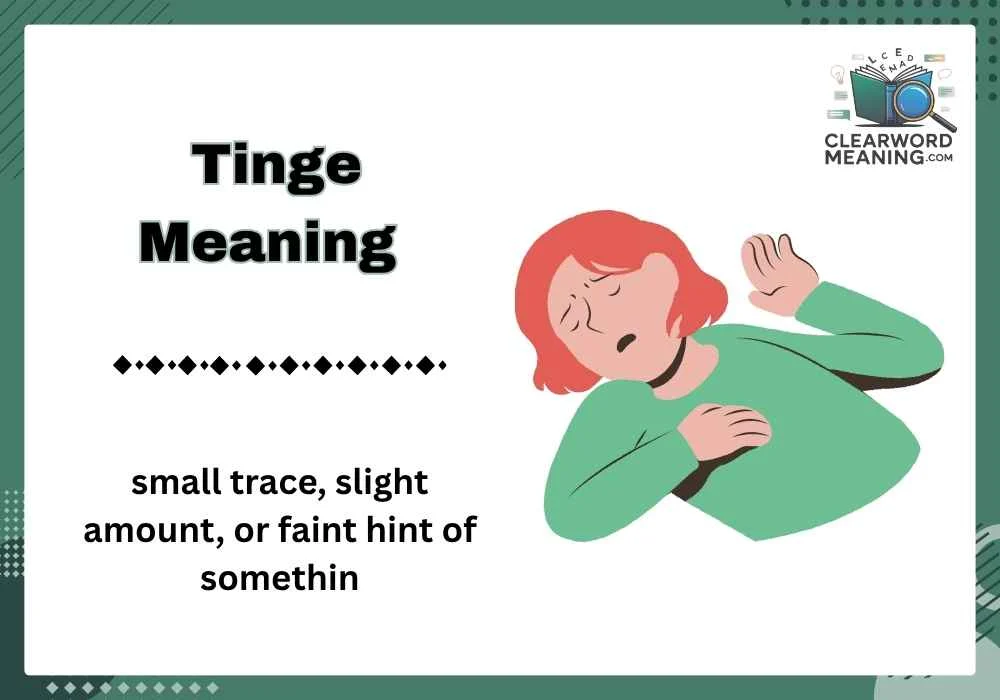
The word tinge means a small trace, slight amount, or faint hint of something. In everyday English, it is often used to describe emotions, colors, moods, or tones.
For example:
- “Her voice had a tinge of sadness.”
- “The sky had a tinge of orange.”
- “His text felt like it had a tinge of sarcasm.”
In chat language, tinge meaning usually stays close to its original dictionary sense. It describes a tiny bit of emotion, attitude, or vibe in a message.
Origin of the Word Tinge
The word comes from older English usage linked to coloring or staining something lightly. Over time, it evolved into a figurative expression for slight emotions or subtle hints.
That’s why in modern texting, someone may say:
- “Your message had a tinge of jealousy 😂”
- “I feel a tinge of regret after sending that”
It’s subtle, expressive, and very common in online conversations.
How to Use Tinge in Texts or Chat
Using tinge meaning correctly in messages is easy when you think of it as “a little bit of”.
Common Chat Uses
People use it for:
- Emotions → sadness, anger, excitement, jealousy
- Tone → sarcasm, humor, seriousness
- Mood → romance, awkwardness, tension
- Opinions → doubt, trust, surprise
Examples in Text
Here are simple examples:
- “I sensed a tinge of annoyance in your reply.”
- “That meme has a tinge of dark humor 😭”
- “Your caption gives a tinge of mystery.”
- “Ngl, I felt a tinge of envy seeing your vacation pics.”
Easy Formula
A simple formula is:
Tinge + of + emotion/feeling/tone
Examples:
- tinge of regret
- tinge of happiness
- tinge of fear
- tinge of sarcasm
This structure sounds natural in both casual chats and social posts.
Examples of Tinge Meaning in Conversations
Here are relatable real-life texting examples.
Friendly Chat
A: “You didn’t invite me 😒”
B: “Oof, I feel a tinge of guilt now.”
Relationship Chat
A: “You replied after 5 hours.”
B: “Was there a tinge of anger in that text?”
Social Media Comment
“That post has a tinge of passive aggression 😂”
Funny Scenario
Imagine your friend says:
“Nice outfit… very brave choice.”
That sentence may carry a tinge of sarcasm, depending on your friendship vibe.
These subtle uses are why tinge meaning is popular in modern texting.
Common Mistakes or Misunderstandings
Many people misuse tinge because they confuse it with stronger emotions.
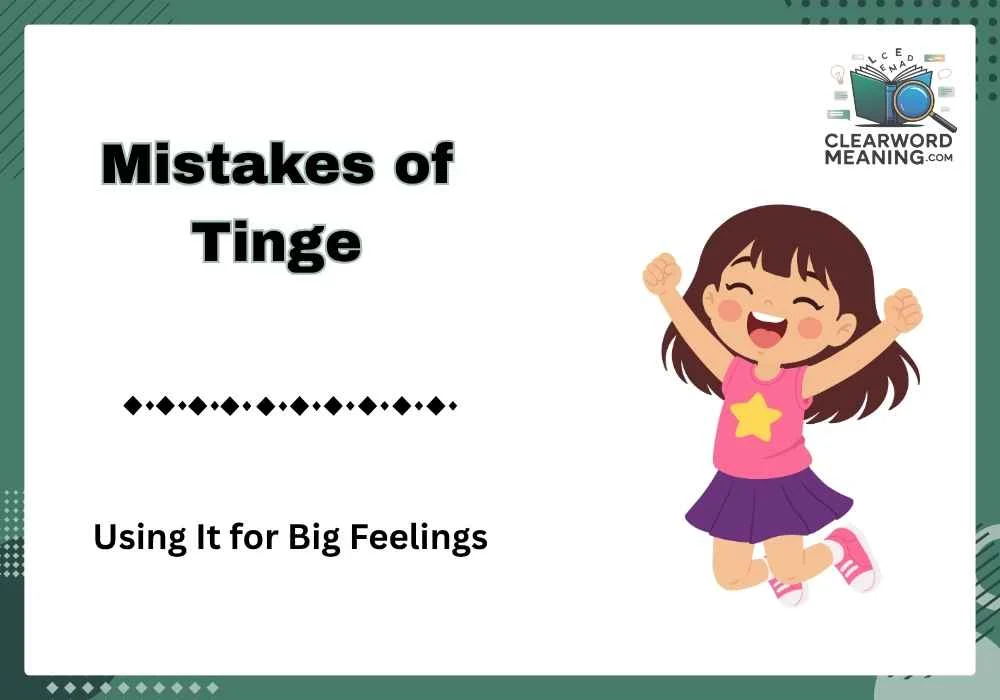
Mistake: Using It for Big Feelings
Wrong:
- “I had a tinge of extreme rage.”
Better:
- “I had a tinge of irritation.”
Why? Because tinge means slight, not intense.
Mistake: Using It Without Context
Saying:
- “Your text had a tinge.”
This feels incomplete.
Better:
- “Your text had a tinge of confusion.”
Always mention what kind of hint or feeling you mean.
Mistake: Overusing It
Using it in every sentence can sound unnatural.
Instead, mix it with:
- hint
- touch
- slight feeling
- trace
- vibe
Related Slangs or Abbreviations
If someone is searching for tinge meaning, they may also like these related internet slang and texting terms:
- Lowkey → slightly or secretly
- Vibe → emotional tone or feeling
- Shade → subtle insult or criticism
- Salty → slightly annoyed
- Dry text → emotionless message
- Passive aggressive → indirect annoyance
Internal Linking Suggestions
For SEO, you can internally link this article to:
- lowkey meaning in text
- salty meaning in chat
- dry texting meaning
- shade meaning slang
- vibe meaning in messages
These related terms strengthen topical authority.
Where Tinge Is Commonly Used Online
You’ll often find tinge meaning used in:
- WhatsApp chats
- Instagram captions
- TikTok comments
- X posts
- Discord conversations
- Reddit threads
- Relationship memes
- Reaction videos
In 2026, subtle emotional language is trending because people like expressive but short wording.
For example:
“That voice note had a tinge of flirting.”
This feels modern, natural, and emotionally smart.
Why Tinge Feels So Popular in 2026
A personal observation: people today love words that describe micro-emotions.
Instead of saying:
- “I’m jealous”
They say:
- “I feel a tinge of jealousy.”
It sounds softer, less dramatic, and more relatable.
This is why creators, meme pages, and even casual texters use it so much. It helps express feelings without sounding too serious.
It also works perfectly in:
- ironic jokes
- soft relationship talks
- passive comments
- subtle flirting
- emotionally aware conversations
That’s a big reason tinge meaning keeps growing in modern online culture.
FAQs:
What is the exact tinge meaning in text?
In text, tinge meaning refers to a small hint or slight feeling in someone’s message, tone, or emotion.
Is tinge a slang word?
Not exactly. It’s a normal English word, but it is widely used in modern texting and social media conversations.
Can tinge be used for sarcasm?
Yes, absolutely. People often say a text has a tinge of sarcasm, humor, or passive aggression.
Is tinge positive or negative?
It can be both. It depends on the context:
- positive → tinge of excitement
- negative → tinge of sadness
What words are similar to tinge?
Similar words include:
- hint
- touch
- trace
- slight feeling
- vibe
- undertone
Conclusion
Understanding tinge meaning is simple once you remember it means a slight hint or touch of emotion, tone, or feeling. In chats, texts, and social media, it helps describe subtle vibes in a natural and expressive way.
The best way to use it is with emotions like sadness, sarcasm, jealousy, humor, or regret. Because online conversations in 2026 are becoming more emotionally nuanced, this word fits perfectly into modern texting culture.
Now that you know tinge meaning, you can use it confidently in your messages, captions, and comments.

I am the author, Brook, dedicated to creating clear and reliable content that informs and engages readers. With a passion for well-researched and valuable information, I focus on delivering content that is both easy to understand and practical. My goal is to build trust with my audience by providing consistent, accurate, and meaningful material. Whether writing for beginners or experts, I strive to make every piece insightful, engaging, and impactful.