If you’ve recently seen >��� emoji meaning in a text, comment, DM, or random social media post, you’re definitely not alone.
The phrase >��� emoji meaning has become a surprisingly common search because people often come across this strange-looking symbol string and wonder whether it’s an actual emoji, a broken emoji code, or a hidden internet slang trend.
Updated for 2026, this guide explains everything in a simple, human way so you instantly know what it means, how people use it, and why it often appears in chats.
Whether you’re active on TikTok, WhatsApp, Snapchat, Discord, Reddit, or texting apps, this article will help you understand the real meaning, context, and modern usage behind it.
What Does >��� Emoji Meaning Mean? Definition & Origin
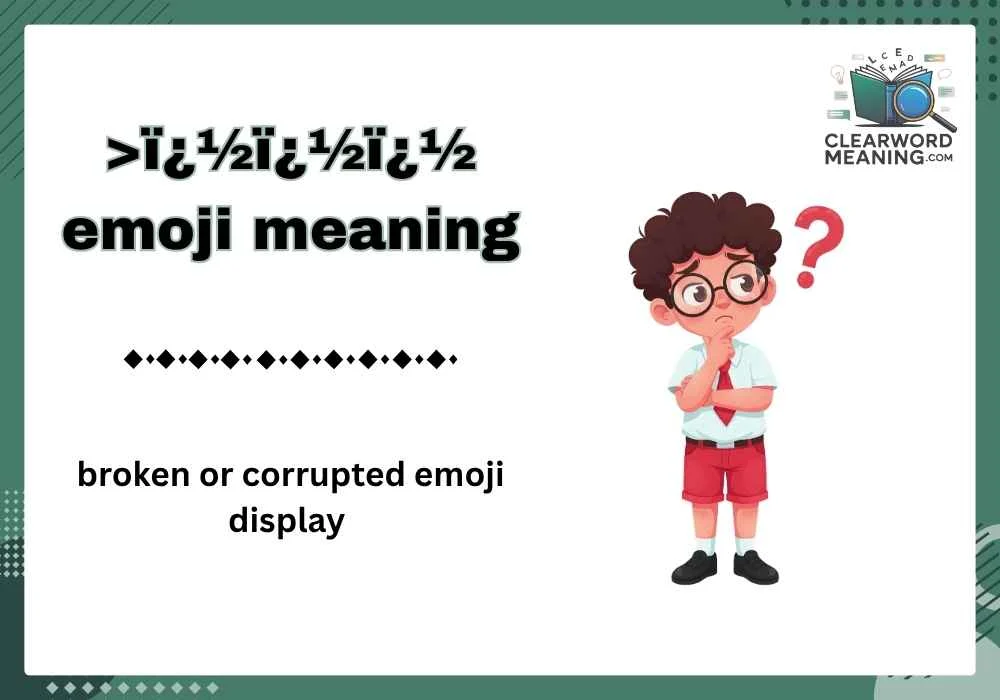
The term >��� emoji meaning usually refers to a broken or corrupted emoji display rather than a real emoji with a fixed universal meaning.
In simple words, this strange text often appears when:
- an emoji fails to load correctly
- the device does not support that emoji
- text encoding gets broken
- copied text changes between apps
- an old browser cannot render modern Unicode symbols
So instead of seeing the intended emoji, users may see weird characters like:
�???- strange symbols mixed with arrows
- broken replacement marks
This is why many people search for >��� emoji meaning after spotting it in a message and thinking it might be a secret slang code.
The real origin behind it
This weird output usually comes from Unicode encoding mismatch.
For example:
- someone sends an emoji from iPhone
- it gets copied into an old Android app
- the app cannot read the Unicode correctly
- it turns into symbols like
���
That means the “meaning” depends on the original emoji that got corrupted.
Sometimes it may have originally been:
- 😂 laughing emoji
- 😭 crying emoji
- 💀 dead laughing meme emoji
- ❤️ heart emoji
- 👀 watching eyes emoji
That’s why context matters a lot.
How to Use >��� Emoji Meaning in Texts or Chat
Most people do not intentionally type this symbol string as slang.
Instead, it usually appears by accident.
Still, internet culture has turned broken text into a funny reaction format. Some users now intentionally use weird corrupted emoji text to create:
- ironic humor
- cursed meme vibes
- chaotic texting energy
- fake “glitched” messages
- sarcasm
Common chat situations
Here’s where you may see it:
Broken device compatibility
A friend sends:
That meme was so funny >���
They probably meant a laughing or skull emoji.
Meme irony
Someone posts:
My brain after 3 hours of scrolling >���
Here it’s used as a glitched reaction face, adding chaotic humor.
Discord or Reddit joke style
Users intentionally use corrupted emoji text to look dramatic:
bro what did I just read >���
This creates a “speechless system error” feeling.
A funny way to think of it:
it’s basically the texting version of your brain crashing.
Examples of >��� Emoji Meaning in Conversations
Real-life style examples make this easier to understand.
Example 1: Funny reaction
Friend 1: I accidentally liked her 2021 picture
Friend 2: NOOOO >���
Possible intended vibe:
- shock
- panic
- screaming laugh
- skull emoji energy
Example 2: Meme comment
When the exam has everything except what you studied >���
This gives a pain + chaos + broken soul vibe.
Example 3: Gaming chat
The server crashed again >���
This works like:
- system broken
- I’m done
- emotional damage
- rage laugh
Example 4: Relationship text
He said “k” after a long paragraph >���
This is usually used to express:
- disbelief
- emotional collapse
- awkward silence
- meme sadness
Honestly, this is why it became searchable. Even when accidental, it feels weirdly expressive.
Common Mistakes or Misunderstandings
People often misunderstand >��� emoji meaning, so let’s clear up the biggest confusion.
Mistake: Thinking it’s a secret Gen Z slang code
It’s usually not a real abbreviation like LOL, FR, IMO, or SMH.
Most of the time it’s just a rendering issue.
Mistake: Assuming it always means one emotion
This broken emoji text can represent many emotions depending on context:
- laughter
- crying
- shock
- embarrassment
- cringe
- speechlessness
Mistake: Copy-pasting it as a normal emoji
Some users copy it thinking it’s trendy, but the receiver may just think your keyboard glitched.
Unless you’re using it for meme humor, it can look confusing.
Mistake: Ignoring context clues
Always look at the sentence around it.
For example:
I can’t believe he wore socks with sandals >���
This likely means:
- dying laughing
- second-hand embarrassment
- disbelief
Context tells the story.
Related Slangs or Abbreviations
If you searched >��� emoji meaning, you’ll probably enjoy these similar internet expressions too.
Keyboard smash
Examples:
- asdfghjkl
- HELP
- NAHHHH
- WHATTT
Used when someone is overwhelmed.
Skull emoji vibe
The corrupted string often replaces the 💀 emoji, which means:
- I’m dead laughing
- this is too funny
- unbelievable cringe
Cry-laugh energy
Sometimes it may represent:
- 😂
- 😭
- 🤣
Especially in older messaging apps.
Related slang terms
Great internal linking opportunities for your blog:
- 💀 emoji meaning in text
- 😭 emoji meaning from a girl
- FR meaning in chat
- SMH meaning in texting
- ISTG meaning
- NPC slang meaning
- side eye emoji meaning
These articles pair naturally with this keyword cluster for SEO.
Where Is It Commonly Used?
The practical side matters because user intent is usually “Where did I even see this?”
Most common platforms include:
- Messenger
- Instagram comments
- TikTok captions
- Discord
- Reddit threads
- YouTube live chats
- gaming communities
- older Android SMS apps
A personal observation: in meme communities, broken emoji text is sometimes even funnier than the actual emoji because it makes the reaction feel more chaotic.
That accidental broken look has become part of modern internet humor culture.
How to Use It Correctly Without Looking Confused
If you want to use this style intentionally, do it in casual meme spaces only.
Best use cases:
- reacting to absurd jokes
- chaotic TikTok comments
- ironic Discord messages
- fake “brain error” moments
- cursed meme captions
Good example
me after reading office emails on Monday >���
Less ideal example
Dear professor, I missed class >���
Definitely avoid it in:
- work emails
- formal messages
- professional DMs
- academic communication
It works best when the goal is humor, irony, or exaggerated confusion.
Why It’s Trending More in 2026
Updated for 2026, strange text strings like this are trending because online humor now loves:
- glitch aesthetics
- cursed captions
- corrupted screenshots
- fake error messages
- absurdist meme formats
The rise of AI-generated memes, low-quality reposts, and cross-platform copying has made broken emoji displays even more common.
So even accidental broken text now feels like a legit reaction format.
That’s why people increasingly search:
>��� emoji meaning
It sits right at the intersection of:
- emoji culture
- meme language
- texting humor
- Unicode glitches
- Gen Z absurd comedy
FAQs:
Is >��� a real emoji?
No, it’s usually not a real emoji. It’s most often a broken display caused by encoding or unsupported device issues.
Why do I only see this on some phones?
Different devices support Unicode updates differently. Older phones or apps may fail to render newer emojis correctly.
Can it mean laughing?
Yes, in many chats it may be a corrupted version of laughing, skull, or crying emojis depending on context.
Why do meme pages use it on purpose?
Because the glitched look feels funny, chaotic, and perfect for absurd humor.
Should I use it in normal texting?
Only casually with friends who understand meme humor. Otherwise it may just look like a phone error.
Conclusion
The simplest way to understand >��� emoji meaning is this: it’s usually a broken emoji display that accidentally became part of internet humor. While it may not have one fixed definition, its emotional vibe often suggests laughter, confusion, chaos, cringe, or total mental shutdown.
In modern texting culture, especially Updated for 2026, people even use broken emoji strings intentionally for irony and meme reactions. The meaning depends heavily on context, platform, and the original emoji that failed to render.
So next time you spot it in a DM or comment section, don’t panic—it’s probably just someone’s emoji turning into chaotic internet art.

I am the author, Brook, dedicated to creating clear and reliable content that informs and engages readers. With a passion for well-researched and valuable information, I focus on delivering content that is both easy to understand and practical. My goal is to build trust with my audience by providing consistent, accurate, and meaningful material. Whether writing for beginners or experts, I strive to make every piece insightful, engaging, and impactful.