Have you ever watched a robot, CGI character, or AI-generated image and felt an odd mix of fascination and discomfort? That strange reaction isn’t just in your imagination—it’s called the uncanny valley meaning, and understanding it can totally change how you see robots, animations, and AI creations.
In this guide, we’ll break down the uncanny valley meaning in simple, relatable language, show how it’s used in modern tech discussions, and give real-life examples to make sense of this fascinating concept. Updated for 2026, this article is your ultimate go-to resource for understanding why some things that look almost human feel so… weird.
What Does “Uncanny Valley” Mean? (Definition & Origin)
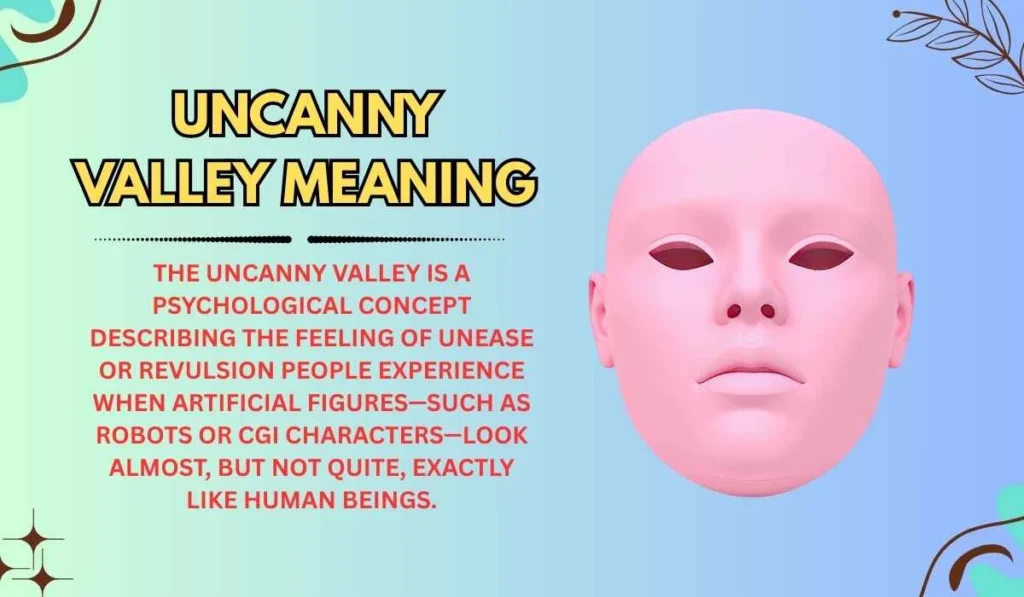
The term uncanny valley refers to the uneasy feeling people get when something looks almost human but not quite right. Imagine a humanoid robot or CGI character that’s nearly lifelike but has slightly unnatural movements or facial expressions. That slight “offness” triggers discomfort or even creepiness in viewers.
- Origin: The concept was first introduced by Japanese roboticist Masahiro Mori in 1970. He observed that as robots become more humanlike, our emotional response to them becomes more positive—until they reach a point where they’re almost human, but not perfect. That drop in comfort is the “valley.”
- Why it matters today: With AI-generated faces, virtual influencers, and hyper-realistic video games, understanding the uncanny valley meaning helps creators make content that feels appealing rather than unsettling.
How to Use “Uncanny Valley” in Texts or Chat
Talking about uncanny valley in conversation doesn’t have to be complicated. Here’s how you can naturally include it in texts, social media posts, or forums:
- Casual chat: “That new AI-generated face is giving me major uncanny valley vibes 😬.”
- Tech discussions: “The CGI in this movie is amazing, but some characters fall into the uncanny valley.”
- Memes & reactions: Perfect for funny posts about slightly weird humanoid robots or avatars.
Tip: Pair it with emojis like 🤖😳 to convey the “creepy-but-cool” feeling visually in chats.
Examples of “Uncanny Valley” in Conversations
Seeing examples in real-life chat can make the concept easier to grasp:
- Friend 1: “Did you see the new AI-generated TikTok influencer?”
Friend 2: “Yeah… it’s in the uncanny valley for sure. Her smile is too stiff.” - Gamer 1: “The NPCs in the latest game look lifelike!”
Gamer 2: “True, but some are kinda creepy. Definitely the uncanny valley effect.” - Online forum: “I can’t enjoy the movie; the robots are almost human, but not quite… total uncanny valley moment.”
Common Mistakes or Misunderstandings
Many people confuse the uncanny valley meaning with general creepiness or bad design, but it’s more specific than that.
- Mistake: Thinking any weird-looking robot is “uncanny valley.”
Correction: Only humanoid figures that are almost—but not perfectly—human trigger this reaction. - Mistake: Assuming it only applies to robots.
Correction: It applies to CGI, AI avatars, prosthetics, and even dolls. - Mistake: Believing it’s a negative term only.
Correction: Creators use it intentionally sometimes to make characters unsettling or surreal.
Related Slangs or Abbreviations
In modern chat or tech discussions, uncanny valley often shows up alongside these terms:
- CGI creepiness – referring to slightly off digital characters
- AI vibes – used to describe something generated by artificial intelligence
- Almost-human syndrome – informal slang for things in the uncanny valley
- Creepy realistic – memes often describe uncanny valley situations
- Hyper-real avatars – used in gaming, VR, and metaverse discussions
Updated 2026 Examples of Usage
As AI and digital tech evolve, the uncanny valley effect is showing up more in:
- AI-generated influencers: Some digital celebrities are lifelike but have slightly unnatural expressions.
- Video games: Characters in next-gen games like Unreal Engine 6 sometimes enter the uncanny valley if facial animations aren’t perfect.
- VR experiences: Virtual humans in metaverse social apps can feel eerie if movements are just slightly off.
FAQs
What does uncanny valley mean in simple words
It means the feeling of unease when something looks almost human but not quite right.
Why do robots in movies feel creepy
Because if they’re too humanlike but slightly off, they enter the uncanny valley and trigger discomfort.
Can AI avatars avoid the uncanny valley
Yes, by balancing realism with stylized features, creators can make them appealing instead of creepy.
Is uncanny valley only about faces
No, it can involve full-body movements, gestures, or even voice if they seem almost human.
Where do I see uncanny valley in real life
In AI influencers, CGI movies, humanoid robots, VR avatars, and even lifelike dolls.
Conclusion
Understanding the uncanny valley meaning helps you appreciate why some humanoid robots, CGI characters, or AI creations feel unsettling. It’s not just “bad design”—it’s a psychological response tied to our instinctive recognition of almost-human figures.
Whether you’re a gamer, a tech enthusiast, or just curious about AI trends, knowing about the uncanny valley can make you a sharper observer of modern digital creations.

I am the author, Mitchell, passionate about creating engaging and reliable content that adds real value to readers. With a focus on clarity, accuracy, and insight, I aim to make complex topics easy to understand. I believe in delivering well-researched, practical information that builds trust and helps my audience make informed decisions. Every piece I write is crafted to be informative, meaningful, and impactful, reflecting my commitment to quality and consistency.