The term “foster child” is often heard in conversations about child welfare, adoption, or social support systems—but its real meaning is deeper and more emotionally layered than most people realize.
At first glance, it might sound like just another legal label. In reality, it represents a child’s temporary placement in a new family situation due to difficult circumstances in their biological home life.
Understanding the foster child meaning isn’t just about definitions—it’s about understanding protection, responsibility, emotional transition, and sometimes uncertainty in a child’s life journey.
Let’s break it down in a way that feels real, not textbook-like.
Foster Child Meaning (Simple Explanation)
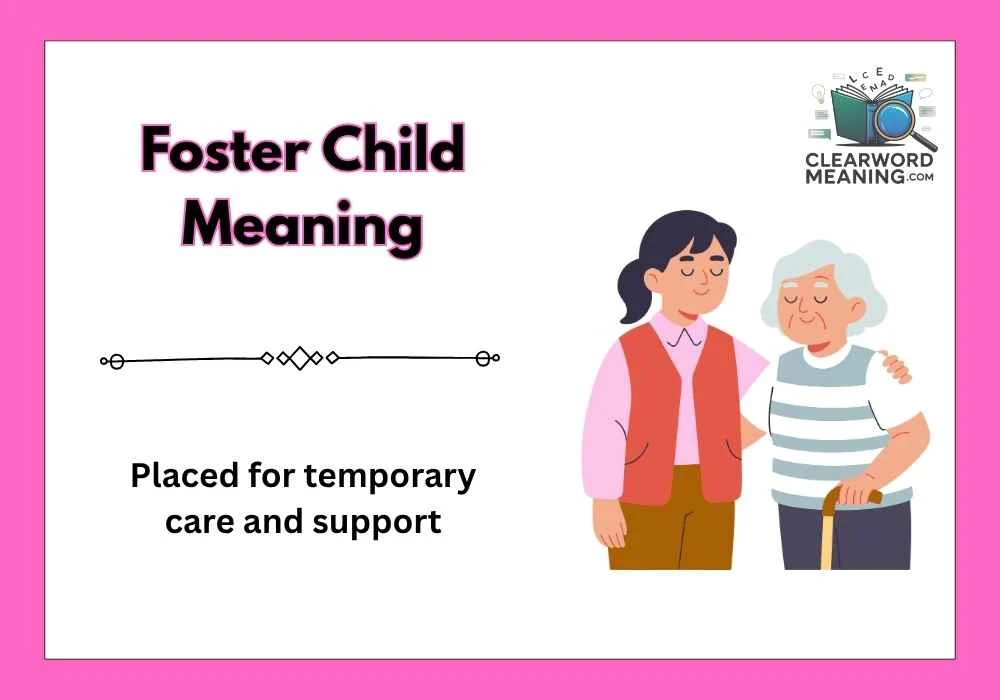
A foster child is a child who is placed under the care of someone other than their biological parents because the original home is temporarily unsafe, unstable, or unable to provide proper care.
That caregiver is known as a foster parent, and they are approved by child welfare authorities or government systems.
In simple words:
A foster child is a child who lives with a different family for care and protection, but is not legally adopted by them.
This arrangement is usually temporary, though in some cases it can last for years depending on the situation.
Foster child vs adopted child
A foster child is a child placed temporarily under the care of a foster family by a government or child welfare agency. The goal is usually to provide safety and support until the child can return to their biological family or find a permanent solution.
An adopted child, on the other hand, becomes a permanent legal member of a new family. Adoption fully transfers parental rights, meaning the adoptive parents become the child’s legal parents forever.
👉 Key difference:
Foster care is usually temporary, while adoption is permanent and legal.
Foster child meaning in English
A foster child in English refers to a child who is placed in the care of someone other than their biological parents because the original family is unable to care for them.
This care is provided by foster parents under the supervision of child welfare services. The arrangement is designed to ensure the child’s safety, emotional support, and basic needs.
👉 Simple meaning: A child living with another family for care and protection, not adoption.
Foster child in French
In French, foster child is translated as “enfant placé” or “enfant en famille d’accueil.”
- Enfant placé = a child placed under care
- Famille d’accueil = foster family
👉 Meaning in French context: A child who lives with a foster family temporarily because their biological parents cannot care for them.
Foster child vs orphan
A foster child still has living parents but cannot stay with them due to safety, financial, or family issues. The child is placed under temporary care.
An orphan is a child whose one or both parents have died.
👉 Key difference:
- Foster child = parents alive, but unable to care temporarily
- Orphan = parents deceased or permanently absent
Foster child synonym
Common synonyms or related terms for foster child include:
- Ward
- Child in foster care
- Fostered child
- Dependent child
- Child under guardianship
👉 Note: “Ward” is often used in legal or formal contexts.
Foster child meaning in Arabic
In Arabic, foster child is commonly translated as:
- طفل في رعاية أسرة بديلة (child in alternative family care)
- طفل بالتبني المؤقت (temporary foster child care context)
👉 Meaning: A child placed under the care of a foster family because their biological family cannot provide proper care at that time.
Foster child meaning in Chinese
In Chinese, foster child is:
- 寄养儿童 (jì yǎng ér tóng)
👉 Meaning: A child who is temporarily raised by another family or guardian because their biological parents are unable to care for them.
This arrangement is supervised by social welfare authorities to ensure the child’s well-being and safety.
Foster care meaning
Foster care is a system where children who cannot live with their biological parents are placed with trained or approved foster families.
The purpose of foster care is to provide:
- Safety and protection
- Emotional support
- Stable living environment
- Temporary care until reunification or adoption
👉 Simple definition: A government-supported system that gives children a safe home when their own family cannot care for them.
Why Children Become Foster Children
Children don’t enter foster care randomly. It usually happens when authorities step in to protect their well-being.
Some common reasons include:
- Abuse or neglect in the biological home
- Parents facing serious illness or addiction
- Financial instability that affects care
- Legal issues or incarceration of parents
- Unsafe living environments
- Loss of parents or guardians
- Court decisions prioritizing child safety
In most countries, child protection services or welfare courts decide when a child needs foster placement.
Organizations like UNICEF and national child protection systems emphasize that foster care is meant to be a protective solution, not a punishment.
Foster Care System Explained
To understand foster child meaning fully, you also need to understand the system behind it.
Foster care is a structured support system where:
- The government or authorized agencies place children with trained families
- Foster parents provide daily care, education, and emotional support
- The child’s biological parents may still have legal rights (in many cases)
- The goal is either family reunification or long-term alternative care
Think of foster care as a temporary safety bridge between crisis and stability.
Foster Child vs Adopted Child (Important Difference)
One of the most common confusions is between foster care and adoption. They are very different legally and emotionally.
| Aspect | Foster Child | Adopted Child |
|---|---|---|
| Legal status | Temporary guardianship | Permanent family membership |
| Parental rights | Usually remain with biological parents | Fully transferred to adoptive parents |
| Duration | Temporary or uncertain | Permanent |
| Goal | Reunification or stability | Permanent family placement |
A foster child may return to their biological parents if conditions improve, while adoption creates a lifelong legal family bond.
Emotional Meaning Behind Being a Foster Child
Beyond legal definitions, the emotional reality of being a foster child can be complex.
Many foster children experience:
- Confusion about belonging
- Emotional attachment struggles
- Fear of another relocation
- Hope for stability and safety
- Mixed feelings about biological parents
At the same time, foster care can also provide:
- A safe and stable environment
- Emotional healing opportunities
- Access to education and healthcare
- Supportive relationships with foster families
It’s important to understand that every foster child experience is different. Some children feel immediate relief, while others take time to adjust.
Life of a Foster Child in Everyday Terms
To make this more relatable, imagine a child suddenly moving from their home into a completely new environment.
They may have to:
- Change schools
- Adjust to new rules and routines
- Meet unfamiliar caregivers
- Build trust from scratch
- Deal with emotional uncertainty
Even if the foster home is loving and safe, the transition itself can feel overwhelming.
A foster child’s life is often a balance between stability in the present and uncertainty about the future.
Types of Foster Care Placements
Foster care is not one-size-fits-all. Different situations require different types of placement:
1. Emergency Foster Care
Immediate placement for children in crisis situations.
2. Short-Term Foster Care
Temporary care while parents address issues or legal processes continue.
3. Long-Term Foster Care
When returning to biological parents is not possible in the near future.
4. Kinship Care
When children are placed with relatives like grandparents, aunts, or uncles.
Each type aims to prioritize the child’s safety and emotional well-being.
How Foster Parents Are Selected
Foster parents don’t just volunteer—they go through screening and approval processes.
This may include:
- Background checks
- Home safety evaluations
- Training programs
- Psychological assessments
- Legal approvals from child welfare authorities
The goal is to ensure that foster children are placed in safe, stable, and supportive homes.
Common Misunderstandings About Foster Children
There are several myths around foster care that often lead to confusion.
1. “Foster children are unwanted”
False. Most foster children are placed for protection, not rejection.
2. “Foster care is the same as adoption”
No. Foster care is usually temporary; adoption is permanent.
3. “Foster children cannot bond with families”
In reality, many foster children build strong emotional connections over time.
4. “Foster care always ends in adoption”
Not always. Many children return to their biological families.
Psychological Impact of Foster Care
The emotional journey of a foster child can vary widely depending on age, experience, and support system.
Possible psychological effects include:
- Attachment difficulties
- Anxiety or trust issues
- Resilience development
- Emotional maturity from early life challenges
But with proper care, many foster children grow into emotionally strong and independent adults.
Support from foster families, counselors, and social workers plays a major role in this healing process.
Real-Life Example of Foster Child Meaning
Imagine a 10-year-old child whose parents are unable to provide safe living conditions due to financial instability and health issues.
A court places the child with a foster family:
- The child attends a new school
- Lives in a safe home environment
- Receives emotional support
- Maintains supervised contact with biological parents
This temporary arrangement continues until the parents are able to provide a stable home again.
This is the real-world application of foster care.
Cultural Understanding of Foster Children
Different cultures view foster care differently.
In some countries, it is a widely used system supported by government programs. In others, family-based or extended-family care is more common.
However, globally, the core idea remains the same:
Children deserve safety, stability, and care regardless of circumstances.
International child welfare organizations like UNICEF and other social services promote foster care as part of child protection frameworks.
Situations Where the Term “Foster Child” Is Used
The term is commonly used in:
- Legal documents
- Child welfare reports
- Social work discussions
- Educational contexts
- Media stories about child protection
- Adoption and family counseling systems
In casual conversation, it may also be used when discussing someone’s upbringing or background.
When the Term Should Be Used Carefully
Even though it is a standard term, it should be used respectfully.
Avoid:
- Labeling children without context
- Defining a child only by their foster status
- Making assumptions about their personal story
Instead, focus on understanding the system and the child’s situation with sensitivity.
Related Terms You Might Also Explore
If you’re building internal links or expanding content, these related terms connect well:
- Foster care system meaning
- Adoption vs foster care
- Guardian meaning
- Orphan vs foster child
- Child custody meaning
- Kinship care definition
These help build stronger topical authority in child welfare content clusters.
FAQ: Foster Child Meaning
What is the simple meaning of a foster child?
A foster child is a child placed in temporary care with a foster family for safety and support.
Is a foster child legally adopted?
No. A foster child is not legally adopted and may still have legal ties to biological parents.
How long does foster care last?
It can last from a few days to several years depending on the child’s situation and legal decisions.
Do foster children go back to their parents?
In many cases, yes—if the biological parents can provide a safe and stable home again.
Can foster children stay permanently with foster families?
Sometimes, yes. If reunification is not possible, adoption or permanent guardianship may occur.
Final Thoughts
The foster child meaning goes far beyond a dictionary explanation. It represents a child’s journey through uncertainty toward safety, stability, and care.
At its core, foster care is not about separation—it’s about protection. It exists to ensure that even in difficult circumstances, a child is not left without support or safety.
Behind every foster child is a story that is often complex, sometimes painful, but always centered around one basic human need: the right to be cared for.

I am the author, M Brauer, a dedicated and detail-focused professional committed to quality content and clear information. I focus on creating reliable, easy-to-understand material that delivers real value and builds trust with readers.