Looking for a simple, accurate explanation of escheated without the confusing legal language (and endless definitions)? You’re in the right place.
This Escheated Meaning Explained guide delivers a clear breakdown of the term, including how unclaimed property ends up with the government and what it means for you.
We’ll cover the definition, key examples, and practical insights so you can understand the concept instantly even if you’re completely new to it. Let’s make it easy.
What Does “Escheated” Mean? Definition & Origin
The word escheated comes from an old legal concept, but don’t worry—it’s not as intimidating as it sounds.
Simple Definition
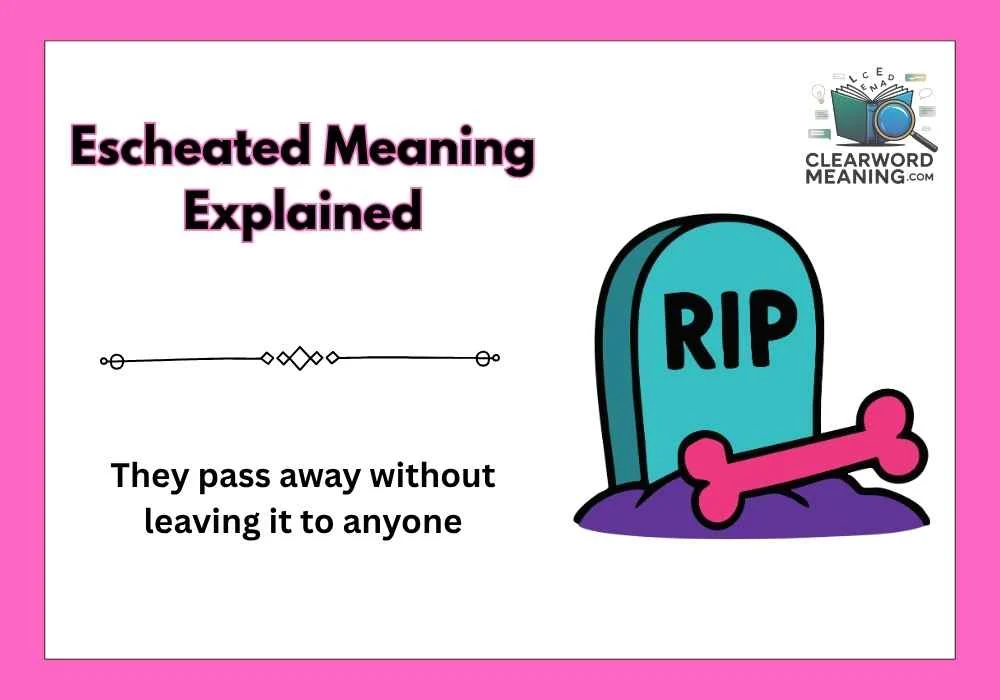
Escheated meaning refers to property or assets that are transferred to the government because the owner has died without a will or without any legal heirs.
In simpler terms:
- Someone owns money, land, or assets
- They pass away without leaving it to anyone
- The government steps in and takes ownership
That process is called escheat, and the property is said to be escheated.
Origin of the Word
The term comes from the old French word eschete, meaning “something that falls to one.” Historically, it was used in feudal systems when land would revert to a lord if a tenant died without heirs.
Even today, the concept still exists—especially in modern financial systems where unclaimed money, inactive bank accounts, or forgotten investments can become escheated.
How to Use “Escheated” in Texts or Chat
Now you might be wondering: Is this even used in texting or online chats?
Surprisingly, yes—though not in the same casual way as slang like “LOL” or “BRB.”
Modern Usage Contexts
You’ll most commonly see escheated meaning used in:
- Legal discussions
- Finance-related chats
- Reddit threads or Quora answers
- Educational content
- Occasionally in memes or sarcastic posts
How People Use It Informally
In modern texting or online language, people sometimes use “escheated” in a humorous or exaggerated way.
For example:
- “Bro disappeared so hard, his gaming account probably got escheated 💀”
- “If I don’t log into this app for 10 years, will my coins get escheated? 😂”
Key Tip
Escheated isn’t slang, but it can be used like slang in a joking or metaphorical way online.
Examples of “Escheated” in Conversations
Let’s make things clearer with some real-life and chat-style examples.
Formal Examples
- “The unclaimed property was escheated to the state after five years.”
- “If no heirs are found, the estate will be escheated.”
Casual / Chat Examples
- “My old PayPal funds probably got escheated by now 😅”
- “Imagine forgetting your crypto wallet and it gets escheated somehow”
- “That domain name got escheated because no one renewed it”
Funny/Relatable Scenario
Picture this:
You forget about a mobile game account with tons of rewards. Years later, you joke with your friends:
“At this point, my account belongs to the government. Fully escheated 😂”
This is how traditional words get a modern internet twist.
Common Mistakes or Misunderstandings
Even though the escheated meaning is straightforward, people often get it wrong.
Confusing It with “Seized”
- Wrong idea: Escheated = taken forcefully
- Correct idea: Escheated = transferred legally due to no ownership
Thinking It Only Applies to Land
Not true. It can apply to:
- Bank accounts
- Stocks and investments
- Digital assets
- Unclaimed funds
Using It in the Wrong Context
Avoid saying:
- “My phone got escheated” ❌
- “The police escheated my car” ❌
Unless there’s no legal owner and it goes to the state, it’s not escheated.
Spelling Mistakes
Common incorrect versions:
- Esheated
- Escheted
- Eschead
Correct spelling: Escheated
Related Slangs or Abbreviations
While escheated meaning isn’t slang, it connects with some modern expressions and concepts.
Similar Concepts
- Unclaimed funds – Money left untouched for years
- Dormant account – Account inactive for a long time
- Asset forfeiture – Property taken due to legal reasons (different but related)
Internet Slang Comparisons
People sometimes compare it jokingly with:
- “Ghosted” – When something disappears (like a person or account)
- “Gone forever” – Casual way of saying something is lost
- “RIP account” – When an account is dead or inaccessible
Internal Linking Suggestions
If you’re building a blog, you can link this article with:
- “What Does ‘AFK’ Mean in Chat?”
- “LOL Meaning Explained”
- “What is ‘Ghosted’ in Texting?”
These help users explore both formal words and internet slang together.
When and Where Is “Escheated” Used Today?
Even in 2026, escheated meaning is still relevant—especially in the digital era.
Real-World Uses
- Banks transferring inactive funds to the state
- Governments holding unclaimed property
- Legal estate cases
Digital Age Examples
- Forgotten crypto wallets
- Unused online payment accounts
- Gaming or platform credits
Social Media Trend
Recently, people have started using “escheated” humorously in:
- TikTok captions
- Twitter (X) jokes
- Meme culture
Example:
“If I don’t finish this course, my knowledge will be escheated to the void 💀”
FAQs:
What does escheated mean in simple words
It means property or money goes to the government when no one claims it or the owner has no heirs.
Is escheated a slang word
No, it’s a legal term, but people sometimes use it jokingly in online conversations.
Can money in a bank account be escheated
Yes, if the account stays inactive for a long time, it can be transferred to the state as unclaimed property.
How is escheated used in texting
Mostly in a humorous or exaggerated way, like saying something is “lost forever” or abandoned.
Is escheated still relevant in 2026
Yes, especially with digital assets and unclaimed online funds becoming more common.
Conclusion
Understanding the escheated meaning doesn’t require a law degree. At its core, it simply describes what happens when property has no rightful owner and is legally transferred to the government.
While it started as a formal legal term, it’s slowly finding its way into modern conversations, especially in humorous or metaphorical contexts online.

I am the author, M Brauer, a dedicated and detail-focused professional committed to quality content and clear information. I focus on creating reliable, easy-to-understand material that delivers real value and builds trust with readers.