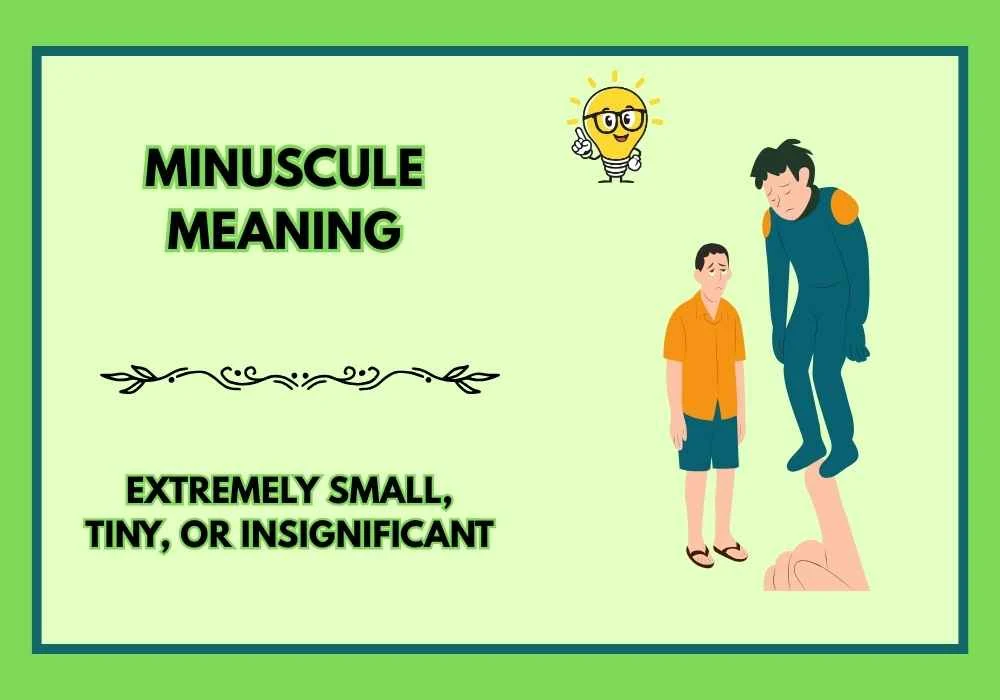
Have you ever come across the word “minuscule” in a chat, text, or social media post and wondered what it truly means? In today’s fast-paced digital conversations, understanding words like minuscule meaning can make your chats sharper, smarter, and way more relatable.
Whether it popped up in a meme, a casual text, or a forum discussion, knowing the real meaning behind minuscule helps you respond confidently and avoid awkward misunderstandings.
Updated for 2026, this guide will explain everything about minuscule meaning, its origin, usage, and fun examples, so you can use it naturally in your digital conversations.
What Does “Minuscule” Mean? (Definition & Origin)
The term minuscule is an adjective used to describe something extremely small, tiny, or insignificant. Its roots trace back to the Latin word minusculus, meaning “somewhat smaller,” which eventually made its way into Old French as minuscule.
In modern English, minuscule can describe physical size, like a tiny object, or abstract things, such as a small mistake, minor detail, or minimal impact. The word adds a touch of sophistication and precision compared to simply saying “tiny” or “small.”
Example in everyday text:
- “The typo in your essay is minuscule, don’t stress about it.”
- “I only have a minuscule amount of free time today.”
How to Use “Minuscule” in Texts or Chat
Using minuscule in digital conversations is surprisingly easy and can make your messages sound witty and intelligent. Here’s how:
- Highlight minor issues: Perfect for showing that something is almost negligible.
- “That error in the code is minuscule, it won’t affect the program.”
- Describe size or quantity: Emphasize how small something is.
- “The dog in the video is minuscule, barely bigger than a hamster.”
- Playfully exaggerate: Use it humorously to describe tiny things.
- “My motivation today is minuscule 😂”
Tip: Pair minuscule with emojis like 🐜, 🔹, or 🪶 for a fun, modern chat vibe.
Examples of “Minuscule” in Conversations
Seeing minuscule in action helps you understand its natural flow in chats and texts. Here are some relatable scenarios:
- Texting a friend about homework:
- “Don’t worry about that question, it’s minuscule compared to the whole assignment.”
- Commenting on social media:
- “The mistake in this post is minuscule, but still funny 😂”
- Casual messaging:
- “I have a minuscule chance of winning, but I’m trying anyway!”
These examples show that minuscule works both in formal and casual digital spaces.
Common Mistakes or Misunderstandings
Even though minuscule is straightforward, people sometimes misuse it. Avoid these mistakes:
- Confusing minuscule with miniscule: The correct spelling is minuscule, but “miniscule” is often seen online.
- Overusing in casual chats: While impressive, using it too much may sound forced.
- Misapplying for large things: Remember, minuscule only describes tiny or insignificant items.
Quick tip: If you can replace it with “tiny,” “small,” or “insignificant,” it’s likely appropriate to use minuscule.
Related Slangs or Abbreviations
While minuscule itself isn’t a slang, it often pops up near casual chat abbreviations and trendy texting words. Here are some contexts:
- LOL or LMAO: Reacting to a tiny mistake or minor issue.
- “The typo was minuscule lol”
- SMH: Expressing disbelief over a small oversight.
- “Their complaint is minuscule smh”
- BRB / TTYL: Sometimes used humorously with tiny updates.
- “BRB, just fixing this minuscule bug 🐞”
Pairing minuscule with slang adds a modern, playful tone to your messages.
FAQs:
What is the difference between minuscule and tiny?
Minuscule is slightly more formal and precise than tiny, which is casual and general.
Can I use minuscule in professional emails?
Yes! It’s perfect for highlighting minor issues or small amounts politely.
Is minuscule pronounced differently in different countries?
Slightly. In American English, it’s usually min-uh-skool, while British English may say min-uh-skyool.
Is minuscule commonly used in online chats?
It’s less common than LOL or BRB but is popular in witty or sarcastic messages.
Can minuscule describe abstract concepts?
Absolutely! You can describe tiny mistakes, minor differences, or negligible chances with it.
Conclusion
Understanding the minuscule meaning can upgrade your digital conversations instantly. From describing tiny mistakes to minor details, this word brings precision, style, and a touch of sophistication to your texts.
Next time you encounter a tiny error or want to emphasize something small, use minuscule confidently. Its versatility works across casual chats, professional emails, and social media posts.

I am the author, Mitchell, passionate about creating engaging and reliable content that adds real value to readers. With a focus on clarity, accuracy, and insight, I aim to make complex topics easy to understand. I believe in delivering well-researched, practical information that builds trust and helps my audience make informed decisions. Every piece I write is crafted to be informative, meaningful, and impactful, reflecting my commitment to quality and consistency.