Curious about dongsaeng meaning and why everyone in K-pop, K-drama, and online chats keeps using it? Whether you’re texting your friends or scrolling through Instagram, knowing the dongsaeng meaning can make your conversations more relatable and culturally savvy.
Dongsaeng is more than just a word it’s a term that conveys closeness, affection, and sometimes playful teasing between people of different ages.
In this guide, we’ll break down the dongsaeng meaning, show you how to use it naturally in texts or chats, and share funny, real-life examples that make the term unforgettable.
What Does “Dongsaeng” Mean? (Definition & Origin)
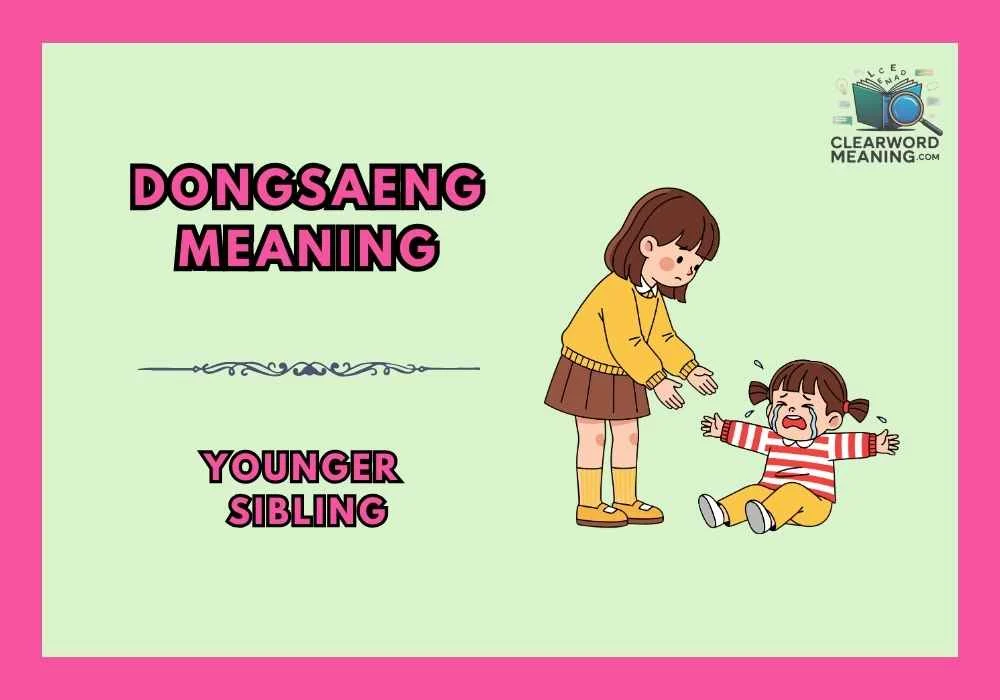
Dongsaeng (동생) is a Korean word that literally means “younger sibling”. But in everyday conversation, it’s much more than that. Koreans use it to address someone younger than themselves, whether it’s a brother, sister, friend, or even a colleague.
- Origin: The word comes from Korean family hierarchy culture, emphasizing respect for age differences.
- Literal meaning: Younger sibling
- Extended meaning: Someone younger you care about or are close to
Think of dongsaeng as a mix between “little bro/little sis” and a friendly term of endearment. It’s widely used in K-dramas, K-pop fan interactions, and social media.
How to Use “Dongsaeng” in Texts or Chat
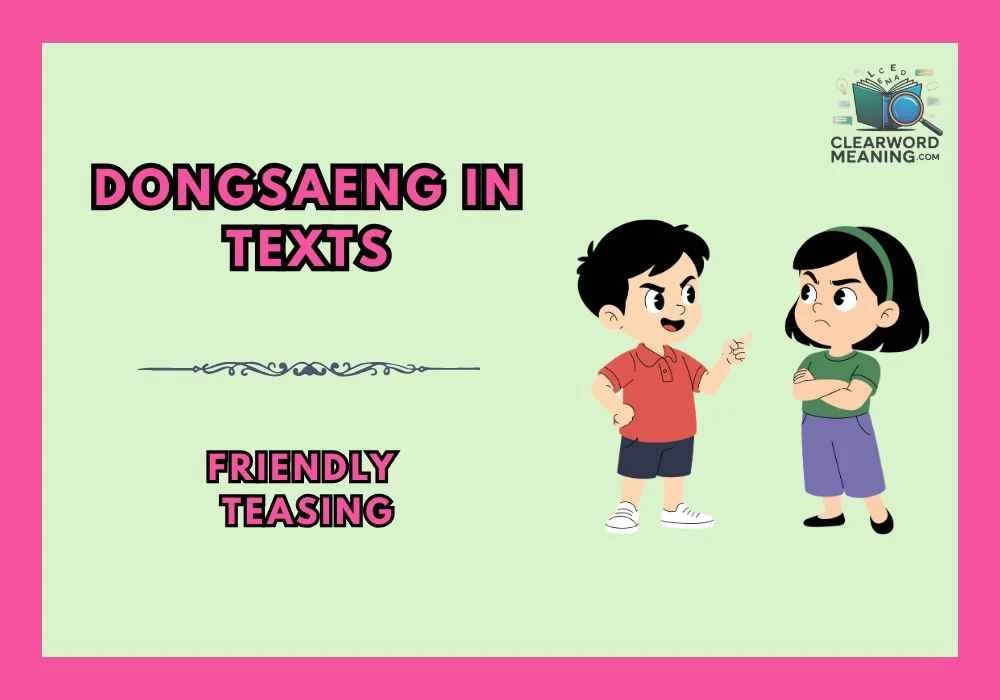
Using dongsaeng in texts is easy once you know the context. Here’s how:
- Direct addressing:
- “Hey dongsaeng, did you finish your homework?”
- Perfect for friends younger than you, or younger siblings.
- Friendly teasing:
- “Stop acting like a baby, dongsaeng 😏”
- Adds a playful vibe to your conversation.
- Compliments or praise:
- “You’re improving so fast, dongsaeng!”
- Shows care and encouragement.
💡 Tip: Don’t use it for someone older or your peer unless joking—they may find it disrespectful.
Examples of “Dongsaeng” in Conversations
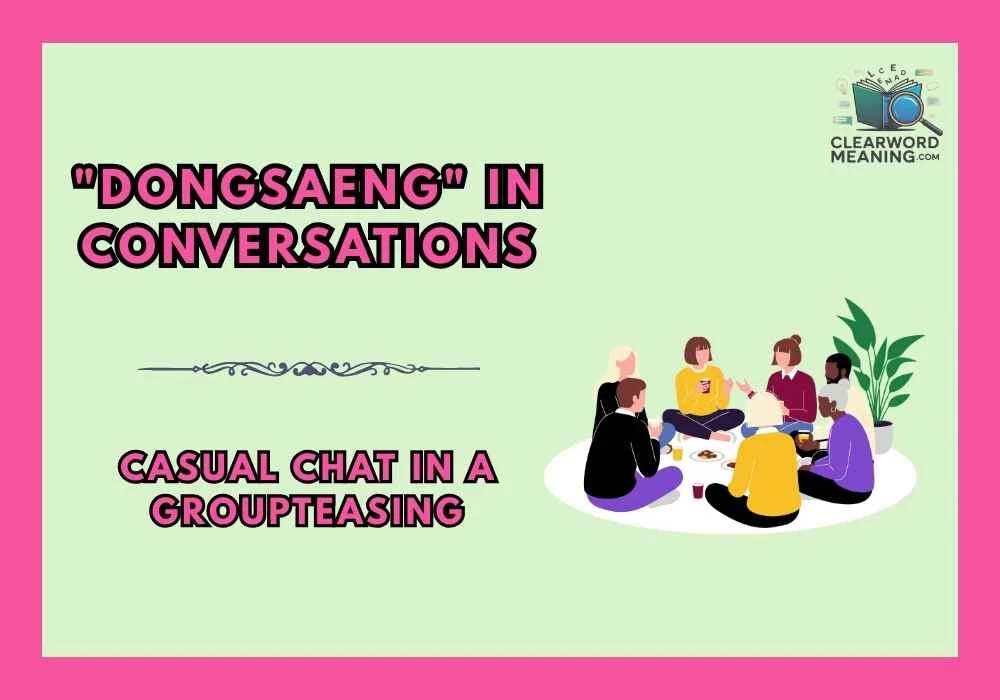
Here are some relatable scenarios where dongsaeng fits naturally:
- Texting a younger friend
- Friend: “I can’t figure out this assignment 😩”
- You: “Don’t worry, dongsaeng, I got you!”
- Social media comment
- Instagram: “Your dance moves are insane!”
- Comment: “Thanks, dongsaeng! Keep slaying 👏”
- Casual chat in a group
- “Come on, dongsaeng, let’s grab some food 🍔”
Notice how it creates warmth, familiarity, and casual fun without being formal.
Common Mistakes or Misunderstandings
Many beginners make small errors when using dongsaeng. Avoid these pitfalls:
- Using it with older people – It can sound rude.
- Assuming everyone knows it – Some may not understand outside K-culture circles.
- Overusing it – Too many mentions can feel forced or cheesy.
✅ Pro tip: Use it sparingly and naturally to keep your messages authentic and friendly.
Related Slangs or Abbreviations
If you love dongsaeng, you’ll also like these Korean texting terms:
- Hyung (형) – Older male you respect
- Noona (누나) – Older female you admire
- Oppa (오빠) – Older male friend or boyfriend
- Unni (언니) – Older female friend or sister
- Maknae (막내) – The youngest in a group, often in K-pop groups
Using these together can make your texts and chats feel authentically K-culture savvy.
FAQs:
What is the difference between dongsaeng and hyung?
Dongsaeng refers to someone younger, while hyung refers to an older male. The key difference is age and respect hierarchy.
Can dongsaeng be used romantically?
Yes! Some people use it playfully in flirty texts or K-drama contexts, but it’s mainly friendly.
Is dongsaeng only for Koreans?
No! Fans of K-pop, K-drama, and Korean culture worldwide often use it in casual chats.
How do you pronounce dongsaeng correctly?
It’s pronounced as “dong-seng”, with a soft “d” and nasal ending.
Can I use dongsaeng in professional settings?
Not really. It’s casual and friendly—best for friends, younger colleagues, or family.
Conclusion
Dongsaeng is more than just a word—it’s a cultural gem that expresses care, familiarity, and playful warmth. Using it correctly can make your chats more engaging, relatable, and trendy in 2026.
Remember, the key points:
- Dongsaeng = younger sibling / younger friend
- Best used in casual, friendly contexts
- Combine with other Korean slangs for full effect
Share your favorite text abbreviation in the comments and start using dongsaeng confidently in your chats today!

I am the author, Brook, dedicated to creating clear and reliable content that informs and engages readers. With a passion for well-researched and valuable information, I focus on delivering content that is both easy to understand and practical. My goal is to build trust with my audience by providing consistent, accurate, and meaningful material. Whether writing for beginners or experts, I strive to make every piece insightful, engaging, and impactful.