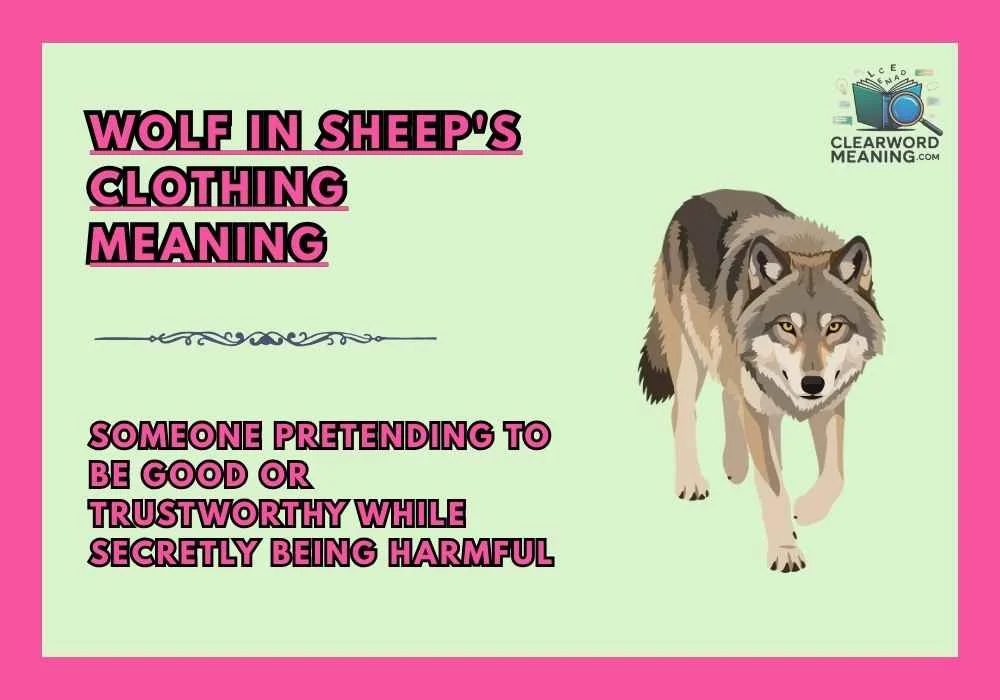
Understanding the wolf in sheep’s clothing meaning is essential in today’s fast-paced world, whether online, at work, or in social circles. This phrase refers to someone who appears harmless or friendly but actually has hidden motives or intentions.
Many people misuse or overlook this concept, leading to misunderstandings or even betrayal. In this guide, you’ll learn the wolf in sheep’s clothing meaning in clear, simple terms, along with practical examples from texting, social media, and daily life.
Updated for 2026, this article equips you to recognize deceptive behaviors, protect yourself, and even use this term correctly in conversations for maximum clarity and impact.
What Does “Wolf in Sheep’s Clothing” Mean? (Definition & Origin)
The phrase “wolf in sheep’s clothing” originates from an ancient fable that warns against deceitful appearances. A wolf disguised as a sheep infiltrates the flock to catch prey, symbolizing people who hide malicious intentions behind a friendly exterior.
- Literal meaning: A predator dressed as harmless prey.
- Figurative meaning: Someone pretending to be good or trustworthy while secretly being harmful.
- Origin: Traced back to Aesop’s fables and commonly used in literature, business, and modern conversations.
The term is widely applied to personal relationships, social media interactions, workplace dynamics, and online communities where deception may occur.
How to Use “Wolf in Sheep’s Clothing” in Texts or Chat
Using this phrase in texting or chats can help describe someone sneaky or manipulative without directly attacking them. Here’s how you can use it naturally:
- Casual chat: “Be careful with Jake; he’s a total wolf in sheep’s clothing.”
- Professional warning: “That client seems helpful, but I sense a wolf in sheep’s clothing situation.”
- Social media post: “Spotting a wolf in sheep’s clothing is easier than you think if you know the signs.”
Tips for usage:
- Keep it context-appropriate—use it for subtle warnings.
- Avoid overusing it, or it may seem dramatic.
- Pair it with examples of suspicious behavior for clarity.
Examples of “Wolf in Sheep’s Clothing” in Conversations
Seeing it in real-life or text conversations helps solidify its meaning. Here are some examples:
- Text example:
- Friend 1: “I think Lisa is super sweet.”
- Friend 2: “Yeah, but don’t forget she’s a wolf in sheep’s clothing—remember last month?”
- Work scenario:
- “He offered to help with the project, but he’s really a wolf in sheep’s clothing, trying to take credit for my work.”
- Social media:
- “That influencer seems nice, but she’s a wolf in sheep’s clothing—watch her sponsored posts closely.”
These examples show that the term works in casual chats, professional conversations, and online commentary.
Common Mistakes or Misunderstandings
Many people misinterpret or misuse this phrase. Avoid these pitfalls:
- Using it for minor disagreements: Not every dishonest action makes someone a wolf in sheep’s clothing.
- Overgeneralization: Don’t label someone based solely on first impressions.
- Ignoring context: The phrase implies hidden intent, not just bad behavior.
By understanding these nuances, you can use the term more accurately and avoid exaggerating situations.
Related Slangs or Abbreviations
For online or texting usage, related phrases can add color to your language:
- Snake in the grass: Someone secretly harmful.
- Backstabber: A person who betrays friends or colleagues.
- Frenemy: Friend pretending to be supportive but actually competitive.
- Fake AF: Slang for extremely fake people.
Incorporating these phrases keeps your chats modern and relatable, especially for younger audiences or social media discussions.
FAQs:
What does a wolf in sheep’s clothing mean in texting?
It means someone seems friendly or harmless in messages but has hidden motives.
How can I spot a wolf in sheep’s clothing?
Look for inconsistencies between words and actions, subtle manipulations, or repeated deceptive behavior.
Can the phrase be used jokingly?
Yes! Among friends, it can describe playful trickery or harmless mischief.
Is it only about people?
No, it can describe situations, groups, or even online scams that appear trustworthy but are harmful.
Are there modern alternatives for this phrase?
Yes, slang like “snake in the grass” or “fake AF” works in casual texting or social media contexts.
Conclusion
The wolf in sheep’s clothing meaning is a timeless phrase with real-world relevance in 2026. It warns us to look beyond appearances and identify hidden intentions, whether in friends, colleagues, or online interactions.
By learning the definition, spotting examples in everyday conversations, and avoiding common mistakes, you can use this term accurately and protect yourself from deceit.

I am the author, Mitchell, passionate about creating engaging and reliable content that adds real value to readers. With a focus on clarity, accuracy, and insight, I aim to make complex topics easy to understand. I believe in delivering well-researched, practical information that builds trust and helps my audience make informed decisions. Every piece I write is crafted to be informative, meaningful, and impactful, reflecting my commitment to quality and consistency.