Disappointment meaning is something most people search when they see the word used in texts, social media, or everyday conversations. The disappointment meaning is simple yet powerful:
it describes the feeling of sadness or frustration when expectations are not met. In modern texting and online chats, people often use this word to express emotional reactions, personal setbacks, or letdowns in a quick and relatable way.
Understanding the disappointment meaning helps you better interpret messages on social media, group chats, and online forums. Whether someone is talking about a canceled plan, a failed expectation, or a missed opportunity, this term carries strong emotional context.
What Does Disappointment Mean in Text and Chat
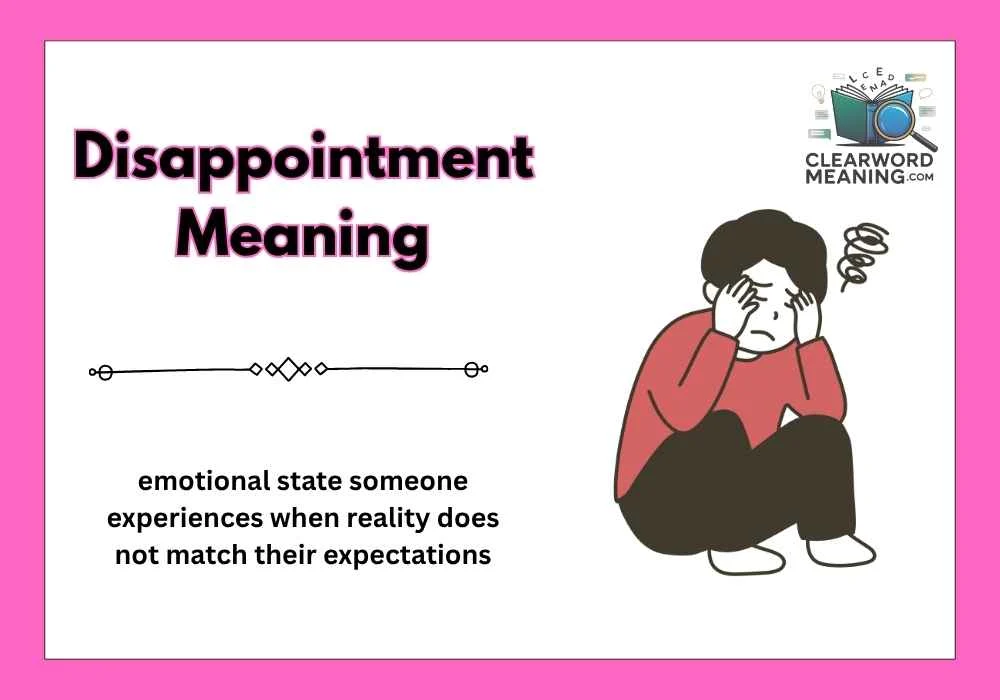
The disappointment meaning refers to the emotional state someone experiences when reality does not match their expectations. It usually happens when something hoped for fails to occur or turns out worse than expected.
In texting or online communication, the word often expresses feelings like:
- Sadness
- Frustration
- Regret
- Letdown
For example, if someone was excited about an event that got canceled, they might say they feel disappointed.
Simple Definition
Disappointment means feeling unhappy because something you hoped for did not happen.
It is one of the most common emotional words used in modern conversations because people frequently share personal reactions online.
Origin of the Word Disappointment
The word disappointment comes from the Old French word desappointer, which meant to remove from office or undo an appointment. Over time, the meaning evolved into the emotional sense we use today.
By the 18th century, the word began to represent emotional letdowns and unmet expectations, which is the meaning still used in modern English and digital communication.
How to Use Disappointment in Texts or Chat
People use the word disappointment in chats when they want to express dissatisfaction or sadness about something.
It is commonly seen in:
- Text messages
- Social media posts
- Online forums
- Gaming chats
- Comment sections
Common Situations Where People Use It
Here are some situations where the disappointment meaning appears in texting:
- A canceled plan with friends
- Losing a game
- Failing an exam
- Not getting a job opportunity
- A movie or show not meeting expectations
Example Sentences
Here are some realistic chat-style examples:
Friend 1: I thought the concert was today.
Friend 2: It got postponed. Total disappointment.
Another example:
Alex: I studied all night and still failed the test.
Sam: That’s a huge disappointment, but you’ll do better next time.
Social media example:
“Waiting 2 hours for the update and it’s still buggy… big disappointment.”
These examples show how the word communicates a feeling quickly and clearly.
Examples of Disappointment in Conversations
Understanding how people use the word in everyday chats can make its meaning clearer.
Casual Friend Chat
Sara: Did you watch the new movie?
Lena: Yeah… honestly a disappointment.
Gaming Chat
Player 1: We almost won that match.
Player 2: Losing in the last minute is pure disappointment.
Social Media Comment
“I waited all week for the episode and it was filler… what a disappointment.”
Relationship Conversation
Partner 1: I thought you’d remember our anniversary.
Partner 2: I’m sorry. I know that was a big disappointment.
These real-life examples show how the word expresses emotional reactions in different contexts.
Common Mistakes or Misunderstandings
Even though the disappointment meaning is simple, people sometimes misunderstand how to use it correctly.
Confusing Disappointment with Anger
Disappointment is not the same as anger.
- Anger means feeling mad or furious.
- Disappointment means feeling sad because something didn’t go as expected.
Example:
Anger: “I’m furious about this.”
Disappointment: “I’m really disappointed.”
Overusing the Word
Sometimes people use disappointment for small issues that might not require such a strong emotional word.
Example:
“My coffee is cold. What a disappointment.”
While it works, it might sound dramatic depending on the situation.
Using It Without Context
Simply saying “disappointment” in a message can confuse readers.
Instead of writing:
Disappointment.
Write something clearer:
“This update was a big disappointment.”
Providing context helps the reader understand the emotion better.
Related Slangs or Abbreviations
In modern texting culture, people sometimes replace the word disappointment with slang or abbreviations.
Here are some related expressions.
Meh
Used to express mild disappointment or lack of excitement.
Example:
“I tried the new burger. Meh.”
SMH
Means shaking my head and often expresses frustration or disappointment.
Example:
“They canceled the event again. SMH.”
Bruh
Often used when something disappointing happens.
Example:
“I waited in line for nothing. Bruh.”
L
Popular internet slang meaning a loss or failure.
Example:
“That game update was a huge L.”
RIP
Sometimes used jokingly to express disappointment.
Example:
“My weekend plans got canceled. RIP.”
These slang expressions are widely used on platforms like TikTok, Twitter, Instagram, and Discord.
When People Commonly Express Disappointment Online
The disappointment meaning often appears in specific online situations.
Entertainment Reactions
People frequently express disappointment about:
- Movies
- TV shows
- Music releases
- Game updates
Example:
“The new season was such a disappointment.”
Sports and Gaming
Fans and players often use the word when their team or performance fails.
Example:
“Losing the final match like that is heartbreaking and a huge disappointment.”
Personal Expectations
People also use it to describe personal experiences.
Example:
“I really hoped I’d get that job. The rejection was a big disappointment.”
How to Respond When Someone Says They Are Disappointed
Knowing the disappointment meaning also helps you respond appropriately in conversations.
Here are some supportive responses.
Show Empathy
Example:
“I’m sorry that happened. I know that must be disappointing.”
Offer Encouragement
Example:
“Don’t worry. Another opportunity will come.”
Suggest Solutions
Example:
“Maybe you can try again next time.”
Responding thoughtfully helps maintain positive communication.
Interesting Psychological Insight About Disappointment
Disappointment is actually a natural and healthy emotional response.
Psychologists explain that disappointment happens when there is a gap between expectation and reality.
When expectations are high and results are lower than expected, the emotional reaction becomes stronger.
Learning to manage disappointment helps people:
- Build resilience
- Adjust expectations
- Grow emotionally
That is why understanding the disappointment meaning is important in both communication and personal development.
FAQs:
What does disappointment mean in simple words
Disappointment means feeling sad or unhappy because something you expected or hoped for did not happen.
Is disappointment the same as sadness
Not exactly. Sadness is a general emotional state, while disappointment specifically occurs when expectations are not met.
How is disappointment used in texting
In texting, people use the word to express frustration or emotional letdowns, such as canceled plans or failed expectations.
Can disappointment be positive in any way
Yes. Experiencing disappointment can help people learn, adjust expectations, and grow emotionally over time.
What slang words express disappointment
Common slang expressions include meh, SMH, bruh, and L, which people often use on social media or in chats.
Conclusion
Understanding the disappointment meaning helps you interpret emotional messages in modern conversations. The word describes the feeling people experience when reality does not meet expectations, whether it involves personal goals, social plans, or entertainment experiences.
In texting and online chats, disappointment is widely used to express emotional reactions quickly and clearly. From casual friend conversations to social media posts, the word remains a powerful way to communicate feelings of letdown.

I am the author, M Brauer, a dedicated and detail-focused professional committed to quality content and clear information. I focus on creating reliable, easy-to-understand material that delivers real value and builds trust with readers.