Understanding the toxic relationship meaning has become more important than ever in today’s digital world. Many people hear the term online but don’t fully understand the real toxic relationship meaning or how it affects mental and emotional health.
A toxic relationship can slowly drain your confidence, happiness, and peace of mind without you even realizing it.
You’ll learn the clear definition, common warning signs, and practical ways to deal with a toxic relationship in everyday life. Whether you’ve seen the phrase on social media, in chats, or in discussions about mental health.
What Does Toxic Relationship Meaning?
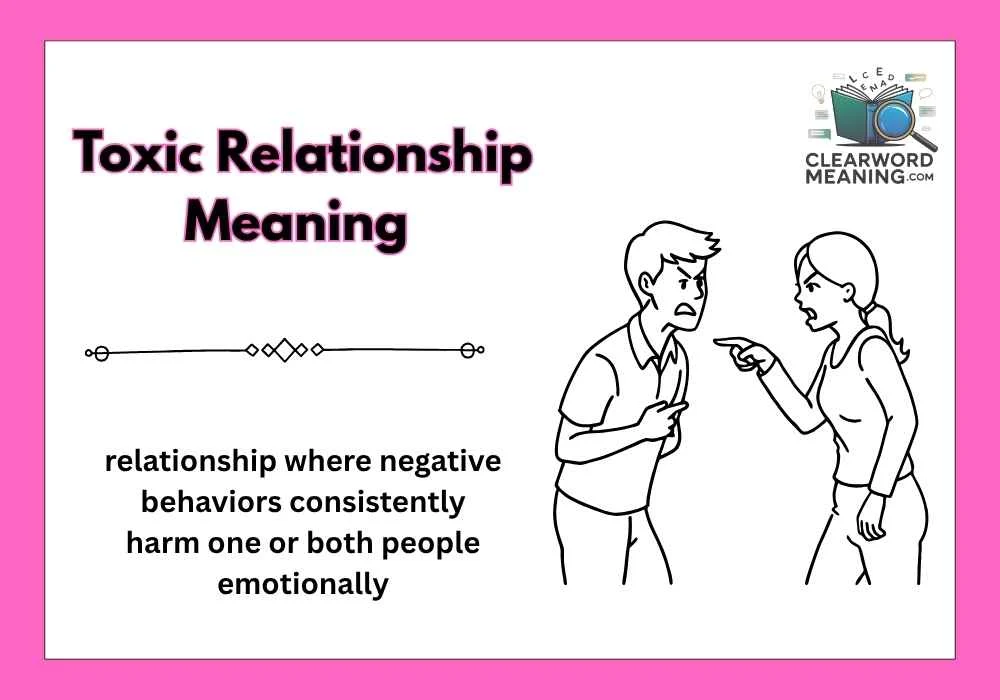
The toxic relationship meaning refers to a relationship where negative behaviors consistently harm one or both people emotionally, mentally, or sometimes even physically. Instead of feeling supported, respected, or valued, one or both partners often feel stressed, controlled, or drained.
In a healthy relationship, both people encourage each other’s growth and happiness. But in a toxic relationship, unhealthy patterns become normal. These patterns may include manipulation, constant criticism, jealousy, or lack of respect.
Simple Definition
A toxic relationship is a connection between two people where harmful behaviors, negativity, and emotional damage occur regularly.
Where the Term Came From
The word toxic originally described poisonous substances. Over time, psychologists and relationship experts began using the term to describe harmful emotional environments in relationships.
Today, the phrase is widely used on:
- Social media discussions
- Relationship advice forums
- Text conversations
- Mental health blogs
- Online communities
Because of this, the toxic relationship meaning has become a popular topic in modern communication and internet culture.
Signs of a Toxic Relationship
Recognizing the warning signs is the first step toward protecting yourself. Many people stay in toxic relationships simply because they don’t realize the behavior is unhealthy.
Here are the most common signs.
Constant Criticism
If a partner regularly criticizes your appearance, decisions, or personality, it can damage your self-esteem over time.
Example:
Person A: Why can’t you ever do anything right?
Person B: I’m trying my best.
Controlling Behavior
A toxic partner may try to control:
- Who you talk to
- Where you go
- What you wear
- How you spend money
This behavior often starts small but gradually becomes more intense.
Lack of Respect
Respect is the foundation of any healthy relationship. When it disappears, the relationship becomes toxic.
Examples include:
- Ignoring your feelings
- Mocking your opinions
- Dismissing your achievements
Emotional Manipulation
Manipulation happens when someone twists situations to make you feel guilty or responsible for their actions.
Common manipulation phrases include:
- “You’re too sensitive.”
- “You made me do this.”
- “If you loved me, you would…”
Constant Drama and Stress
If your relationship always feels exhausting, full of arguments, and emotionally draining, it may be toxic.
Healthy relationships bring peace, not constant stress.
Causes of Toxic Relationships
Understanding why toxic relationships happen can help people recognize unhealthy patterns earlier.
Poor Communication
Many toxic relationships begin with communication problems. When people stop listening or expressing themselves honestly, misunderstandings grow.
Insecurity and Jealousy
Some people act toxic because of deep insecurity. They may become overly jealous or controlling out of fear of losing their partner.
Past Trauma
Previous emotional wounds can sometimes affect how people behave in relationships.
For example:
- Fear of abandonment
- Trust issues
- Emotional dependency
Power Imbalance
When one partner wants complete control over decisions or emotions, the relationship becomes unbalanced and unhealthy.
How to Use the Term Toxic Relationship in Conversations
The phrase toxic relationship is commonly used in texting, social media, and casual conversations.
Here are a few typical contexts.
Social Media Posts
People often use the phrase when discussing relationship struggles.
Example:
“I finally left a toxic relationship and feel so much happier now.”
Text Messages Between Friends
Friend A: I feel stressed every time we argue.
Friend B: That sounds like a toxic relationship.
Online Discussions
In forums or comment sections, users might write:
“Those behaviors are classic signs of a toxic relationship.”
Memes and Internet Humor
The internet often turns serious topics into relatable humor.
Example meme caption:
“When you realize the toxic relationship was draining your energy all along.”
Examples of Toxic Relationship Meaning in Conversations
Real-life examples help people understand how the phrase is used naturally.
Example Conversation 1
.Friend 1: Why do you still stay with him?
.Friend 2: I don’t know… maybe I’m scared to leave.
.Friend 1: It sounds like a toxic relationship.
Example Conversation 2
Person A: She checks my phone every day.
Person B: That’s not healthy. That’s toxic.
Example Conversation 3
User on social media:
“Leaving a toxic relationship was the best decision I ever made.”
Example Conversation 4
Friend: Are you okay lately?
You: Honestly, my relationship has become really toxic.
These conversations show how common the phrase has become in everyday communication.
Common Mistakes or Misunderstandings
Although the phrase is popular, people sometimes misuse it.
Calling Every Conflict Toxic
All relationships have disagreements. A single argument does not automatically mean the relationship is toxic.
Ignoring Personal Responsibility
Sometimes both partners contribute to unhealthy behavior patterns.
Blaming only one side may oversimplify the situation.
Confusing Toxic With Temporary Problems
A toxic relationship involves repeated harmful behavior, not just occasional stress.
Healthy couples may argue but still respect each other.
How to Deal With a Toxic Relationship
If someone realizes they are in a toxic relationship, there are several steps they can take.
Recognize the Problem
Awareness is the first step toward change. Many people stay in unhealthy relationships because they normalize toxic behavior.
Set Clear Boundaries
Boundaries help protect emotional well-being.
Examples:
- Saying no to disrespectful behavior
- Limiting contact when necessary
- Communicating expectations clearly
Seek Support
Talking to trusted people can help.
Consider reaching out to:
- Close friends
- Family members
- Counselors or therapists
Focus on Self-Respect
A healthy relationship should never require sacrificing your self-worth.
Consider Leaving the Relationship
Sometimes the healthiest decision is ending the relationship and moving forward.
While difficult, many people report feeling relief and emotional freedom afterward.
Related Slangs or Abbreviations
Online communities often discuss toxic relationships using modern slang or internet terms.
Here are some commonly related phrases.
Red Flag
A red flag is a warning sign that someone’s behavior may be unhealthy.
Example:
“Jealousy that extreme is a huge red flag.”
Gaslighting
Gaslighting is psychological manipulation that makes someone doubt their reality.
Example:
“You’re imagining things.”
“You’re overreacting.”
Love Bombing
Love bombing happens when someone gives excessive attention or affection early in a relationship to gain control.
Emotional Vampire
This slang refers to people who drain emotional energy from others.
Situationship
A situationship describes a relationship without clear commitment or labels, which can sometimes become toxic.
FAQs
What is the simple toxic relationship meaning?
The toxic relationship meaning refers to a relationship where harmful behaviors such as manipulation, disrespect, or constant negativity damage emotional well-being.
How do you know if you are in a toxic relationship?
Signs include constant criticism, controlling behavior, lack of respect, emotional manipulation, and feeling drained or unhappy most of the time.
Can a toxic relationship become healthy?
Yes, but it requires effort from both partners. Honest communication, therapy, and strong boundaries can sometimes repair unhealthy dynamics.
Why do people stay in toxic relationships?
People may stay due to emotional attachment, fear of loneliness, financial dependence, or hope that the partner will change.
Is arguing a sign of a toxic relationship?
Not necessarily. All couples argue occasionally. A relationship becomes toxic when harmful behaviors happen repeatedly and cause emotional harm.
Conclusion
Understanding the toxic relationship meaning can help people recognize unhealthy patterns before they cause long-term emotional damage. A toxic relationship is not simply about occasional disagreements. Instead, it involves repeated behaviors that create stress, insecurity, and emotional exhaustion.
Healthy relationships should feel supportive, respectful, and balanced. If someone constantly feels drained, controlled, or unhappy, it may be a sign that the relationship needs serious change.

I am the author, M Brauer, a dedicated and detail-focused professional committed to quality content and clear information. I focus on creating reliable, easy-to-understand material that delivers real value and builds trust with readers.