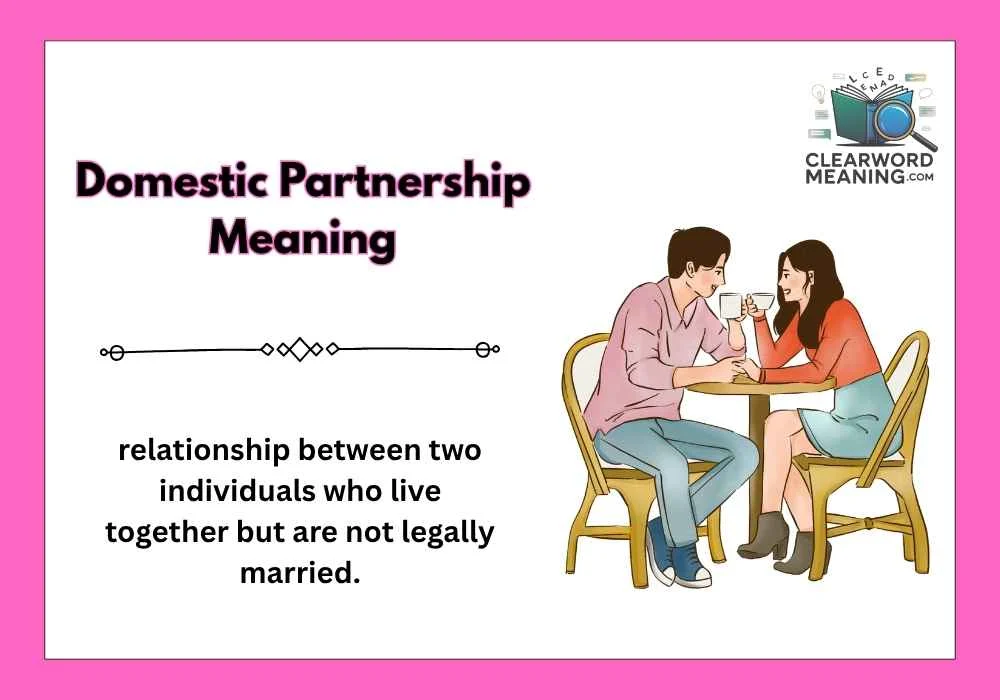
Domestic partnership meaning is something many people search when they want to understand modern relationships without traditional marriage. In simple terms, domestic partnership meaning refers to a legally recognized relationship between two people who live together and share a committed life but may not be married.
Many couples choose this option for legal benefits, financial protection, and relationship recognition without going through a marriage ceremony.
In today’s world of modern relationships, understanding the domestic partnership meaning helps people make informed choices about love, commitment, and legal rights.
Explains the definition, origin, real-life examples, and how domestic partnerships work in 2026, so you can clearly understand whether it’s the right option for you.
What Does Domestic Partnership Mean? Definition and Origin
The domestic partnership meaning refers to a legal or officially recognized relationship between two individuals who live together and share a domestic life but are not legally married.
Domestic partnerships were originally created to provide legal recognition and benefits to couples who could not marry. Historically, this included many same-sex couples before same-sex marriage became legal in several countries.
Simple Definition
A domestic partnership is:
- A committed relationship between two adults
- Both partners usually live together
- The relationship may receive legal recognition in some regions
- Partners may receive certain benefits similar to marriage
However, domestic partnerships are not exactly the same as marriage, and the benefits depend on the country, state, or organization.
Brief History
The concept of domestic partnership started gaining attention in the 1980s and 1990s, particularly in workplaces and local governments.
Key moments include:
- Companies offering domestic partner benefits to employees
- Cities recognizing partnerships for housing and healthcare rights
- The growing recognition of same-sex relationships
Today, the term is still widely used for couples who want commitment without marriage.
How to Use Domestic Partnership in Texts or Chat
Although domestic partnership meaning is more of a legal or relationship term than a slang abbreviation, people often use it in everyday conversations, social media posts, or discussions about relationships.
Here are common ways people mention it in messages.
In Casual Conversations
Example texts:
- “We’re not married yet, but we registered a domestic partnership.”
- “My company offers domestic partner benefits, which is great.”
- “They’ve been in a domestic partnership for five years.”
On Social Media
You may see posts like:
- “Celebrating 3 years of our domestic partnership ❤️”
- “Thinking about registering a domestic partnership instead of marriage.”
In Online Forums
People often ask questions like:
- “What is the domestic partnership meaning in my state?”
- “Is a domestic partnership the same as marriage?”
In Workplace Conversations
Companies sometimes allow employees to add a domestic partner to benefits like:
- Health insurance
- Housing benefits
- Travel benefits
- Family leave policies
Example message:
“My employer allows me to add my partner through a domestic partnership declaration.”
Examples of Domestic Partnership in Conversations
Real-life examples help explain the domestic partnership meaning better. Here are several relatable scenarios.
Example Conversation Between Friends
Friend 1: “Are you two getting married soon?”
Friend 2: “Not yet. We actually registered a domestic partnership last year.”
Example in a Workplace Chat
Employee: “Can I add my partner to my health insurance?”
HR: “Yes, if you’re in a domestic partnership, you can register them.”
Example in a Relationship Discussion
Person A: “Do you believe in marriage?”
Person B: “Maybe later. For now, we prefer a domestic partnership.”
Funny Scenario
Friend: “So are you single?”
You: “Not exactly. I’m in a domestic partnership, which is like marriage without the wedding stress.”
Common Mistakes or Misunderstandings
Many people misunderstand the domestic partnership meaning. Let’s clear up some common confusion.
Thinking Domestic Partnership Is Exactly Like Marriage
This is one of the biggest misunderstandings.
While both involve commitment, marriage usually offers more legal protections.
Domestic partnerships may not include:
- Full tax benefits
- Automatic inheritance rights
- Immigration benefits
These depend on the location.
Assuming It Exists Everywhere
Not every country or state recognizes domestic partnerships.
Some places offer:
- Civil unions
- Registered partnerships
- Cohabitation agreements
Each has different legal effects.
Confusing It With Living Together
Simply living together does not automatically create a domestic partnership.
Most regions require:
- Registration forms
- Legal declarations
- Proof of shared residence
Thinking It’s Only for Same-Sex Couples
Originally it helped many same-sex couples gain recognition, but today any couple may choose domestic partnership in certain places.
Related Slangs or Relationship Terms
When researching domestic partnership meaning, you may also encounter related terms.
Civil Union
A civil union is a legally recognized relationship similar to marriage but usually with limited rights.
Cohabitation
Cohabitation simply means living together without marriage. It usually has no automatic legal status.
Life Partner
This informal phrase describes someone you plan to spend your life with.
Example text:
“That’s not just my boyfriend, he’s my life partner.”
Significant Other
A neutral term used to refer to a partner without specifying the relationship type.
Example:
“I’m bringing my significant other to the party.”
Partner
This word has become very common in modern relationships.
Example:
“My partner and I live together.”
Where Domestic Partnerships Are Commonly Used
The domestic partnership meaning becomes important in several real-life situations.
Workplace Benefits
Some companies allow employees to register a domestic partner for benefits like:
- Health insurance
- Dental coverage
- Retirement benefits
- Family leave
Legal Documentation
Domestic partnerships may require:
- Registration forms
- Proof of shared residence
- Signed declarations
Housing and Rental Agreements
Couples sometimes use domestic partnership documents when applying for housing together.
Social Media Discussions
People often talk about domestic partnerships when discussing:
- Alternative relationship choices
- Modern family structures
- Legal rights for partners
Pros and Cons of Domestic Partnership
Understanding the domestic partnership meaning also involves looking at its advantages and limitations.
Advantages
- Easier registration compared to marriage
- Recognition of committed relationships
- Access to some workplace benefits
- Legal acknowledgment of partners
Possible Limitations
- Fewer legal rights than marriage
- Recognition varies by location
- Some benefits may not apply nationally
Because of these differences, couples often research their local laws before choosing this option.
When People Choose Domestic Partnerships
Couples choose domestic partnerships for many personal reasons.
Personal Beliefs
Some couples prefer commitment without the traditional institution of marriage.
Financial Reasons
In certain cases, marriage may affect:
- Taxes
- Student loans
- Financial aid
A domestic partnership may offer flexibility.
Legal Convenience
Some couples want legal recognition but do not want a formal wedding.
Workplace Benefits
Many people register domestic partnerships primarily to access employee benefits.
FAQs:
What is the domestic partnership meaning in simple words
The domestic partnership meaning refers to a committed relationship between two adults who live together and share a life but are not legally married. Some places recognize this relationship for certain legal or workplace benefits.
Is domestic partnership the same as marriage
No, a domestic partnership is not exactly the same as marriage. Marriage usually provides broader legal rights, while domestic partnerships may offer limited benefits depending on the location.
Can opposite-sex couples have a domestic partnership
Yes, many regions allow both same-sex and opposite-sex couples to register a domestic partnership as long as they meet the requirements.
Do domestic partners get health insurance benefits
In some workplaces, employees can add their domestic partner to health insurance plans. However, this depends on company policies and local laws.
How do you register a domestic partnership
Registration typically involves filling out legal forms, proving that both partners live together, and submitting documents to the appropriate government office.
Conclusion
Understanding the domestic partnership meaning helps people navigate modern relationships in a world where commitment takes many different forms. A domestic partnership offers couples a way to formalize their relationship, gain certain legal recognition, and sometimes access important benefits without getting married.
However, domestic partnerships are not identical to marriage, and the rights can vary depending on location and laws. Before choosing this option, couples should research their local regulations and consider what works best for their relationship and future plans.
As relationship trends continue evolving, domestic partnerships remain an important option for couples seeking commitment, flexibility, and legal recognition.

I am the author, M Brauer, a dedicated and detail-focused professional committed to quality content and clear information. I focus on creating reliable, easy-to-understand material that delivers real value and builds trust with readers.