If you are Searching for the real Ethos Logos Pathos Meaning without confusing definitions?
This complete guide breaks down each rhetorical appeal in a clear, engaging, and smart way so you can instantly understand how persuasion works.
Learn how ethos builds credibility, logos uses logic, and pathos triggers emotions with real-world examples from speeches, advertising, social media, and classroom writing.
This valuable explanation is perfect for students, bloggers, public speakers, and anyone who wants stronger communication skills.
in the end of this articale end, you will fully understand Ethos Logos Pathos Meaning and know exactly how these persuasive techniques influence people every day in a powerful and memorable way
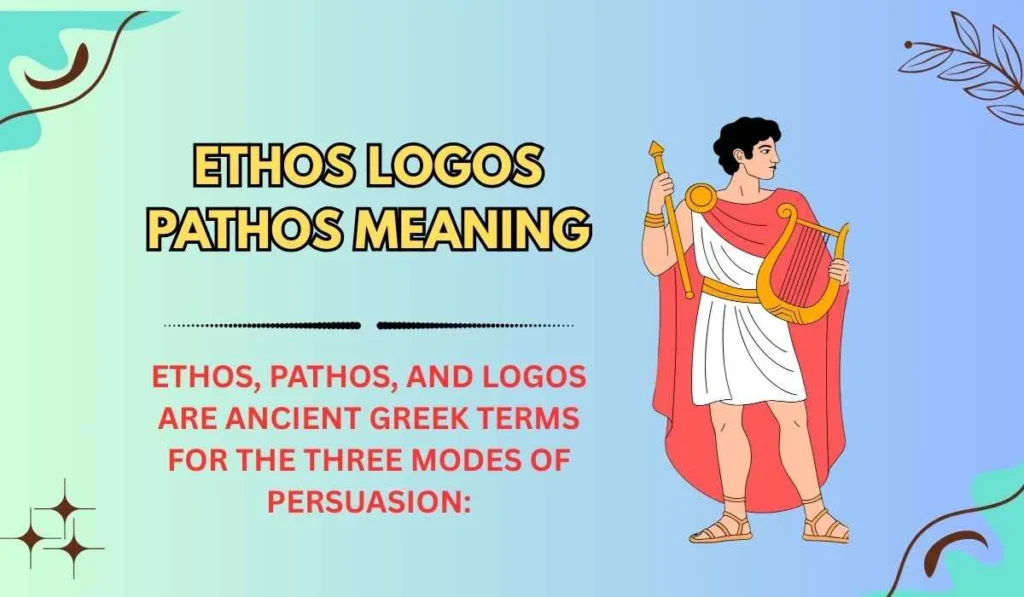
What Does “Ethos, Logos, Pathos” Mean?
Let’s break it down in the simplest way:
- Ethos – Credibility or trust. When someone listens to you because they believe you’re knowledgeable or reliable, that’s ethos.
- Logos – Logic and reasoning. Using facts, data, and clear arguments to persuade someone is logos.
- Pathos – Emotion. This is about appealing to feelings, like happiness, fear, or excitement, to convince someone.
Origin: These concepts come from Aristotle, the famous Greek philosopher. Over 2,000 years ago, he studied what makes people persuasive in speech and writing. Today, these principles are everywhere in modern communication—from TikTok captions to Twitter debates.
Pro Tip: Understanding these isn’t just academic—it’s practical for texting, writing, or even negotiating.
How to Use “Ethos, Logos, Pathos” in Texts or Chat
Even in casual messaging, you can use these techniques subtly:
- Ethos Example:
“Trust me, I’ve tried this app for months, and it actually works!”
(Shows credibility based on personal experience.) - Logos Example:
“Over 80% of people who followed this method saw results in just two weeks.”
(Uses facts and logic to convince.) - Pathos Example:
“Imagine feeling confident every morning without worrying about deadlines.”
(Appeals to emotions like desire and relief.)
Tip for Chatting: Use a mix of these in group messages, social media posts, or persuasive replies to make your point more convincing and relatable.
Examples of “Ethos, Logos, Pathos” in Conversations
Here are some relatable scenarios:
1 Scenario : Persuading a Friend to Try a New Game
- Ethos: “I’ve been playing this for weeks, and it’s amazing.”
- Logos: “It has over 1 million downloads and a 4.8-star rating.”
- Pathos: “You’ll love how fun and addictive it is—I was laughing nonstop!”
2 Scenario : Texting About a Study Tip
- Ethos: “As someone who aced exams last year…”
- Logos: “Studying 25 minutes with a 5-minute break improves retention by 20%.”
- Pathos: “You’ll feel so relieved when you actually remember everything!”
3 Scenario : Social Media Post
- Ethos: “I’m a certified fitness coach…”
- Logos: “This plan helps burn 500 calories per session.”
- Pathos: “Feel stronger, healthier, and more confident in just weeks!”
Common Mistakes or Misunderstandings
Even though these concepts are simple, people often mix them up:
- Mistake 1: Using too much logos without connecting emotionally. Facts alone don’t always persuade.
- Mistake 2: Relying solely on pathos. Emotional appeals can seem manipulative without credibility or logic.
- Mistake 3: Overusing ethos. Just saying “trust me” isn’t enough—show proof or experience.
✅ Pro Tip: The best communication uses all three in balance. Think of it like a recipe: a pinch of ethos, a dash of logos, and a sprinkle of pathos.
Related Slangs or Abbreviations
If you’re into modern texting language, understanding these rhetorical tools can even enhance your social media lingo:
- FOMO – Fear of Missing Out (pathos-driven in marketing).
- TBH – To Be Honest (ethos-driven, builds trust).
- FYI – For Your Information (logos-driven, shares facts clearly).
- IRL – In Real Life (use ethos to build credibility in personal stories).
Tip: Mix traditional rhetoric with modern abbreviations to make messages both persuasive and trendy.
FAQs:
1. Can I use ethos, logos, pathos in casual texting?
Absolutely! Even casual messages can be more convincing with credibility, facts, or emotional appeal.
2. Which is the most important: ethos, logos, or pathos?
None is “most important.” The most persuasive messages balance all three.
3. Are these techniques only for English?
No! They apply in all languages and cultures, though examples may vary.
4. How do I identify ethos, logos, and pathos in messages?
Look for credibility (ethos), facts (logos), or emotion (pathos). Texts usually contain a mix.
5. Can emojis enhance pathos?
Yes! Emojis can add emotion, making your message more relatable and persuasive.
Conclusion
Understanding ethos, logos, and pathos is more than academic it’s a practical skill for texts, chats, social media, and everyday persuasion. By balancing credibility, logic, and emotion, your messages become more convincing and engaging.
Start practicing today: try analyzing your messages for ethos, logos, and pathos, and watch how people respond differently.
Share your favorite text abbreviation or persuasion tip in the comments and join the conversation!

I am the author, Mitchell, passionate about creating engaging and reliable content that adds real value to readers. With a focus on clarity, accuracy, and insight, I aim to make complex topics easy to understand. I believe in delivering well-researched, practical information that builds trust and helps my audience make informed decisions. Every piece I write is crafted to be informative, meaningful, and impactful, reflecting my commitment to quality and consistency.