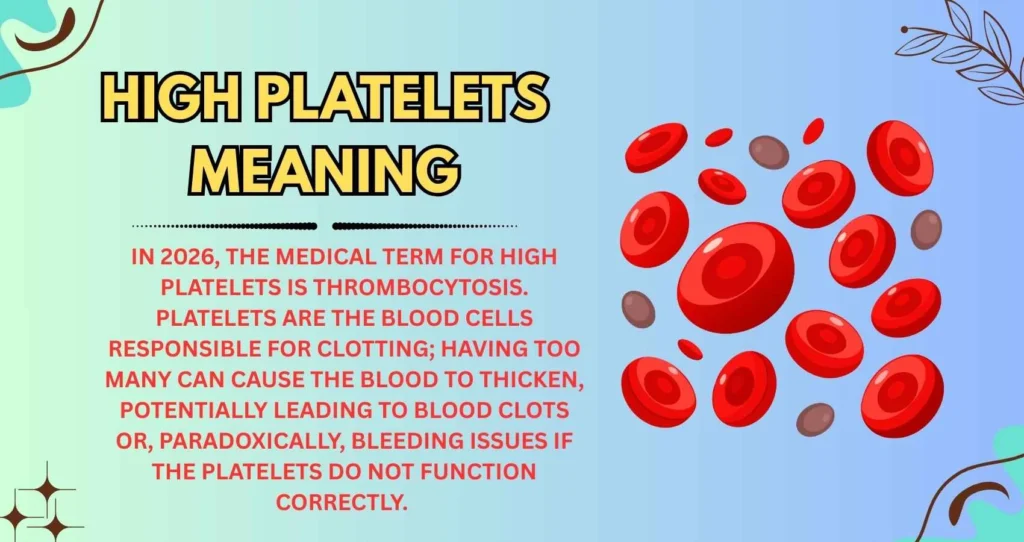
Are you curious about what “high platelets meaning” really is? Whether you just got your blood test results or you’re hearing friends talk about platelet counts, understanding this term is essential.
High platelets meaning refers to a condition where your blood has more platelets than normal, which can impact your health in subtle or significant ways.
In this guide, we’ll break down everything you need to know, including causes, symptoms, practical advice, and real-life examples updated for 2026.
What Does “High Platelets” Mean? (Definition & Origin)
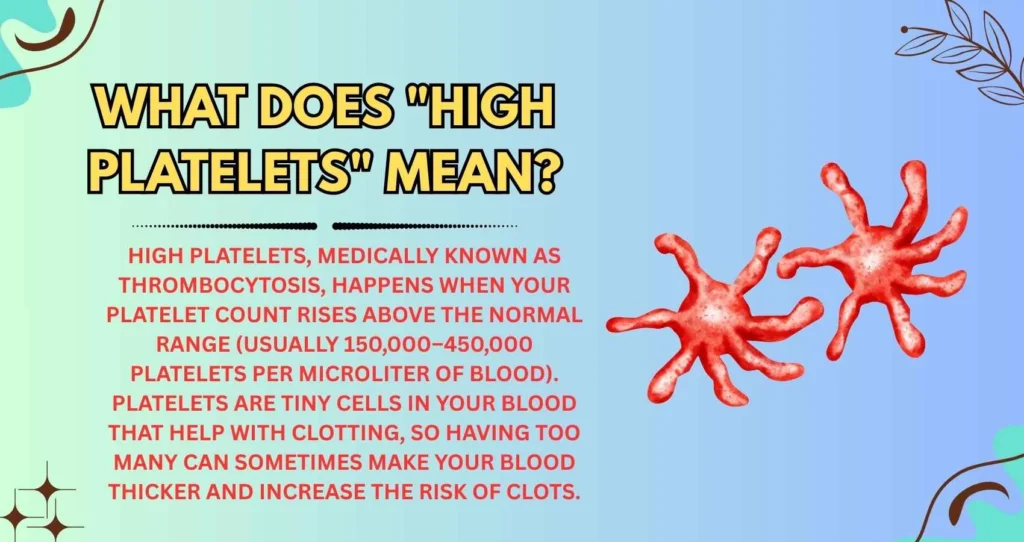
High platelets, medically known as thrombocytosis, happens when your platelet count rises above the normal range (usually 150,000–450,000 platelets per microliter of blood). Platelets are tiny cells in your blood that help with clotting, so having too many can sometimes make your blood thicker and increase the risk of clots.
Originating from medical research in hematology, high platelets is a term widely used in labs, online health forums, and casual texting when people discuss their blood results. People often text each other with phrases like “Doc says I have high platelets 😬” without fully understanding what it means.
How to Use “High Platelets” in Texts or Chat
Using high platelets in casual conversation or chat messages is straightforward. People often use it when:
- Talking about recent blood tests
- Sharing health updates with friends or family
- Discussing medical concerns on forums or support groups
Example text messages:
- “Just got my lab results… high platelets again 😅”
- “High platelets meaning I need to drink more water?”
- “My doctor said high platelets, but I feel fine 🤔”
In social media threads or health forums, you might see posts like: “Anyone else dealing with high platelets? Tips appreciated!”
Examples of “High Platelets” in Conversations
Understanding real-life usage makes it easier to grasp the term:
- 1 Scenario – Friend Chat
- Friend 1: “Hey, how was your check-up?”
- Friend 2: “Good, but my platelets are high 😬”
- 2 Scenario – Forum Discussion
- User: “High platelets meaning I’m at risk for clotting?”
- Reply: “It depends, but usually your doctor monitors it closely.”
- 3 Scenario – Family Update
- Text to parent: “Got my blood report. High platelets, so I’ll follow up with the doctor.”
These examples show how common high platelets is in everyday conversations.
Common Mistakes or Misunderstandings
Many people confuse high platelets with other blood issues. Common mistakes include:
- Assuming high platelets always cause serious problems
- Panicking without understanding lab ranges
- Ignoring the doctor’s advice because “I feel fine”
Quick Tip: Always consult a healthcare professional before worrying too much—context matters, and numbers alone don’t tell the full story.
Related Slangs or Abbreviations
While high platelets isn’t a typical “slang,” it appears in shorthand on chat apps and forums:
- “Thrombocytosis” – medical term often shortened to “thromb” in casual discussions
- “Platelets high” – a simple reverse phrasing in text
- Emojis like 🩸💉 are sometimes used for emphasis in health-related texts
Knowing these variations can help you read posts online or communicate about blood health more clearly.
Practical Tips for Managing High Platelets
Understanding high platelets meaning is just the start. Here are some practical tips:
- Follow-up with a doctor regularly to track your count
- Hydrate well and maintain a balanced diet
- Avoid smoking or excess alcohol
- Exercise moderately to support circulation
- Know the symptoms of clotting: dizziness, chest pain, or numbness
These tips are helpful for everyday management and reduce misunderstandings about your blood count.
Updated Insights for 2026
Medical knowledge evolves quickly, and as of 2026, research highlights that:
- Mild thrombocytosis is often temporary and caused by inflammation or infection
- Regular monitoring is more important than immediate intervention
- Social media groups provide peer support but never replace professional advice
This makes the term high platelets meaning more relevant than ever, especially for people tracking their health digitally.
FAQs:
What are the main causes of high platelets?
High platelets can be caused by infection, inflammation, iron deficiency, or certain chronic conditions. Rarely, it may be due to a bone marrow disorder.
Can high platelets be dangerous?
In some cases, yes. Extremely high platelet counts can increase the risk of blood clots, but mild cases are often harmless.
How can I lower high platelets naturally?
Staying hydrated, eating iron-rich foods, exercising, and avoiding smoking can help maintain healthy platelet levels.
Do symptoms always appear with high platelets?
Not always. Many people with slightly elevated platelets feel completely normal, which is why monitoring is key.
Is high platelets hereditary?
Most cases are not inherited, but some rare blood disorders affecting platelets can run in families.
Conclusion
Understanding high platelets meaning helps you interpret blood test results with confidence. It’s a condition where platelet counts exceed normal levels, and while it may sound alarming, mild cases are often manageable. Knowing how to use the term in chat, spotting common mistakes, and following practical tips makes it easier to discuss your health clearly.
Remember, numbers are just part of the story consult your doctor for personalized advice.

I am the author, Mitchell, passionate about creating engaging and reliable content that adds real value to readers. With a focus on clarity, accuracy, and insight, I aim to make complex topics easy to understand. I believe in delivering well-researched, practical information that builds trust and helps my audience make informed decisions. Every piece I write is crafted to be informative, meaningful, and impactful, reflecting my commitment to quality and consistency.