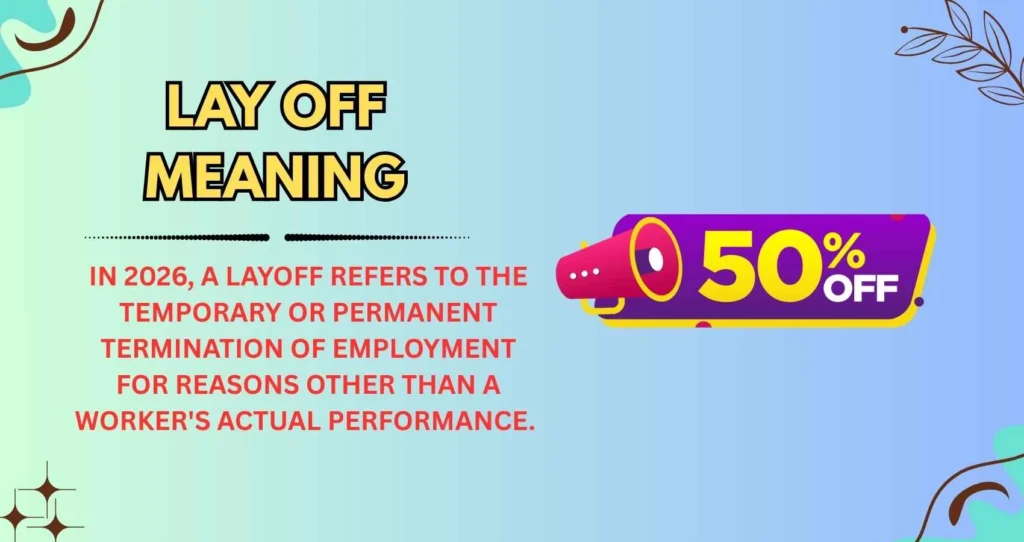
Understanding lay off meaning has become more important than ever in modern chats, workplace messages, and social media conversations.
People often search for lay off meaning because this phrase changes its tone depending on context, mood, and platform.
Whether someone says it jokingly in a group chat or seriously in a professional message, the meaning can shift fast.
In today’s digital communication, knowing the exact intent, emotional tone, and correct usage helps you avoid awkward moments.
This Updated for 2026 guide explains everything in simple language, with real-life texting examples, so you can confidently understand and use this phrase like a pro.
What Does Lay Off Mean? Definition and Origin
The phrase lay off is not new, but its usage has evolved with texting and online chats.
At its core, lay off meaning depends on how and where it is used. Traditionally, it comes from workplace language, but now it is widely used in casual conversations, social media, and online arguments.
Basic Meaning of Lay Off
Lay off generally means:
- To stop doing something
- To give someone space
- To stop bothering or criticizing someone
In simple terms, when someone says lay off, they are asking another person to back off or calm down.
Origin of Lay Off
The phrase originated in industrial and workplace English, where lay off referred to stopping work temporarily or permanently. Over time, it moved into everyday language and later became popular in texting culture.
Today, its meaning can be:
- Serious
- Playful
- Sarcastic
- Defensive
Context is everything.
How to Use Lay Off in Texts or Chat
Using lay off correctly depends on tone, relationship, and platform.
Common Situations Where Lay Off Is Used
People commonly use lay off in:
- Text messages between friends
- Group chats
- Social media comments
- Online gaming chats
- Workplace messages
Tone Variations in Texting
Here is how tone changes the meaning:
- Friendly tone: playful request
- Angry tone: warning or confrontation
- Professional tone: polite boundary setting
For example, adding emojis, punctuation, or capital letters can completely change the message.
Examples of Lay Off in Conversations
Seeing real examples makes lay off meaning much clearer.
Casual Friend Chat Examples
- Lay off bro, I was just joking 😂
- Lay off the snacks, dinner is almost ready
- Lay off me today, I am already tired
Social Media Usage
- People need to lay off celebrities sometimes
- Lay off the hate and spread positivity
Workplace or Professional Examples
- Please lay off the criticism during the meeting
- The manager asked the team to lay off overtime for now
Gaming or Online Chat Examples
- Lay off my character, I am still learning
- Lay off spamming the chat
These examples show how flexible and context-driven the phrase is.
Common Mistakes or Misunderstandings
Many people misuse lay off, especially non-native speakers.
Confusing Lay Off With Get Fired
One of the biggest mistakes is mixing these meanings:
- Lay off someone means job termination
- Lay off someone in chat means stop bothering them
In texting, it almost always means stop or back off, not job loss.
Tone Misinterpretation
Text lacks voice, so lay off can sound rude if not softened.
To avoid misunderstandings:
- Add emojis
- Use polite words
- Explain your intent briefly
Example:
- Lay off a bit please, I did not mean it that way
Related Slangs or Abbreviations
Understanding similar slang helps you grasp lay off meaning better.
Common Alternatives
- Chill
- Back off
- Relax
- Ease up
- Take it easy
Slang-Based Variations
- Chill out
- Slow your roll
- Calm down
These phrases often carry the same emotional message but vary in intensity.
When Should You Use Lay Off and When Not To
Knowing when to use lay off is just as important as knowing its meaning.
Appropriate Situations
- Friendly teasing
- Setting boundaries
- Ending annoying behavior
- Defending yourself calmly
Situations to Avoid
- Formal emails without context
- Serious arguments without explanation
- Talking to elders or authority figures casually
In professional settings, softer alternatives are often better.
Psychological Insight Behind Saying Lay Off
People usually say lay off when they feel:
- Overwhelmed
- Attacked
- Teased too much
- Emotionally drained
It acts as a verbal boundary, especially in fast-paced online conversations.
Cultural Impact of Lay Off in Digital Communication
With social media and instant messaging, lay off has become shorter, sharper, and more expressive.
In 2026, people often use it to:
- Shut down negativity
- Protect mental space
- Keep conversations light
This makes it a powerful phrase when used wisely.
FAQs:
Is lay off rude in texting
It depends on tone. With emojis or polite words, it is usually not rude.
Can lay off be used jokingly
Yes, friends often use it playfully during teasing.
Does lay off always mean stop talking
No, it usually means stop a specific action or behavior.
Is lay off common in social media comments
Yes, it is frequently used to call out negativity or criticism.
Can lay off be used professionally
Yes, but it should be softened with polite language.
Conclusion
Understanding lay off meaning helps you navigate modern texting, online chats, and social media conversations with confidence. This phrase is simple, flexible, and powerful when used correctly. Whether you want someone to stop teasing, reduce pressure, or back off respectfully, lay off delivers the message quickly.
As digital language continues to evolve, knowing the context, tone, and intent behind common phrases keeps communication smooth and stress-free. Updated for 2026, this guide ensures you stay current and clear in every chat.

I am the author, Mitchell, passionate about creating engaging and reliable content that adds real value to readers. With a focus on clarity, accuracy, and insight, I aim to make complex topics easy to understand. I believe in delivering well-researched, practical information that builds trust and helps my audience make informed decisions. Every piece I write is crafted to be informative, meaningful, and impactful, reflecting my commitment to quality and consistency.