Curious about what alright meaning really means in chats or text messages? If you’ve ever received a simple “alright” and wondered whether it’s positive, neutral, or even annoyed, you’re not alone. In this guide, we’ll break down the alright meaning in everyday conversations and online chats, updated for 2026, so you can confidently understand and use it in your messages.
From casual texting to social media posts, knowing how to interpret alright meaning can save you from misunderstandings and help you sound more natural in digital conversations.
Whether you’re a teen, professional, or social media enthusiast, this article will explain everything about alright, its origin, usage tips, common mistakes, and fun examples you can relate to.
What Does “Alright” Mean? (Definition & Origin)
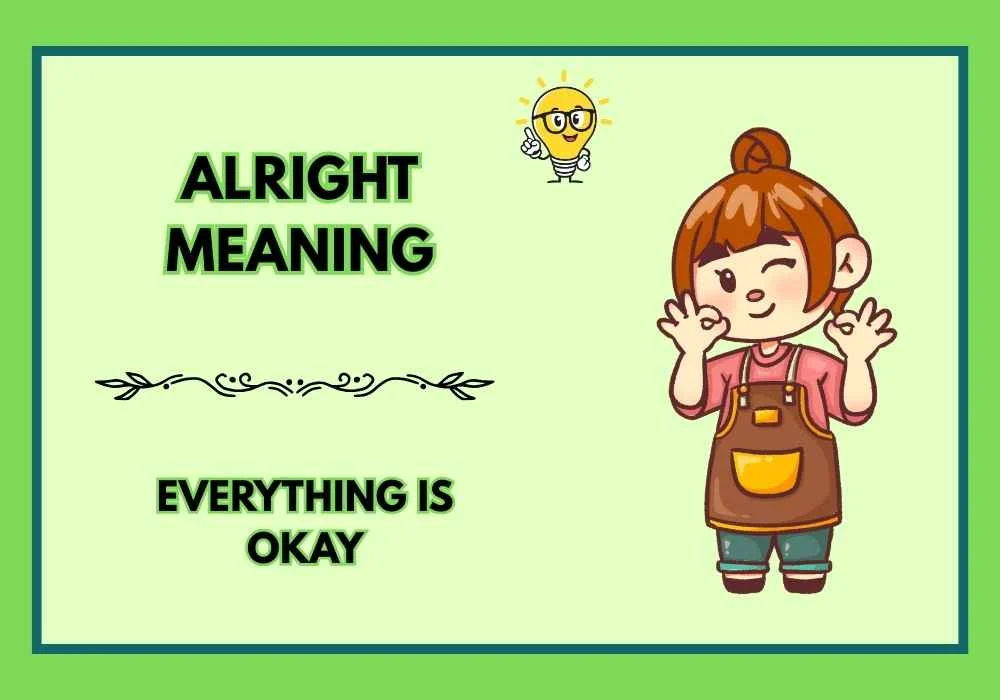
Alright is a versatile word in English and modern texting language. At its core, it’s often used as a casual form of “all right,” meaning everything is okay, acceptable, or agreed upon. However, context is everything—it can convey neutrality, approval, or even mild frustration depending on tone.
Origin:
- The word alright has been used since the 19th century as a less formal version of “all right.”
- It gained popularity in casual speech and later in online chats and text messaging.
- Unlike the traditional “all right,” the single-word form alright is widely accepted in informal writing, including social media, texting, and forums.
How to Use “Alright” in Texts or Chat
Using alright correctly can make your conversations smoother and more natural. Here’s how:
- Agreement or Confirmation:
- “Alright, I’ll meet you at 7 PM.” ✅
- Reassurance:
- “Don’t worry, everything will be alright.” ✅
- Neutral Response:
- “Alright, I guess that works.” ⚠️ (Sometimes perceived as lukewarm or uninterested)
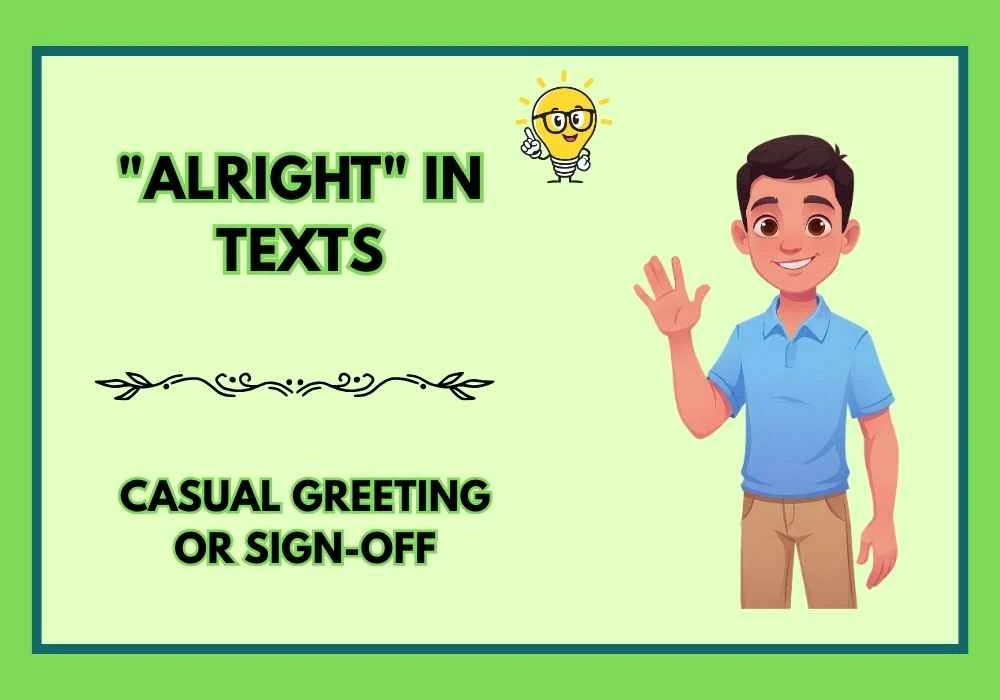
- Casual Greeting or Sign-Off:
- “Alright, catch you later!” ✅
Tips for texting:
- Add emojis to convey tone: “Alright 😊”
- Use punctuation wisely: “Alright…” can indicate hesitation or doubt.
Examples of “Alright” in Conversations
Here are some real-life texting examples where alright fits naturally:
- Friendly Agreement:
- Friend: “Can we start the game at 5?”
- You: “Alright, sounds good!”
- Mild Frustration:
- Partner: “I forgot to bring the snacks.”
- You: “Alright… I guess we’ll manage.”
- Reassuring Someone:
- “You’ll be alright, just take it easy.”
- Casual Sign-Off:
- “Alright, see you tomorrow!”
These examples show how flexible alright is depending on tone, context, and punctuation.
Common Mistakes or Misunderstandings
Even though alright is simple, many people misinterpret or misuse it.
- Using it in formal writing:
- ❌ “The project is alright.” (Better: “The project is acceptable.”)
- Tone confusion in texts:
- “Alright” alone can sound passive-aggressive if not used with context or emojis.
- Spelling mix-ups:
- “All right” is more formal; “alright” is casual and common in chats.
Related Slangs or Abbreviations
If you love texting, here are some related abbreviations and casual phrases:
- k / kk / ok / okay – Simple agreement or acknowledgment.
- np – Short for “no problem,” similar in reassurance.
- brb / ttyl – Casual sign-offs.
- gotcha – Expresses understanding or agreement like “alright.”
- yea / yup – Informal agreement in texts.
FAQs:
What’s the difference between alright and all right?
Alright is casual and commonly used in texts, while all right is more formal and grammatically traditional. Both mean similar things.
Can “alright” sound rude in messages?
Yes, depending on tone and punctuation. “Alright.” might seem uninterested or passive-aggressive. Emojis help clarify intent.
Is “alright” correct in professional emails?
It’s better to use “all right” or more formal alternatives like “acceptable” or “understood” in professional contexts.
How do teens commonly use “alright” online?
Teens often use it for agreement, confirmation, or casual sign-off, sometimes paired with emojis or short phrases.
Can “alright” replace “ok” in texts?
Absolutely. “Alright” is slightly more expressive than “ok,” giving a friendly or neutral tone depending on context.
Conclusion
Understanding the alright meaning is simple but essential for modern texting and online chats. Its versatility allows it to convey agreement, reassurance, or casual acknowledgment. Being aware of context, tone, and punctuation ensures your messages are interpreted correctly.
Next time you type alright, remember its subtle power—it can make conversations smoother, friendlier, and more relatable. Share your favorite text abbreviation in the comments and see how others use alright in creative ways!

I am the author, Mitchell, passionate about creating engaging and reliable content that adds real value to readers. With a focus on clarity, accuracy, and insight, I aim to make complex topics easy to understand. I believe in delivering well-researched, practical information that builds trust and helps my audience make informed decisions. Every piece I write is crafted to be informative, meaningful, and impactful, reflecting my commitment to quality and consistency.