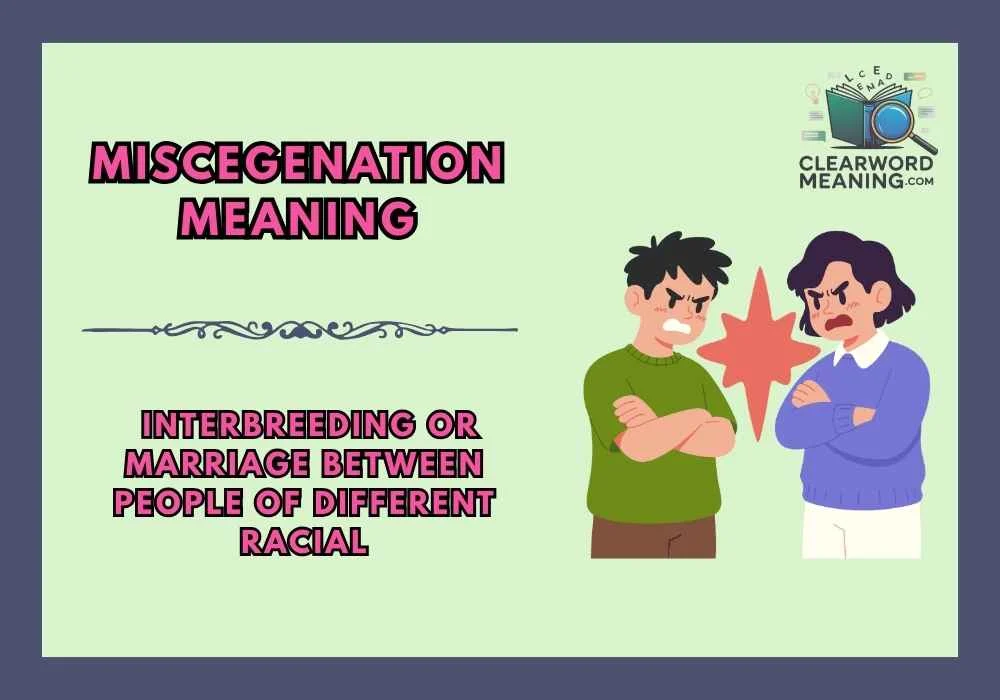
Discover the true miscegenation meaning and unlock the fascinating history behind this controversial term. Whether you’re curious about culture, heritage, or identity, understanding miscegenation can reshape your perspective on diversity and society.
Explore how this concept has influenced relationships, challenged traditions, and shaped race dynamics.
Learn the truth, gain insights, and empower yourself with knowledge that is both informative and eye-opening.
What Does “Miscegenation” Mean? (Definition & Origin)
At its core, miscegenation refers to the interbreeding or marriage between people of different racial or ethnic backgrounds. The term has historical roots in legal and social contexts and has often been associated with racial discussions, laws, and policies.
Origin:
- The word “miscegenation” comes from the Latin words miscere (to mix) and genus (kind or race).
- It first appeared in American political discourse in the 19th century and was often used in controversial or even discriminatory contexts.
Key Point:
Today, the term is primarily used in historical, sociological, or cultural discussions. Modern usage has shifted to more neutral or academic contexts, although sensitivity is crucial when discussing race-related topics.
How to Use “Miscegenation” in Texts or Chat
Using miscegenation in casual texting or online chats can be tricky due to its historical weight. Here’s how to approach it carefully:
- Academic/Informative Contexts:
“I was reading about miscegenation laws in the U.S. during the 20th century.” - Social Media or Forum Posts:
“It’s interesting to see how views on miscegenation have changed over the decades.” - Avoid Casual or Humorous Contexts:
Because of its sensitive nature, joking about miscegenation can be offensive. Always consider your audience before using the term in memes or casual messages.
Tip: Pair it with neutral or historical terms when chatting online to maintain clarity and sensitivity.
Examples of “Miscegenation” in Conversations
Here are some real-life examples to make the term easier to understand:
- Text Example 1:
Friend 1: “Did you know that anti-miscegenation laws existed in some U.S. states until 1967?”
Friend 2: “Wow, I had no idea! That’s crazy.” - Text Example 2 (Forum Post):
“When discussing colonial history, the topic of miscegenation often comes up. It’s fascinating how racial mixing impacted societies worldwide.” - Social Media Post:
“Exploring family history can uncover stories of miscegenation that challenge our understanding of race and identity.”
These examples show the term’s proper context and respectful usage.
Common Mistakes or Misunderstandings
Many people misuse miscegenation due to its uncommon usage or historical baggage. Here are some mistakes to avoid:
- Using it casually in jokes: This can be offensive.
- Confusing it with cultural mixing: Miscegenation specifically refers to racial/ethnic interbreeding, not just cultural exchange.
- Assuming it’s outdated: While the term has historical connotations, it’s still used in modern sociological and legal discussions.
Pro Tip: Always pair the word with context or explanation if chatting with someone unfamiliar with it.
Related Slangs or Abbreviations
While miscegenation doesn’t have direct texting abbreviations like “LOL” or “BRB,” some related terms often pop up in online discussions:
- Interracial Marriage: Often used interchangeably in casual conversations.
- Mixed Race: Refers to people born from parents of different races, related to miscegenation.
- Cultural Mixing: Broader term covering traditions, languages, or customs rather than genetics.
These related terms are safer for casual chats, social media, or forums while maintaining clarity.
Practical Tips for Using Miscegenation in 2026
- Know Your Audience: Use it in academic, historical, or respectful contexts.
- Provide Context: Pair with explanatory phrases to avoid misunderstandings.
- Stay Updated: Modern discussions focus more on identity, race, and inclusion than on the controversial legal past.
- Respect Sensitivities: Avoid joking or trivializing the term.
- Use Synonyms When Needed: “Interracial relationships” or “mixed-race” can sometimes replace the term in casual contexts.
FAQs:
What is the origin of miscegenation?
The term originates from Latin words miscere (to mix) and genus (race), first used in the 19th-century U.S. to discuss racial mixing.
Is miscegenation still relevant today?
Yes, it’s still relevant in sociological, historical, and cultural discussions, though modern conversations focus on inclusivity and understanding.
Can miscegenation be used casually in texts?
It’s better to avoid casual or humorous use due to its sensitive nature. Use it in informative or academic contexts.
What are common misconceptions about miscegenation?
People often confuse it with cultural exchange or use it jokingly, which is inappropriate. It specifically refers to interracial or interethnic mixing.
Are there alternative words for miscegenation?
Yes, terms like “interracial marriage” or “mixed race” are safer and more neutral in casual discussions.
Conclusion
Understanding miscegenation meaning is more than just learning a new word—it’s about cultural awareness, historical context, and respectful communication. Whether you encounter it in texts, online discussions, or academic readings, knowing its correct usage helps you engage in informed conversations.
As digital communication evolves, being mindful of sensitive terms like miscegenation ensures clarity and respect in both personal and online interactions. Updated for 2026, this guide helps you navigate these conversations confidently.

I am the author, Brook, dedicated to creating clear and reliable content that informs and engages readers. With a passion for well-researched and valuable information, I focus on delivering content that is both easy to understand and practical. My goal is to build trust with my audience by providing consistent, accurate, and meaningful material. Whether writing for beginners or experts, I strive to make every piece insightful, engaging, and impactful.